LIBER VI · CAPUT 16
NATIONS SITUATE AROUND THE HYRCANIAN SEA
Latine · Mayhoff 1906
A Caspiis ad orientem versus regio est Apavortene dicta et in ea fertilitatis inclutae locus Dareium, mox gentes Tapyri, Anariaci, Staures, Hyrcani, a quorum litoribus idem mare Hyrcanium vocari incipit a flumine Sideri. citra id amnes Maziris, Strator, omnia ex Caucaso. sequitur regio Margiane apricitatis inclutae, sola in eo tractu vitifera, undique inclusa montibus amoenis, ambitu stadiorum M-D, difficilis aditu propter harenosas solitudines per CXX p., et ipsa contra Parthiae tractum sita. in qua Alexander Alexandriam condiderat, qua diruta a barbaris Antiochus Seleuci filius eodem loco restituit Syrianam interfluente Margo, qui corrivatur in Zotha lacu; maluerat illam Antiochiam appellari. urbis amplitudo circumitur stadiis LXX. in hanc Orodes Romanos Crassiana clade captos deduxit. ab huius excelsis per iuga Caucasi protenditur ad Bactros usque gens Mardorum fera, sui iuris. sub eo tractu gentes Orciani, Commori, Berdrigae, Pharmacotrop hi, Chomarae, Choamani, Murrasiarae, Mandruani, flumina Mandrum, Chindrum, ultraque Chorasmi, Gandari, Pariani, Zarangae, Arasmi, Marotiani, Arsi, Gaeli, quos Graeci Cadusios appellavere, Matiani, oppidum Heraclea, ab Alexandro conditum, quod deinde subversum ac restitutum Antiochus Achaida appellavit, Dribyces, quorum medios fines secat Oxusamnis, ortus in lacu Oaxo, Syrmatae, Oxyttagae, Moci, Bateni, Saraparae, Bactri, quorum oppidum Zariastes, quod postea Bactrum a flumine appellatum est. gens haec optinet aversa montis Paropanisi exadversus fontes Indi; includitur flumine Ocho. ultra Sogdiani, oppidum Panda et in ultimis eorum finibus Alexandria, ab Alexandro Magno conditum. arae ibi sunt ab Hercule ac Libero Patre constitutae, item Cvro et Samiramide atque Alexandro, finis omnium eorum ductus ab illa parte terrarum, includente flumine laxarte, quod Scythae Silim vocant, Alexander militesque eius Tanain putavere esse. transcendit eum amnem Demodamas, Seleuci et Antiochi regum dux, quem maxime sequimur in his, arasque Apollini Didymaeo statuit.
English · Bostock & Riley 1855–57
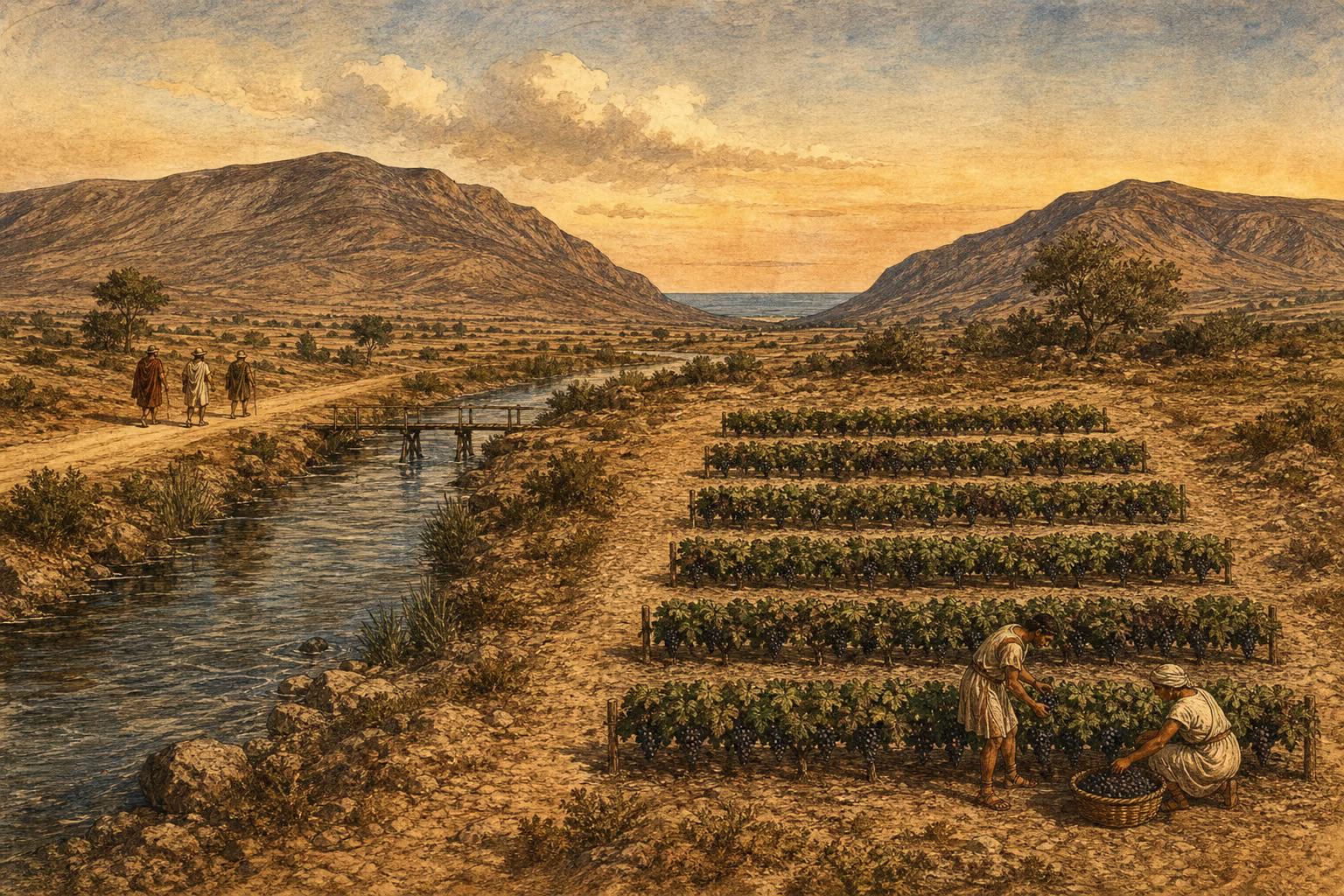
Lying to the east of the Caspii is the region known as Apavortene, in which there is a place noted for its singular fertility, called Dareium. We then come to the nations of the Tapyri, the Anariaci, the Staures, and the Hyrcani, past whose shores and beyond the river Sideris the Caspian begins to take the name of the ‘Hyrcanian’ Sea: on this side of that stream are also the rivers Maxeras and Strato; all of them take their rise in the Caucasian chain. Next comes the district of Margiane, so remarkable for its sunny climate. It is the only spot in all these regions that produces the vine, being shut in on every side by verdant and refreshing hills. This district is fifteen hundred stadia in circumference, but is rendered remarkably difficult of access by sandy deserts, which extend a distance of one hundred and twenty miles: it lies opposite to the country of Parthia, and in it Alexander founded the city of Alexandria. This place having been destroyed by the barbarians, Antiochus, the son of Seleucus, rebuilt it on the same site as a Syrian city. For, seeing that it was watered by the Margus, which passes through it, and is afterwards divided into a number of streams for the irrigation of the district of Zothale, he restored it, but preferred giving it the name of Antiochia. The circumference of this city is seventy stadia: it was to this place that Orodes conducted such of the Romans as had survived the defeat of Crassus. From the mountain heights of this district, along the range of Caucasus, the savage race of the Mardi, a free people, extends as far as the Bactri. Below the district inhabited by them, we find the nations of the Orciani, the Commori, the Berdrigæ, the Harmatotropi, the Citomaræ, the Comani, the Marucæi, and the Mandruani. The rivers here are the Mandrus and the Chindrus. Beyond the nations already mentioned, are the Chorasmii, the Candari, the Attasini, the Paricani, the Sarangæ, the Marotiani, the Aorsi, the Gaëli, by the Greek writers called Cadusii, the Matiani, the city of Heraclea, which was founded by Alexander, but was afterwards destroyed, and rebuilt by Antiochus, and by him called Achaïs; the Derbices also, through the middle of whose territory the river Oxus runs, after rising in Lake Oxus, the Syrmatæ, the Oxydracæ, the Heniochi, the Bateni, the Saraparæ, and the Bactri, whose chief city is Zariaspe, which afterwards received the name of Bactra, from the river there. This last nation lies at the back of Mount Paropanisus, over against the sources of the river Indus, and is bounded by the river Ochus. Beyond it are the Sogdiani, the town of Panda, and, at the very extremity of their territory, Alexandria, founded by Alexander the Great. At this spot are the altars which were raised by Hercules and Father Liber, as also by Cyrus, Semiramis, and Alexander; for the expeditions of all these conquerors stopped short at this region, bounded as it is by the river Jaxartes, by the Scythians known as the Silis, and by Alexander and his officers supposed to have been the Tanais. This river was crossed by Demodamas, a general of kings Seleucus and Antiochus, and whose account more particularly we have here followed. He also consecrated certain altars here to Apollo Didymæus.