LIBER VII · CAPUT 1
MAN
Latine · Mayhoff 1906
Mundus et in eo terrae, gentes, maria,.... insignia, insulae, urbes ad hunc modum se habent, animantium in eodem natura nullius prope partis contemplatione minore, etsine hic quidem omnia exsequi humanus animus queat.
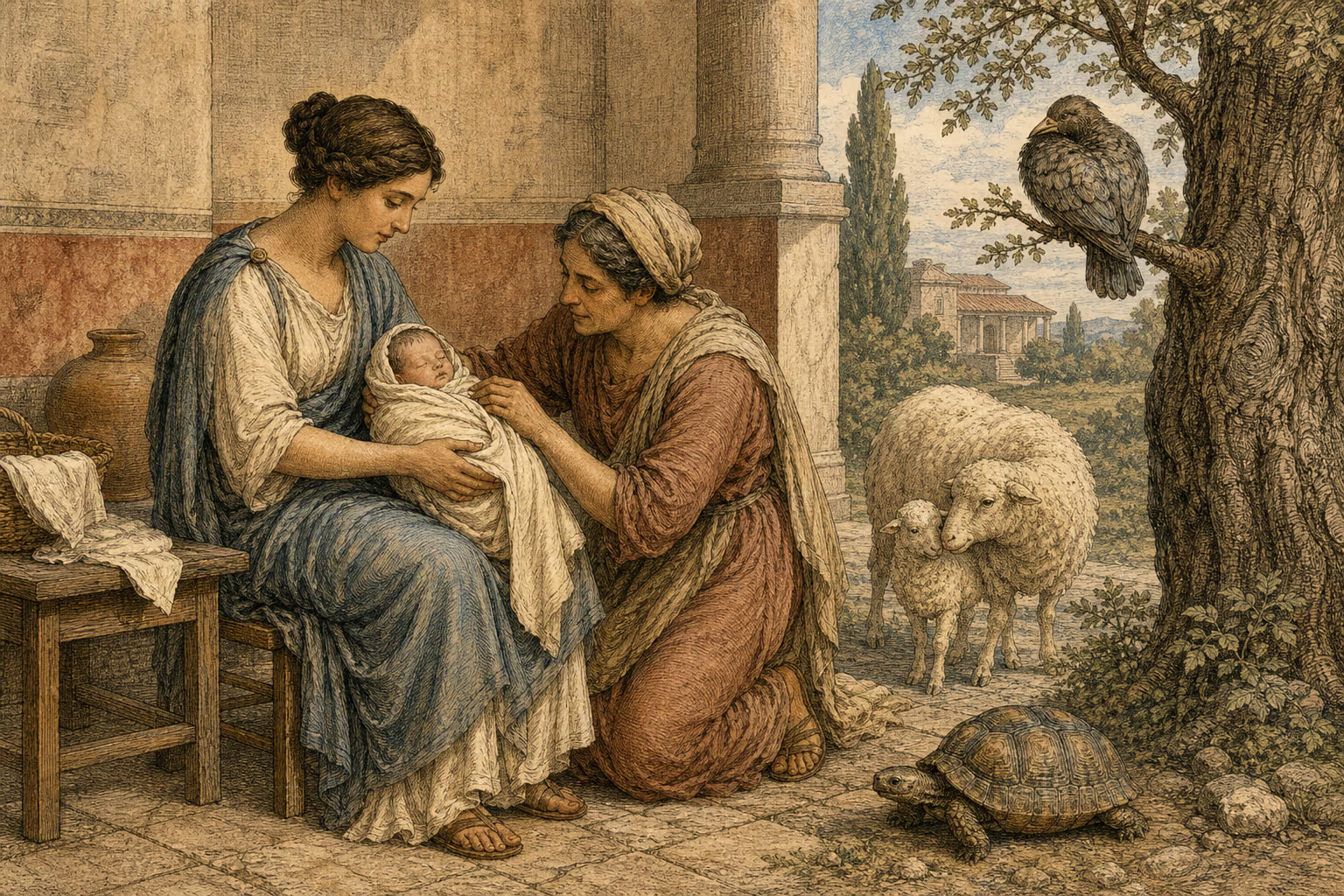
Principium iure tribuetur homini, cuius causa videtur cuncta alia genuisse natura, magna, saeva mercede contra tanta sua munera, non ut sit satis aestimare, parens melior homini an tristior noverca fuerit. ante omnia unum animantium cunctorum alienis velat opibus. ceteris sua varie tegimenta tribuit, testas, cortices, coria, spinas, villos, saetas, pilos, plumam, pinnas, squamas, vellera; truncos etiam arboresque cortice, interdum gemino, a frigoribus et calore tutata est: hominem tantum nudum et in nuda humo natali die abicit ad vagitus statim et ploratum, nullumque tot animalium aliud ad lacrimas, et has protinus vitae principio; at Hercule risus praecox ille et celerrimus ante XL diem nulli datur. ab hoc lucis rudimento quae ne feras quidem inter nos genitas vincula excipiunt et omnium membrorum nexus; itaque feliciter natus iacet manibus pedibusque devinctis, flens animal ceteris imperaturum, et a suppliciis vitam auspicatur unam tantum ob culpam, qua natum est. heu dementia ab his initiis existimantium ad superbiam se genitos! prima roboris spes primumque temporis munus quadripedi similem facit. quando homini incessus! quando vox! quando firmum cibis os! quam diu palpitans vertex, summae inter cuncta animalia inbecillitatis iudicium! iam morbi totque medicinae contra mala excogitatae, et hae quoque subinde novitatibus victae! et cetera sentire naturam suam, alia pernicitatem usurpare, alia praepetes volatus, alia nare: hominem nihil scire, nihil sine doctrina, non fari, non ingredi, non vesci, breviterque non aliud naturae sponte quam flere! itaque multi extitere qui non nasci optimum censerent aut quam ocissime aboleri. uni animantium luctus est datus, uni luxuria et quidem innumerabilibus modis ac per singula membra, uni ambitio, uni avaritia, uni inmensa vivendi cupido, uni superstitio, uni sepulturae cura atque etiam post se de futuro. nulli vita fragilior, nulli rerum omnium libido maior, nulli pavor confusior, nulli rabies acrior. denique cetera animantia in suo genere probe degunt. congregari videmus et stare contra dissimilia: leonum feritas inter se non dimicat, serpentium morsus non petit serpentes, ne maris quidem beluae ac pisces nisi in diversa genera saeviunt. at Hercule homini plurima ex homine sunt mala.
Et de universitate quidem generis humani magna ex parte in relatione gentium diximus. neque enim ritus moresque nunc tractabimus innumeros ac totidem paene quot sunt coetus hominum, quaedam tamen haut omittenda duco maximeque longius ab mari degentium, in quibus prodigiosa aliqua et incredibilia multis visum iri haud dubito. quis enim Aethiopas ante quam cerneret credidit? aut quid non miraculo est, cum primum in notitiam venit? quam multa fieri non posse prius quam sunt facta iudicantur? naturae vero rerum vis atque maiestas in omnibus momentis fide caret, si quis modo partes eius ac non totam complectatur animo. ne pavonis ac tigrium pantherarumque maculas et tot animalium picturas commemorem, parvum dictu, sed inmensum aestimatione, tot gentium sermones, tot linguae, tanta loquendi varietas, ut externus alieno paene non sit hominis vice! iam in facie vultuque nostro cum sint decem aut paulo plura membra, nullas duas in tot milibus hominum indiscretas effigies existere, quod ars nulla in paucis numero praestet adfectando! nec tamen ego in plerisque eorum obstringam fidem meam potiusque ad auctores relegabo, qui dubiis reddentur omnibus, modo ne sit fastidio Graecos sequi, tanto maiore eorum diligentia vel cura vetustiore.
English · Bostock & Riley 1855–57
Such then is the present state of the world, and of the countries, nations, more remarkable seas, islands, and cities which it contains. The nature of the animated beings which exist upon it, is hardly in any degree less worthy of our contemplation than its other features; if, indeed, the human mind is able to embrace the whole of so diversified a subject. Our first attention is justly due to Man, for whose sake all other things appear to have been produced by Nature; though, on the other hand, with so great and so severe penalties for the enjoyment of her bounteous gifts, that it is far from easy to determine, whether she has proved to him a kind parent, or a merciless step-mother.
In the first place, she obliges him alone, of all animated beings, to clothe himself with the spoils of the others; while, to all the rest, she has given various kinds of coverings, such as shells, crusts, spines, hides, furs, bristles, hair, down, feathers, scales, and fleeces. The very trunks of the trees even, she has protected against the effects of heat and cold by a bark, which is, in some cases, twofold. Man alone, at the very moment of his birth cast naked upon the naked earth, does she abandon to cries, to lamentations, and, a thing that is the case with no other animal whatever, to tears: this, too, from the very moment that he enters upon existence. But as for laughter, why, by Hercules!—to laugh, if but for an instant only, has never been granted to man before the fortieth day from his birth, and then it is looked upon as a miracle of precocity. Introduced thus to the light, man has fetters and swathings instantly put upon all his limbs, a thing that falls to the lot of none of the brutes even that are born among us. Born to such singular good fortune, there lies the animal, which is destined to command all the others, lies, fast bound hand and foot, and weeping aloud! such being the penalty which he has to pay on beginning life, and that for the sole fault of having been born. Alas! for the folly of those who can think after such a beginning as this, that they have been born for the display of vanity!
The earliest presage of future strength, the earliest bounty of time, confers upon him nought but the resemblance to a quadruped. How soon does man gain the power of walking? How soon does he gain the faculty of speech? How soon is his mouth fitted for mastication? How long are the pulsations of the crown of his head to proclaim him the weakest of all animated beings? And then, the diseases to which he is subject, the numerous remedies which he is obliged to devise against his maladies, and those thwarted every now and then by new forms and features of disease. While other animals have an instinctive knowledge of their natural powers; some, of their swiftness of pace, some of their rapidity of flight, and some again of their power of swimming; man is the only one that knows nothing, that can learn nothing without being taught; he can neither speak, nor walk, nor eat, and, in short, he can do nothing, at the prompting of nature only, but weep. For this it is, that many have been of opinion, that it were better not to have been born, or if born, to have been annihilated at the earliest possible moment.
To man alone, of all animated beings, has it been given, to grieve, to him alone to be guilty of luxury and excess; and that in modes innumerable, and in every part of his body. Man is the only being that is a prey to ambition, to avarice, to an immoderate desire of life, to superstition, —he is the only one that troubles himself about his burial, and even what is to become of him after death. By none is life held on a tenure more frail; none are more influenced by unbridled desires for all things; none are sensible of fears more bewildering; none are actuated by rage more frantic and violent. Other animals, in fine, live at peace with those of their own kind; we only see them unite to make a stand against those of a different species. The fierceness of the lion is not expended in fighting with its own kind; the sting of the serpent is not aimed at the serpent; and the monsters of the sea even, and the fishes, vent their rage only on those of a different species. But with man,—by Hercules! most of his misfortunes are occasioned by man.
We have already given a general description of the human race in our account of the different nations. Nor, indeed, do I now propose to treat of their manners and customs, which are of infinite variety and almost as numerous as the various groups themselves, into which mankind is divided; but yet there are some things, which, I think, ought not to be omitted; and more particularly, in relation to those peoples which dwell at a considerable distance from the sea; among which, I have no doubt, that some facts will appear of an astounding nature, and, indeed, incredible to many. Who, for instance, could ever believe in the existence of the Æthiopians, who had not first seen them? Indeed what is there that does not appear marvellous, when it comes to our knowledge for the first time? How many things, too, are looked upon as quite impossible, until they have been actually effected? But it is the fact, that every moment of our existence we are distrusting the power and the majesty of Nature, if the mind, instead of grasping her in her entirety, considers her only in detail. Not to speak of peacocks, the spotted skins of tigers and panthers, and the rich colours of so many animals, a trifling thing apparently to speak of, but of inestimable importance, when we give it due consideration, is the existence of so many languages among the various nations, so many modes of speech, so great a variety of expressions; that to another, a man who is of a different country, is almost the same as no man at all. And then, too, the human features and countenance, although composed of but some ten parts or little more, are so fashioned, that among so many thousands of men, there are no two in existence who cannot be distinguished from one another, a result which no art could possibly have produced, when confined to so limited a number of combinations. In most points, however, of this nature, I shall not be content to pledge my own credit only, but shall confirm it in preference by referring to my authorities, which shall be given on all subjects of a nature to inspire doubt. My readers, however, must make no objection to following the Greeks, who have proved them selves the most careful observers, as well as of the longest standing.