LIBER VI · CAPUT 34
DIVISION OF THE EARTH INTO PARALLELS AND SHADOWS OF EQUAL LENGTH
Latine · Mayhoff 1906
Principium habet Indiae pars versa ad austrum. patet usque Arabiam et Rubri maris accolas. continentur Gedrosi, Carmani, Persae, Elymaei, Parthyene, Aria, Susiane, Mesopotamia, Seleucia cognominata Babylonia, Arabia ad Petras usque, Syria Coele, Pelusium, Aegypti inferiora, quae Chora vocatur, Alexandria, Africae maritima, Cyrenaica oppida omnia, Thapsus, Hadrumetum, Clupea, Carthago, Vtica, uterque Hippo, Numidia, Mauretania utraque, Atlanticum mare, columnae Herculis. in hoc caeli circumplexu aequinoctii die medio umbilicus, quem gnomonem vocant, VII pedes longus umbram non amplius IIII pedes longam reddit, noctis vero dieique longissima spatia XIIII horas aequinoctiales habent, brevissima ex contrario X.
Sequens circulus incipit ab India vergente ad occasum, vadit per medios Parthos, Persepolim, citima Persidis, Arabiam citeriorem, Iudaeam, Libani montis accolas, amplectitur Babylonem, Idumaeam, Samariam, Hierosolyma, Ascalonem, Iopen, Caesaream, Phoenicen, Ptolemaidem, Sidonem, Tyrum, Berytum, Botryn, Tripolim, Byblum, Antiochiam, Laodiceam, Seleuciam, Ciliciae maritima, Cypri austrina, Cretam, Lilybaeum in Sicilia, septentrionalia Africae et Numidiae. umbilicus, aequinoctio XXXV pedum, umbram XXIIII pedes longam facit, dies autem noxque maxima XIIII horarum aequinoctialium est accedente bis quinta parte unius horae.
Tertius circulus ab Indis Imavo proximis oritur. tendit per Caspias Portas, Mediae proxima, Cataoniam, Cappadociam, Taurum, Amanum, Issum, Cilicias Portas, Solos, Tarsum, Cyprum, Pisidiam, Pamphyliam, Siden, Lycaoniam, Lyciam,Patara, Xanthum, Caunum, Rhodum, Coum, Halicarnassum, Cnidum, Dorida, Chium, Delum, Cycladas medias, Gythium, Malean, Argos, Laconicam, Elim, Olympiam, Messaniam Peloponnesi, Syracusas, Catinam, Siliciam mediam, Sardiniae austrina, Carteiam, Gadis. gnomonis C unciae unmbram LXXVII unciarum faciunt. longissimus dies est aequinoctialium horarum XIIII atque dimidiae cum tricesima unius horae.
Quarto subiacent circulo quae sunt ab altero latere Imavi, Cappadociae austrina, Galatia, Mysia, Sardis, Zmyrna, Sipylus, Tmolus mons, Lydia, Caria, Ionia, Trallis, Colophon, Ephesus, Miletus, Chios, Samos, Icarium mare, Cycladum septentrio, Athenae, Megara, Corinthus, Sicyon, Achaia, Patrae, Isthmus, Epirus, septentrionalia Siciliae, Narbonensis Galliae exortiva, Hispaniae maritima a Carthagine Nova et inde ad occasum. gnomoni XXI pedum respondent umbrae XVI pedum. longissimus dies habet aequinoctiales horas XIIII et tertias duas unius horae.
Quinto continentur segmento ab introitu Caspii maris Bactri, Hiberia, Armenia, Mysia, Phrygia, Hellespontus, Troas, Tenedus, Abydos, Scepsis, Ilium, Ida mons, Cyzicum, Lampsacum, Sinope, Amisum, Heraclea in Ponto, Paphlagonia, Lemnus, Imbrus, Thasus, Cassandria, Thessalia, Macedonia, Larisa, Amphipolis, Thessalonice, Pella, Edesus, Beroea, Pharsalia, Carystum, Euboea Boeotum, Chalcis, Delphi, Acarnania, Aetolia, Apollonia, Brundisium, Tarentum, Thurii, Locri, Regium, Lucani, Neapolis, Puteoli, Tuscum mare, Corsica, Baliares, Hispania media. gnomoni septem pedes, umbris sex. magnitudo diei summa horarum aequinoctialium XV.
Sexta comprehensio, qua continetur urbs Roma, amplectitur Caspias gentes, Caucasum, septentrionalia Armeniae, Apolloniam supra Rhyndacum, Nicomediam, Nicaeam, Cal- chadonem, Byzantium, Lysimacheam, Cherronesum, Melanem sinum, Abderam, Samothraciam, Maroneam, Aenum, Bessicam, Thraciam, Maedicam, Paeoniam, Illyrios, Durrachium, Canusium, Apuliae extuma, Campaniam, Etruriam, Pisas, Lunam, Lucam, Genuam, Liguriam, Antipolim, Massiliam, Narbonem, Tarraconem, Hispaniam Tarraconensem mediam et inde per Lusitaniam. gnomoni pedes VIII, umbrae VIII. longissima diei spatia horarum aequinoctialium XV addita VIIII parte unius horae aut, ut Nigidio placuit, quinta.
Septima divisio ab altera Caspii maris ora incipit, vadit super Callatim, Bosporum, Borysthenen, Tomos, Thraciae aversa, Triballos, Illyrici reliqua, Hadriaticum mare, Aquileiam, Altinum, Venetiam, Vicetiam, Patavium, Veronam, Cremonam, Ravennam, Anconam, Picenum, Marsos, Paelignos, Sabinos, Vmbriam, Ariminum, Bononiam, Placentiam, Mediolanum omniaque ab Appennino, transque Alpis Galliam Aquitanicam, Viennam, Pyrenaeum, Celtiberiam. umbilico XXXV pedum umbrae XXXVI, ut tamen in parte Venetiae exaequetur umbra gnomoni. amplissima dieispatia horarum aequinoctialium XV et quintarum partium horae trium.
Hactenus antiquorum exacta celebravimus. sequentium diligentissimi quod superest terrarum supra tribus adsignavere segmentis, a Tanai per Maeotim lacum et Sarmatas usque Borysthenen atque ita per Dacos partemque Germaniae, Gallias oceani litora amplexi, quod esset horarum XVI, alterum per Hyperboreos et Britanniam horarum XVII, postremum Scythicum a Ripaeis iugis in Thylen, in quo dies continuarentur, ut diximus, noctesque per vices.iidem et ante principia quae fecimus posuere circulos duos: primum per insulam Meroen et Ptolemaidem in Rubro mari ad elephantorum venatus conditam, ubi longissimus dies XII horarum esset dimidia hora amplior, secundum per Syenen Aegypti euntem, qui esset horarum XIII, iidemque singulis dimidia horarum spatia usque ad ultimum adiecere circulis.
Et hactenus de terris.
English · Bostock & Riley 1855–57
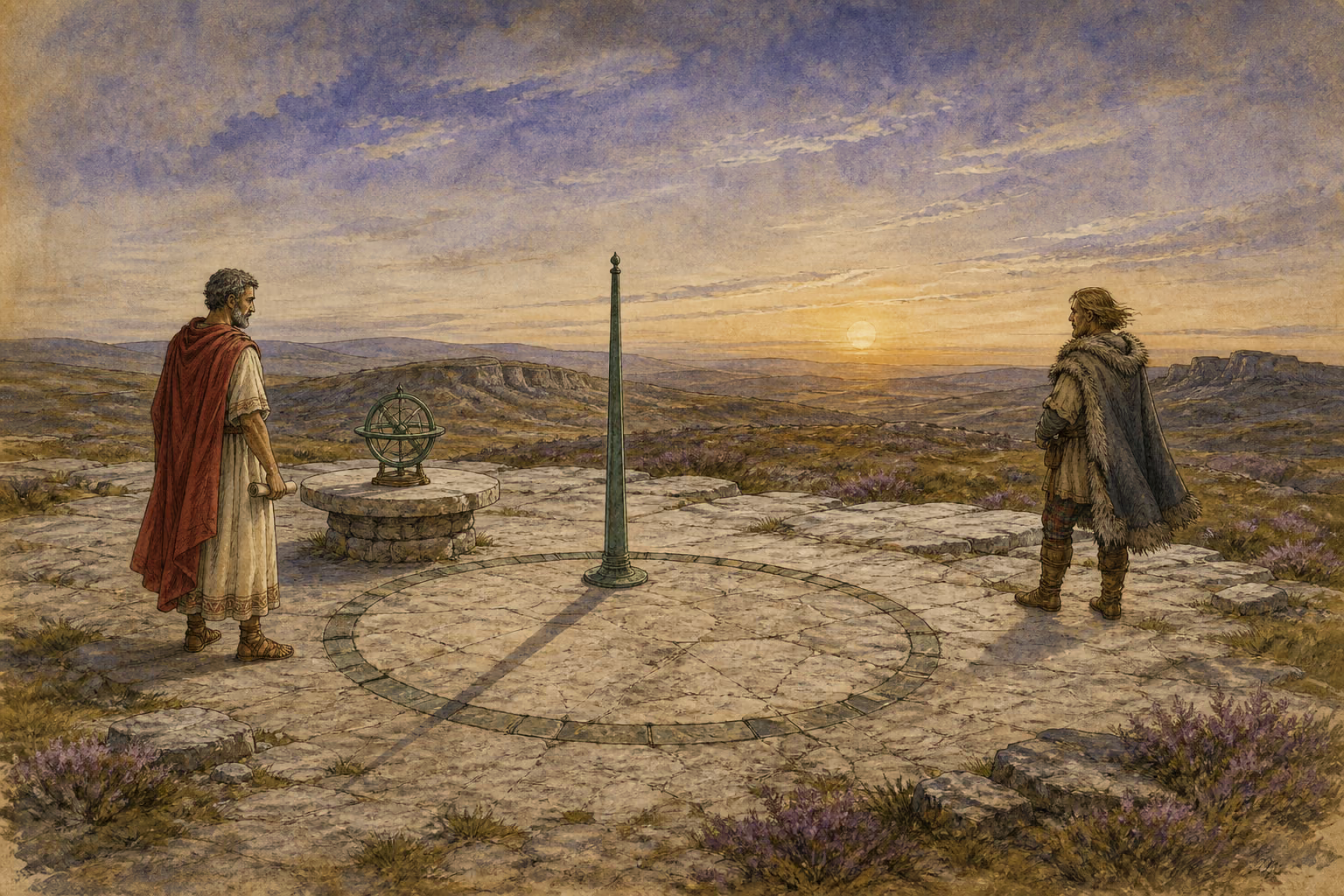
The first begins at that part of India which looks towards the south, and extends to Arabia and those who dwell upon the borders of the Red Sea. It embraces the Gedrosi, the Carmanii, the Persæ, the Elymæi, Parthyene, Aria, Susiane, Mesopotamia, Seleucia surnamed Babylonia, Arabia as far as Petra, Cœle Syria, Pelusium, the lower parts of Egypt called the Chora of Alexandria, the maritime parts of Africa, all the cities of Cyrenaica, Thapsus, Adrumetum, Clupea, Carthage, Utica, the two Hippo’s, Numidia, the two Mauritanias, the Atlantic Sea, and the Pillars of Hercules. Within the meridian of this parallel, on the middle day of the equinox, the pin of the dial, usually called the gnomon, if seven feet in length, throws a shadow at mid-day no more than four feet long: the longest day and night are fourteen equinoctial hours respectively, the shortest being only ten.
The next circle or parallel begins with the western parts of India, and runs through the middle of Parthia, through Persepolis, the nearer parts of Persis, the nearer Arabia, Judæa, and the people who live near Mount Libanus, and it embraces Babylon, Idumæa, Samaria, Hierosolyma, Ascalon, Joppa, Cæsarea in Phœnicia, Ptolemais, Sidon, Tyre, Berytus, Botrys, Tripolis, Byblus, Antiochia, Laodicea, Seleucia, the maritime parts of Cilicia, the southern parts of Cyprus, Crete, Lilybæum in Sicily, and the northern parts of Africa and Numidia. In these regions, at the time of the equinox, a gnomon of thirty-five feet in length gives only a shadow twenty-four feet long; and the longest day and night are respectively fourteen equinoctial hours, and one-fifth of an hour, in length.
The third circle or parallel begins at the part of India which lies in the vicinity of Mount Imaüs, and runs through the Caspian Gates and the nearer parts of Media, Cataonia, Cappadocia, Taurus, Amanus, Issus, the Passes of Cilicia, Soli, Tarsus, Cyprus, Pisidia, Side in Pamphylia, Lycaonia, Patara in Lycia, Xanthus, Caunus, Rhodes, Cos, Halicarnassus, Cnidos, Doris, Chios, Delos, the middle of the Cyclades, Gythium, Malea, Argos, Laconia, Elis, Olympia, Messenia in Peloponnesus, Syracuse, Catina, the middle of Sicily, the southern parts of Sardinia, Carteia, and Gades. A gnomon, one hundred inches in length, throws a shadow seventy-seven inches long; the length of the longest day is fourteen equinoctial hours and a half, plus one thirtieth of an hour.
Under the fourth circle or parallel lie those parts of India which are on the other side of the Imaüs, the southern parts of Cappadocia, Galatia, Mysia, Sardis, Smyrna, Sipylus, Mount Tmolus, Lydia, Caria, Ionia, Tralles, Colophon, Ephesus, Miletus, Chios, Samos, the Icarian Sea, the northern part of the Cyclades, Athens, Megara, Corinth, Sicyon, Achaia, Patræ, the Isthmus, Epirus, the northern parts of Sicily, the eastern parts of Gallia Narbonensis, and the sea-coast of Spain, from New Carthage westward. In these districts a gnomon of twenty-one feet throws a shadow of sixteen feet in length; the longest day contains fourteen equinoctial hours and two-thirds of an hour.
Under the fifth zone are included, from the entrance to the Caspian Sea, the Bactri, Iberia, Armenia, Mysia, Phrygia, the Hellespont, Troas, Tenedos, Abydos, Scepsis, Ilium, Mount Ida, Cyzicus, Lampsacus, Sinope, Amisus, Heraclea in Pontus, Paphlagonia, Lemnos, Imbros, Thasos, Cassandria, Thessaly, Macedonia, Larissa, Amphipolis, Thessalonica, Pella, Edessa, Berœa, Pharsalia, Carystus, Eubœa in Bœotia, Chalcis, Delphi, Acarnania, Ætolia, Apollonia, Brudisium, Tarentum, Thurii, Locri, Rhegium, the Lucani, Neapolis, Puteoli, the Tuscan Sea, Corsica, the Balearic Islands, and the middle of Spain. A gnomon, seven feet in length, in these countries gives a shadow of six feet, and the length of the day is fifteen equinoctial hours.
The sixth division, in which Rome is included, embraces the Caspian nations, Caucasus, the northern parts of Armenia, Apollonia on the Rhyndacus, Nicomedia, Nicæa, Chalcedon, Byzantium, Lysimachia, the Chersonnesus, the Gulf of Melas, Abdera, Samothracia, Maronea, Ænus, Bessica, Thracia, Mædica, Pæonia, the Illyrii, Dyrrhachium, Canusium, the extreme parts of Apulia, Campania, Etruria, Pisæ, Luna, Luca, Genua, Liguria, Antipolis, Massilia, Narbo, Tarraco, the middle parts of Hispania Tarraconensis, and thence through Lusitania. A gnomon of nine feet here throws a shadow eight feet long; the greatest length of the day is fifteen equinoctial hours, plus one-ninth part of an hour, or, according to Nigidius, one-fifth.
The seventh division begins on the other side of the Caspian Sea, and the line runs above Callatis, and through the Bosporus, the Borysthenes, Tomi, the back part of Thrace, the Triballi, the remainder of Illyricum, the Adriatic Sea, Aquileia, Altinum, Venetia, Vicetia, Patavium, Verona, Cremona, Ravenna, Ancona, Picenum, the Marsi, the Peligni, the Sabini, Umbria, Ariminum, Bononia, Placentia, Mediolanum, all the districts at the foot of the Apennines, and, beyond the Alps, Gallia Aquitanica, Vienna, the Pyrenæan range, and Celtiberia. A gnomon thirty-five feet in length here throws a shadow of thirty-six feet, except in some parts of Venetia, where the shadow just equals the length of the gnomon; the longest day is fifteen equinoctial hours, plus three-fifths of an hour.
Thus far we have set forth the results of observations made by the ancients. The remaining part of the earth has been divided, through the careful researches of those of more recent times, by three additional parallels. The first runs from the Tanais through the Mæotis and the country of the Sarmatæ, as far as the Borysthenes, and so through the Daci and part of Germany, and the Gallic provinces, as far as the shores of the ocean, the longest day being sixteen hours.
The second parallel runs through the country of the Hyperborei and the island of Britannia, the longest day being seventeen hours in length.
The last of all is the Scythian parallel, which runs from the Riphæan range to Thule, in which, as we have already stated, the year is divided into days and nights alternately, of six months’ duration. The same authors have also placed before the first parallel, which we have here given, two other parallels or circles; the first running through the island of Meroë and the city of Ptolemais which was built on the Red Sea for the chase of the elephant; where the longest day is twelve hours and a half in length; and the second passing through Syene in Egypt, in which the longest day is thirteen hours in length. The same authors have also added half an hour to each of the parallels, till they come to the last.
Thus far on the Geography of the earth.