LIBER VII · CAPUT 19
SOME REMARKABLE PROPERTIES OF THE BODY
Latine · Mayhoff 1906
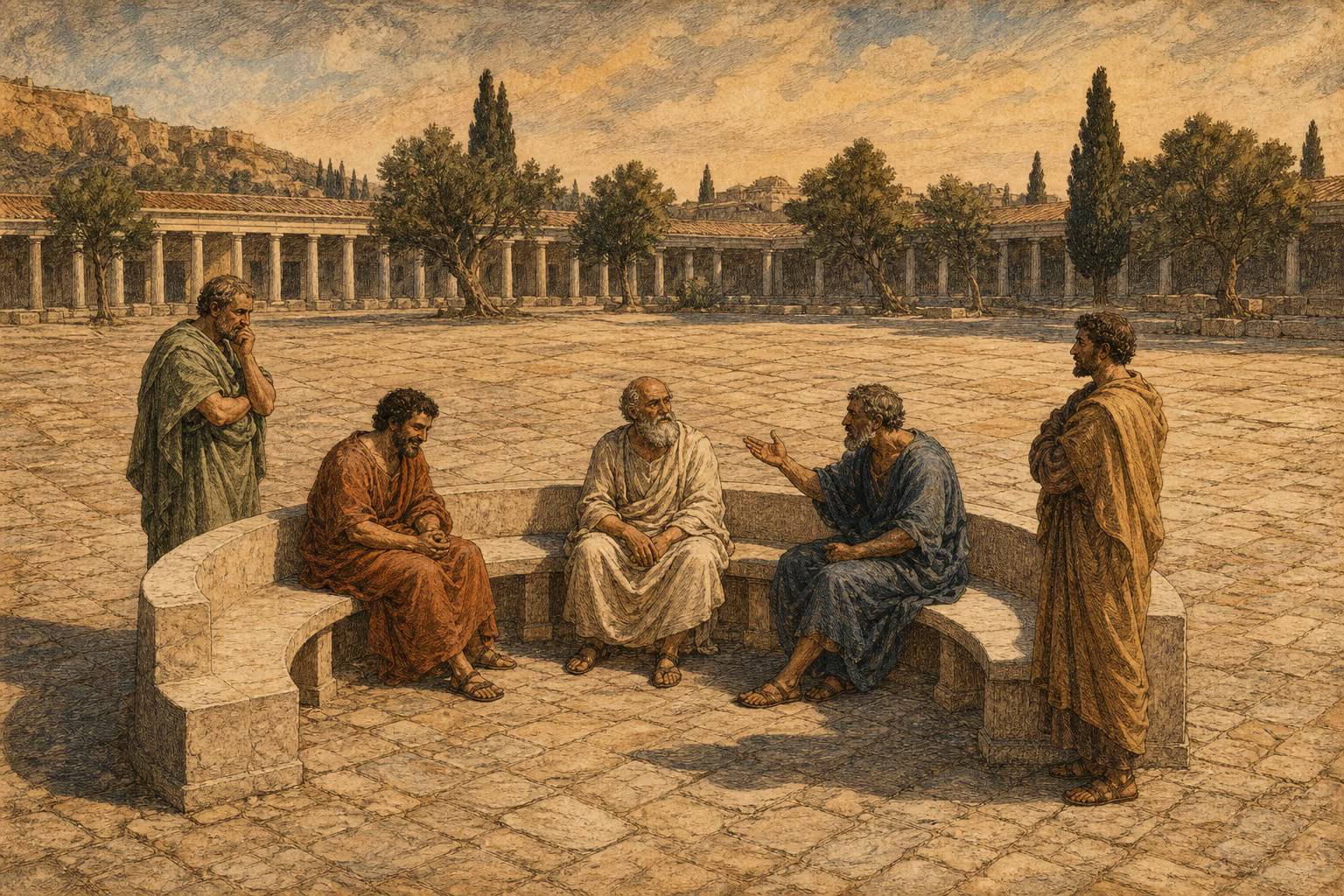
Ferunt Crassum, avum Crassi in Parthis interempti, numquam risisse, ob id Agelastum vocatum, sicuti nec flesse multos. Socratem clarum sapientia eodem semper visum vultu nec aut hilaro magis aut turbato. exit hic animi tenor aliquando in rigorem quendam torvitatemque naturae duram et inflexibilem affectusque humanos adimit, quales ἀπαθεῖς Graeci vocant, multos eius generis experti, — quod mirum sit — auctores maxime sapientiae, Diogenen Cynicum, Pyrrhonem, Heraclitum, Timonem, hunc quidem etiam in totius odium generis humani evectum. sed haec parva naturae insignia in multis varia cognoscuntur, ut in Antonia Drusi numquam expuisse, in Pomponio consulari poeta non ructasse.— (Quibus natura concreta sunt ossa, qui sunt rari admodum, cornei vocantur) —
English · Bostock & Riley 1855–57
It is said that Crassus, the grandfather of Crassus, who was slain by the Parthians, was never known to laugh; from which circumstance he obtained the name of Agelastus. There are other persons again, who have never been seen to weep. Socrates, who was so famous for his wisdom, always appeared with the same countenance, and was never known to appear either more gay or more sad than ordinary. This even tenor of the mind, however, sometimes degenerates into a sort of harshness, and a rigorous and inflexible sternness of nature, entirely effacing all the human affections. The Greeks, among whom there have been many persons of this description, are in the habit of calling them Ἀπαθεῖς. A very remarkable thing, too, is the fact, that among these persons are to be found some of the greatest masters of philosophy. Diogenes the Cynic, for instance, Pyrrho, Heraclitus, and Timon, which last allowed himself to be so entirely carried away by this spirit, as to become a hater of all mankind. Less important peculiarities of nature, again, are to be observed in many persons; Antonia, for instance, the wife of Drusus, was never known to expectorate; and Pomponius, the poet, a man of consular rank, was never troubled with eructation. Those rare instances of men, whose bones are naturally solid and without marrow, are known to us as men “of horn.”