LIBER VII · CAPUT 20
INSTANCES OF EXTRAORDINARY STRENGTH
Latine · Mayhoff 1906
Corpore vesco, sed eximiis viribus Tritanum, in gladiatorio ludo Samnitium armatura celebrem, filiumque eius militem Magni Pompei et rectos et traverses cancellatim toto corpore habuisse nervos, in brachiis etiam manibusque, auctor est Varro prodigiosa virium relatione atque etiam hostem ab eo ex provocatione dimicante inermi dextera * superatum et postremo correptum * uno digito * in castra tralatum. at Vinnius Valens meruit in praetorio Divi Augusti centurio, vehicula vini culleis onusta, donec exinanirentur, sustinere solitus, carpenta adprehensa una manu retinere, obnixus contra nitentibus iumentis, et alia mirifica facere, quae insculpta monumento eius spectantur.Idem M. Varro: Rusticelius, inquit, Hercules appellatus mulum suum tollebat, Fufius Salvius duo centenaria pondera pedibus, totidem manibus et ducenaria duo umeris contra scalas ferebat. nos quoque vidimus Athanatum nomine prodigiosae ostentationis quingenario thorace plumbeo indutum cothurnisque quingentum pondo calciatum per scaenam ingredi. Milonem athletam, cum constitisset, nemo vestigio educebat, malum tenenti modo digitum corrigebat.
Cucurrisse MCXL stadia ab Athenis Lacedaemonem biduo Philippidem magnum erat, donec Anystis cursor Lacedaemonius et Philonides Alexandri Magni a Sicyone Elim uno die MCCCV cucurrerunt. nunc quidem in circo quosdam CLX passuum tolerare non ignoramus nuperque Fonteio et Vipstano cos. annos VIII genitum a meridie ad vesperamLXXV passuum cucurrisse. cuius rei admiratio ita demum solida perveniat, si quis cogitet nocte ac die longissimum iter vehiculis Tib. Neronem emensum festinantem ad Drusum fratrem aegrotum in Germaniam. ea fueruntCC passuum.
English · Bostock & Riley 1855–57
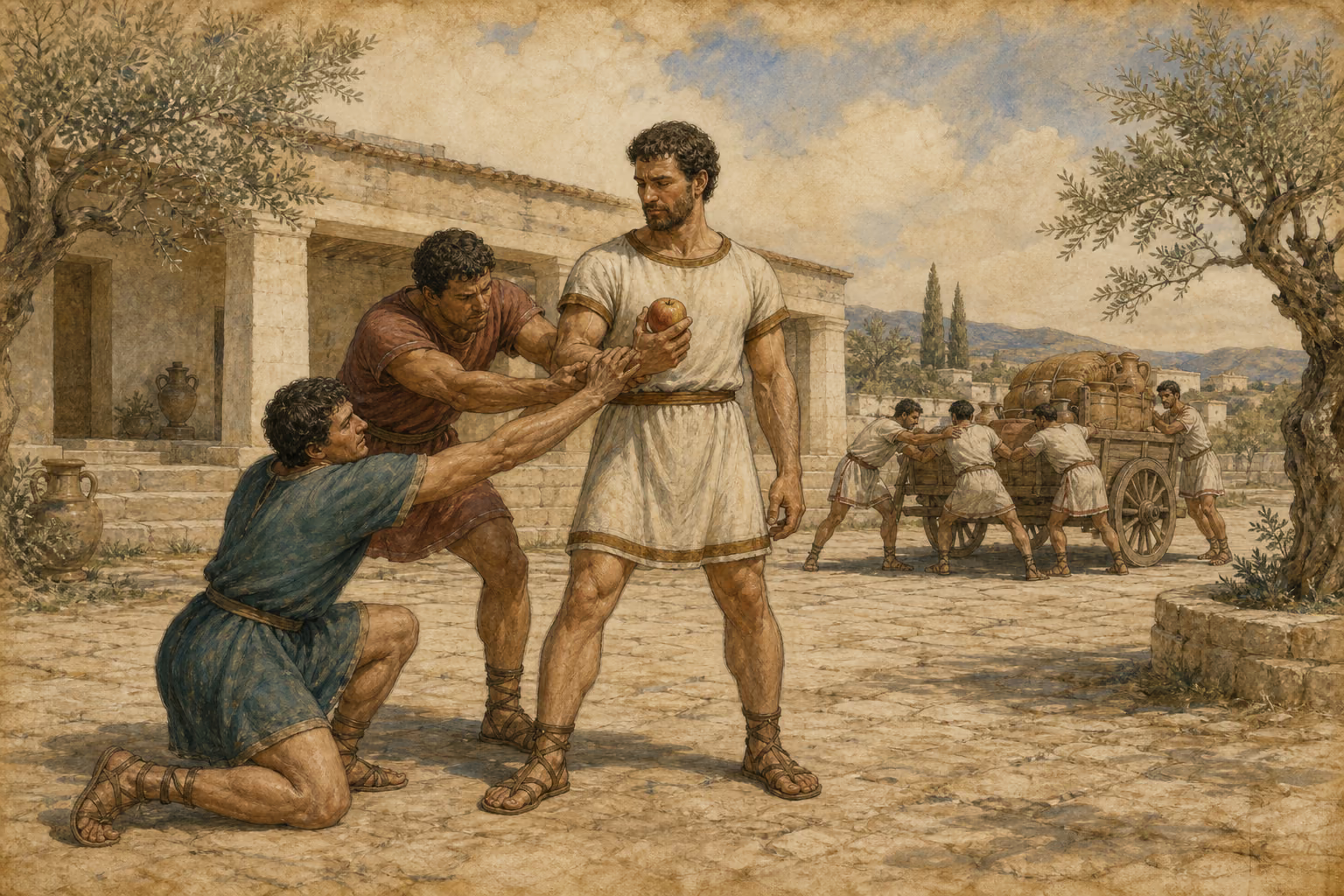
Varro, speaking of persons remarkable for their strength, gives us an account of Tributanus, a celebrated gladiator, and skilled in the use of the Samnite arms; he was a man of meagre person, but possessed of extraordinary strength. Varro makes mention of his son also, who served in the army of Pompeius Magnus. He says, that in all parts of his body, even in the arms and hands, there was a network of sinews, extending across and across. The latter of these men, having been challenged by an enemy, with a single finger of the right hand, and that unarmed, vanquished him, and then seized and dragged him to the camp. Vinnius Valens, who served as a centurion in the prætorian guard of Augustus, was in the habit of holding up waggons laden with casks, until they were emptied; and of stopping a carriage with one hand, and holding it back, against all the efforts of the horses to drag it forward. He performed other wonderful feats also, an account of which may still be seen inscribed on his monument. Varro, also, gives the following statement: “Fusius, who used to be called the ‘bumpkin Hercules,’ was in the habit of carrying his own mule; while Salvius was able to mount a ladder, with a weight of two hundred pounds attached to his feet, the same to his hands, and two hundred pounds on each shoulder.” I myself once saw,—a most marvellous display of strength,—a man of the name of Athanatus walk across the stage, wearing a leaden breast-plate of five hundred pounds weight, while shod with buskins of the same weight. When Milo, the wrestler, had once taken his stand, there was not a person who could move him from his position; and when he grasped an apple in his hand, no one could so much as open one of his fingers.
It was considered a very great thing for Philippides to run one thousand one hundred and sixty stadia, the distance between Athens and Lacedæmon, in two days, until Amystis, the Lacedæmonian courier, and Philonides, the courier of Alexander the Great, ran from Sicyon to Elis in one day, a distance of thirteen hundred and five stadia. In our own times, too, we are fully aware that there are men in the Circus, who are able to keep on running for a distance of one hundred and sixty miles; and that lately, in the consulship of Fonteius and Vipstanus, there was a child eight years of age, who, between morning and evening, ran a distance of seventy-five miles. We become all the more sensible of these wonderful instances of swiftness, upon reflecting that Tiberius Nero, when he made all possible haste to reach his brother Drusus, who was then sick in Germany, reached him in three stages, travelling day and night on the road; the distance of each stage was two hundred miles.