LIBER VII · CAPUT 21
INSTANCES OF ACUTENESS OF SIGHT
Latine · Mayhoff 1906
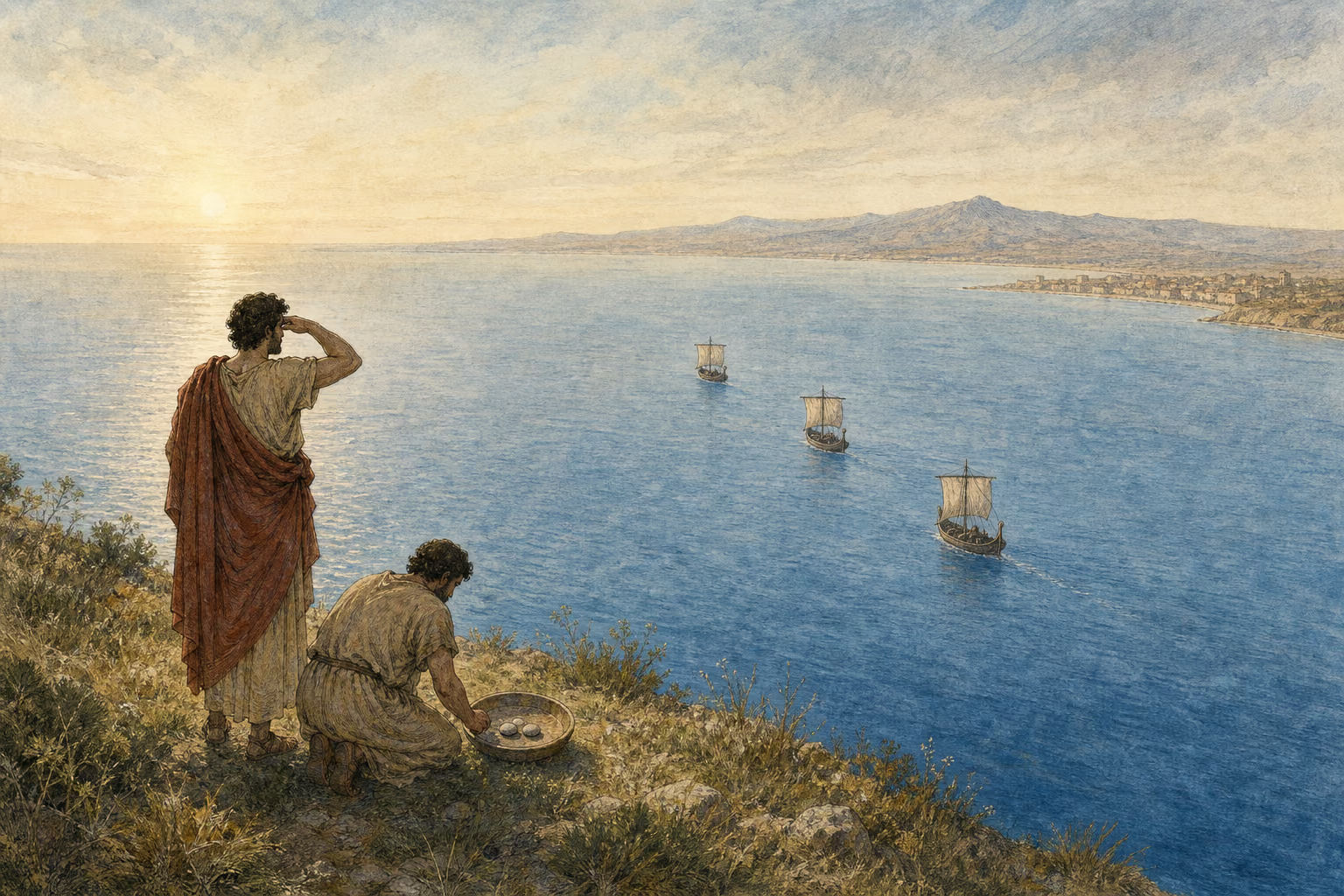
Oculorum acies vel maxime fidem excedentia invenit exempla. in nuce inclusam Iliadem Homeri carmen in membrana scriptum tradit Cicero. idem fuisse qui pervideret CXXXV passuum. huic et nomen M. Varro reddit: Strabonem vocatum; solitum autem Punico bello a Lilybaeo Siciliae promunturio, exeunte classe e Carthaginis portu, etiam numerum navium dicere. Callicrates ex ebore formicas et alia tam parva fecit animalia, ut partes eorum a ceteris cerni non possent. Myrmecides quidem in eodem genere inclaruit quadriga ex eadem materia, quam musca integeret alis, fabricata et nave, quam apicula pinnis absconderet.
English · Bostock & Riley 1855–57
Instances of acuteness of sight are to be found stated, which, indeed, exceed all belief. Cicero informs us, that the Iliad of Homer was written on a piece of parchment so small as to be enclosed in a nut-shell. He makes mention also of a man who could distinguish objects at a distance of one hundred and thirty-five miles. M. Varro says, that the name of this man was Strabo; and that, during the Punic war, from Lilybæum, the promontory of Sicily, he was in the habit of seeing the fleet come out of the harbour of Carthage, and could even count the number of the vessels. Callicrates used to carve ants and other small animals in ivory, so minute in size, that other persons were unable to distinguish their individual parts. Myrmecides also was famous in the same line; this man made, of similar material, a chariot drawn by four horses, which a fly could cover with its wings; as well as a ship which might be covered by the wings of a tiny bee.