LIBER VII · CAPUT 28
INSTANCES OF EXTREME COURAGE
Latine · Mayhoff 1906
Fortitudo in quo maxime exstiterit inmensae quaestionis est, utique si poetica recipiatur fabulositas. Q. Ennius T. Caecilium Teucrum fratremque eius praecipue miratus propter eos sextum decimum adiecit annalem. L. Siccius Dentatus, qui tribunus plebei fuit Sp. Tarpeio A. Aternio cos. haud multo post exactos reges, vel numerosissima suffragia habet centiens viciens proeliatus, octiens ex provocatione victor, quadraginta quinque cicatricibus adverso corpore insignis, nulla in tergo. idem spolia cepit XXXIIII, donatus hastis puris duodeviginti, phaleris viginti quinque, torquibus tribus et octoginta, armillis CLX, coronis XXVI, in iis civicis XIIII, aureis octo, muralibus, tribus, obsidionali una, fisco aeris, X captivis et viginti simul bubus, imperatores novem ipsius maxime opera triumphantes secutus, praeterea (quod optimum in operibus eius reor) uno ex ducibus T. Romilio ex consulatu ad populum convicto male imperatae rei militaris.
Haut minora forent Capitolini decora, ni perdidisset illa exitu vitae. ante decem et septem annos bina ceperat spolia. primus omnium eques muralem acceperat coronam, sex civicas, XXXVII dona, XXIII cicatrices adverso corpore exceperat, P. Servilium magistrum equitum servaverat, ipse vulneratus umerum, femur. super omnia Capitolium summamque rem in eo solus a Gallis servaverat, si non regno suo servasset.
Verum in his sunt quidem virtutis opera magna, sed maiora fortunae. M. Sergio, ut equidem arbitror, nemo quemquam hominum iure praetulerit, licet pronepos Catilina gratiam nomini deroget. secundo stipendio dextram manum perdidit; stipendiis duobus ter et viciens vulneratus est, ob id neutra manu, neutro pede satis utilis, uno tantum salvus, plurimis postea stipendiis debilis miles. bis ab Hannibale captus — neque enim cum quolibet hoste res fuit —, bis vinculorum eius profugus, in viginti mensibus nullo non die in catenis aut compedibus custoditus. sinistra manu sola quater pugnavit, uno die duobus equis insidente eo suffossis. dextram sibi ferream fecit eaque religata proeliatus Cremonam obsidione exemit, Placentiam tutatus est, duodena castra hostium in Gallia cepit, quae omnia ex oratione eius apparent habita cum in praetura sacris arceretur a collegis ut debilis, quos hic coronarum acervos constructurus hoste mutato! etenim plurimum refert, in quae cuiusque virtus tempora inciderit. quas Trebia Ticinusve aut Trasimennus civicas dedere? quae Cannis corona merita, unde fugisse virtutis summum opus fuit? ceteri profecto victores hominum fuere, Sergius vicit etiam fortunam.
English · Bostock & Riley 1855–57
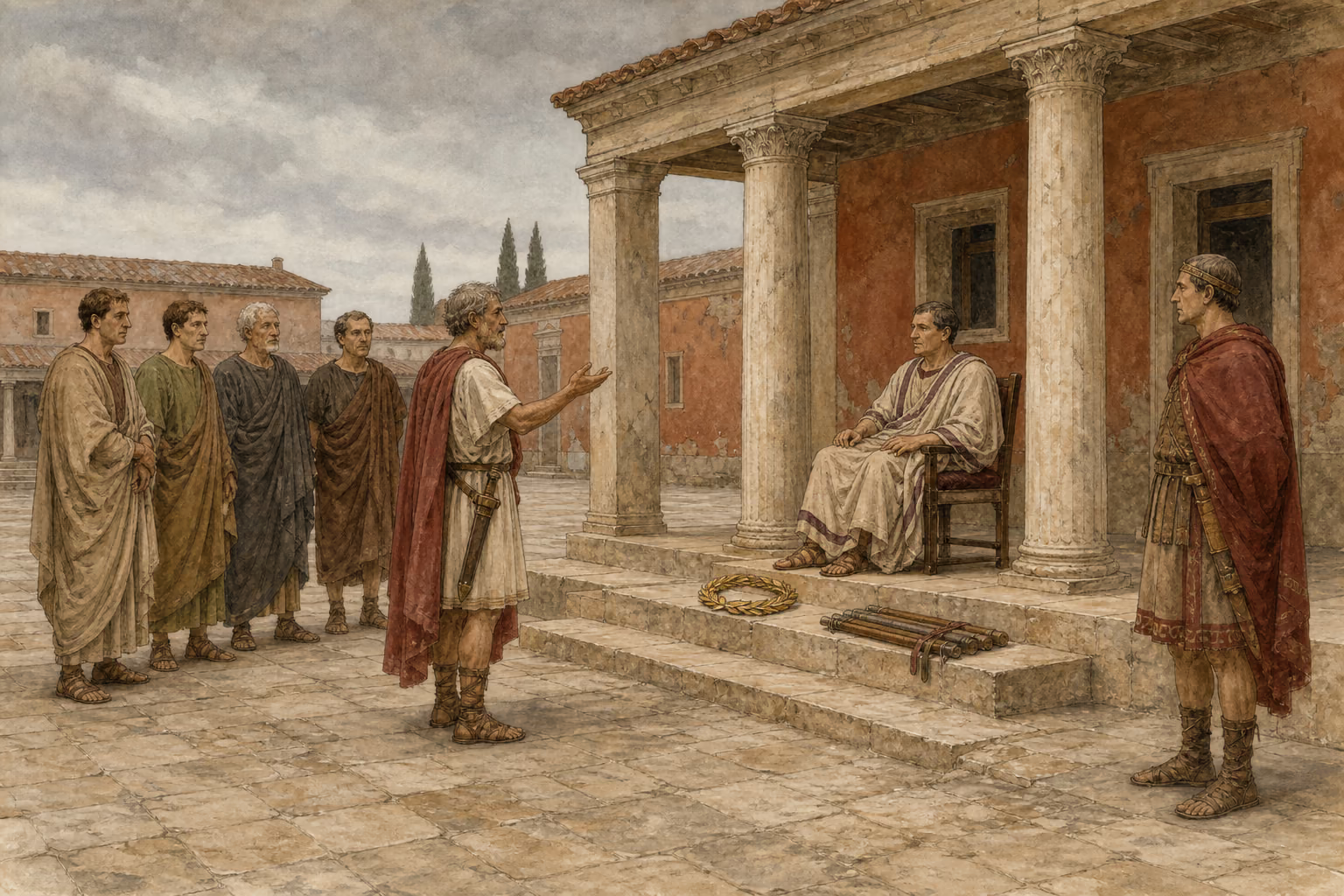
A minute enquiry by whom the greatest valour has ever been exhibited, would lead to an endless discussion, more especially if all the fables of the poets are to be taken for granted. Q. Ennius admired T. Cæcilius Denter and his brother to such a degree, that on their account he added a sixteenth book to his Annals. L. Siccius Dentatus, who was tribune of the people in the consulship of Spurius Tarpeius and A. Aterius, not long after the expulsion of the kings, has also very numerous testimonies in his favour. This hero fought one hundred and twenty battles, was eight times victorious in single combat, and was graced with forty-five wounds in the front of the body, without one on the back. The same man also carried off thirty-four spoils, was eighteen times presented with the victor’s spear, and received twenty-five pendants, eighty-three torcs, one hundred and sixty bracelets, twenty-six crowns, (of which fourteen were civic, eight golden, three mural, and one obsidional), a fisc of money, ten prisoners, and twenty oxen altogether. He followed in the triumphal processions of nine generals, who mainly owed their victories to his exertions; besides all which, a thing that I look upon as the most important of all his services, he denounced to the people T. Romilius, one of the generals of the army, at the end of his consulship, and had him convicted of having made an improper use of his authority.
The military honours of Manlius Capitolinus would have been no less splendid than his, if they had not been all effaced at the close of his life. Before his seventeenth year, he had gained two spoils, and was the first of equestrian rank who received a mural crown; he also gained six civic crowns, thirty-seven donations, and had twenty-three scars on the fore-part of his body. He saved the life of P. Servilius, the master of the horse, receiving wounds on the same occasion in the shoulders and the thigh. Besides all this, unaided, he saved the Capitol, when it was attacked by the Gauls, and through that, the state itself; a thing that would have been the most glorious act of all, if he had not so saved it, in order that he might, as its king, become its master. But in all matters of this nature, although valour may effect much, fortune does still more.
No person living, in my opinion at least, ever excelled M. Sergius, although his great-grandson, Catiline, tarnished the honours of his name. In his second campaign he lost his right hand; and in two campaigns he was wounded three and twenty times; so much so, that he could scarcely use either his hands or his feet; still, attended by a single slave, he afterwards served in many campaigns, though but an invalided soldier. He was twice taken prisoner by Hannibal, (for it was with no ordinary enemy that he would engage,) and twice did he escape from his captivity, after having been kept, without a single day’s intermission, in chains and fetters for twenty months. On four occasions he fought with his left hand alone, two horses being slain under him. He had a right hand made of iron, and attached to the stump, after which he fought a battle, and raised the siege of Cremona, defended Placentia, and took twelve of the enemy’s camps in Gaul. All this we learn from an oration of his, which he delivered when, in his prætorship, his colleagues attempted to exclude him from the sacred rites, on the ground of his infirmities. What heaps upon heaps of crowns would he have piled up, if he had only had other enemies! For, in matters of this nature, it is of the first importance to consider upon what times in especial the valour of each man has fallen. What civic crowns did Trebia, what did the Ticinus, what did Lake Thrasymenus afford? What crown was there to be gained at Cannæ, where it was deemed the greatest effort of valour to have escaped from the enemy? Other persons have been conquerors of men, no doubt, but Sergius conquered even Fortune herself.