LIBER VII · CAPUT 43
REMARKABLE EXAMPLES OF HONOURS
Latine · Mayhoff 1906
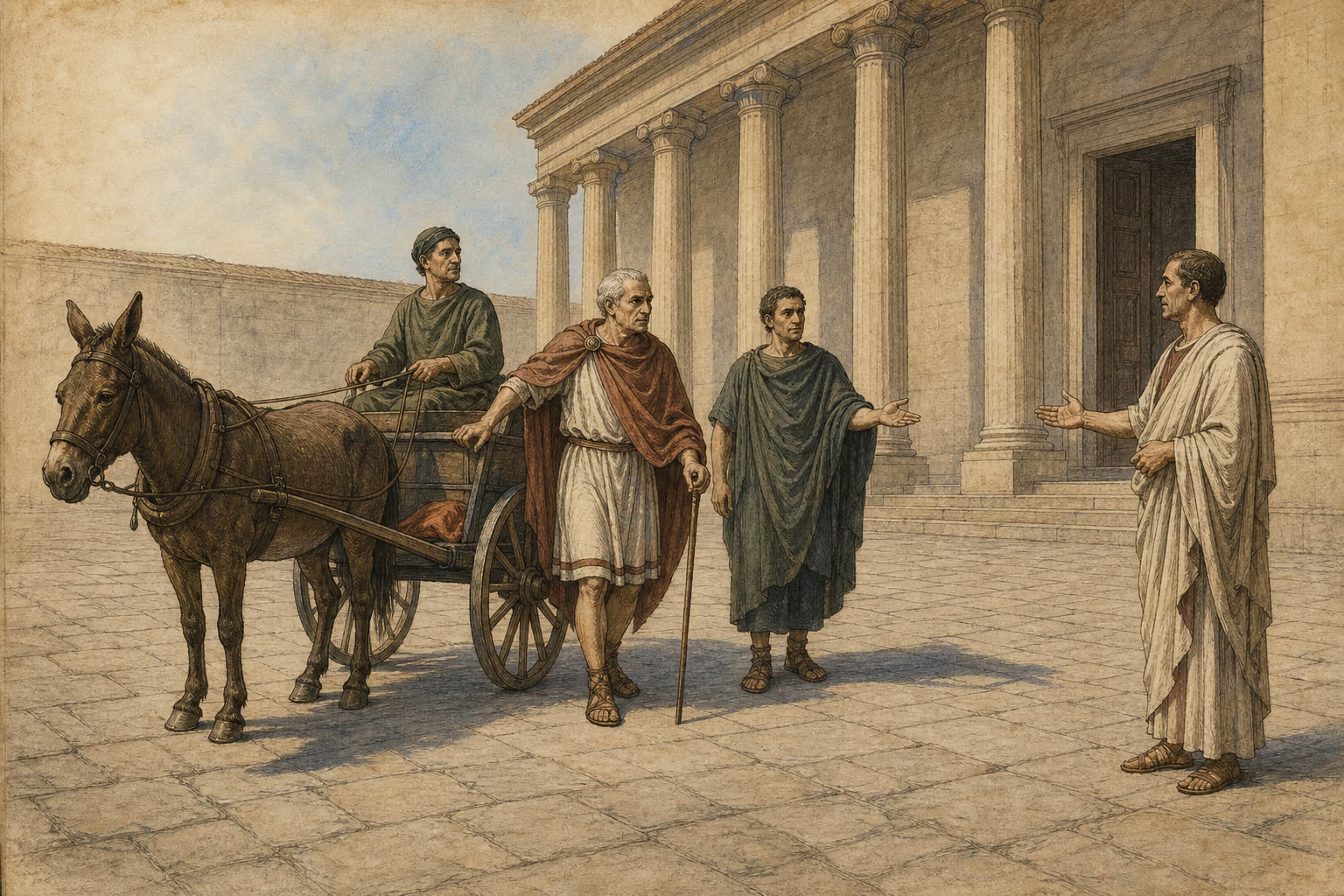
servavit proscriptum a Sulla M. Fidustium senatorem annis XXXVI, sed iterum proscriptura. superstes Sullae vixit, sed usque ad Antonium, constatque nulla alia de causa ab eo proscriptu m quam quia proscriptus fuisset. triumphare P. Ventidium de Parthis voluit quidem solum, sed eundem in triumpho Asculano Cn. Pompei duxit puerum, quamquam Masurius auctor est bis in triumpho ductum, Cicero mulionem castrensis furnariae fuisse, plurimi iuventam inopem in caliga militari tolerasse. fuit et Balbus Cornelius maior consul, sed accusatus atque de iure virgarum in eum iudice in consilium misso, primus externorum atque etiam in oceano genitorum usus illo honore, quem maiores Latio quoque negaverint. est et L. Fulvius inter insignia exempla, Tusculanorum rebellantium consul, eodemque honore, cum transisset, exornatus confestim a populo Romano, qui solus eodem anno, quo fuerat hostis, Romae triumphavit ex iis quorum consul fuerat. unus hominum ad hoc aevi Felicis sibi cognomen adseruit L. Sulla, civili nempe sanguine ac patriae oppugnatione adoptatus. et quibus felicitatis inductus argumentis? quod proscribere tot milia civium ac trucidare potuisset? o prava interpretatio et futuro tempore infelix! non melioris sortis tunc fuere pereuntes, quorum miseremur hodie, cum Sullam nemo non oderit? age, non exitus vitae eius omnium proscriptorum ab illo calamitate crudelior fuit erodente se ipso corpore et supplicia sibi gignente? quod ut dissimulaverit et supremo somnio eius, cui inmortuus quodammodo est, credamus ab uno illo invidiam gloria victam, hoc tamen nempe felicitati suae defuisse confessus est quod Capitolium non dedicavisset.
Q. Metellus in ea oratione, quam habuit supremis laudibus patris sui L. Metelli pontificis, bis consulis, dictatoris, magistri equitum, XVviri agris dandis, qui plurimos elephantos ex primo Punico bello duxit in triumpho, scriptum reliquit decem maximas res optimasque, in quibus quaerendis sapientes aetatem exigerent, consummasse eum: voluisse enim primarium bellatorem esse, optimum oratorem, fortissimum imperatorem, auspicio suo maximas res geri, maximo honore uti, summa sapientia esse, summum senatorem haberi, pecuniam magnam bono modo invenire, multos liberos relinquere et clarissimum in civitate esse; haec contigisse ei nec ulli alii post Romam conditam. longum est refellere et supervacuum abunde uno casu refutante, siquidem is Metellus orbam luminibus exegit senectam, amissis incendio, cum Palladium raperet ex aede Vestae, memorabili causa, sed eventu misero. quo fit ut infelix quidem dici non debeat, felix tamen non possit. tribuit ei populus Romanus quod nulli alii ab condito aevo, ut, quotiens in senatum iret, curru veheretur ad curiam: magnum ei et sublime, sed pro oculis datum.
English · Bostock & Riley 1855–57
It was fortune that preserved the Senator, M. Fidustius, who had been proscribed by Sylla, for a period of thirty-six years. And yet he was proscribed a second time; for he survived Sylla, even to the days of Antony, and, as it appears, was proscribed by him, for no other reason but because he had been proscribed before.
Fortune has determined that P. Ventidius alone should enjoy the honour of a triumph over the Parthians, and yet the same individual, when he was a child, she led in the triumphal procession of Cneius Pompeius, the conqueror of Asculum. Indeed, Masurius says, that he had been twice led in triumph; and according to Cicero, he used to let out mules for the bakers of the camp. Most writers, indeed, admit that his younger days were passed in the greatest poverty, and that he wore the hob-nailed shoes of the common soldier. Balbus Cornelius, also, the elder, was elected to the consulate; but he had previously been accused, and the judges had been charged to discuss the point whether he could or not lawfully be scourged with rods; he being the first foreigner, —born even on the very shores of the ocean,—who obtained that honour, which our ancestors denied even to the people of Latium. Among other remarkable instances, also, we have that of L. Fulvius, the consul of the rebellious Tusculani, who, immediately upon his coming over to the Romans, obtained from them the same honour. He is the only individual who, in the same year in which he had been its enemy, enjoyed the honour of a triumph in Rome, and that too, over the people whose consul he had previously been.
Down to the present time, L. Sylla is the only man who has claimed to himself the surname of “Happy;” a name which he derived, forsooth, from the bloodshed of the citizens and the oppression of his country! But what claim had he on which to found his title to this happiness? Was it the power which he had of proscribing and massacreing so many thousands of his fellow-citizens? Oh interpretation most disgraceful, and which must stamp him as “Unhappy” to all future time! Were not the men who perished in those times, of the two, to be looked upon as the more fortunate—seeing that with them we sympathize, while there is no one who does not detest Sylla? And then, besides, was not the close of his life more horrible than the sufferings which had been experienced by any of those who had been proscribed by him? his very flesh eating into itself, and so engendering his own punishment. And this, although he may have thought proper to gloss it over by that last dream of his, in the very midst of which he may be said, in some measure, to have died; and in which, as he pretended, he was told that his glory alone had risen superior to all envy; though at the same time, he confessed that it was still wanting to his supreme happiness, that he had not dedicated the Capitol.
Q. Metellus, in the funeral oration which he made in praise of his father, L. Metellus, who had been pontiff, twice consul, dictator, master of the horse, one of the quindecemvirs for dividing the lands, and the first who had elephants in his triumphal procession, the same having been taken in the first Punic war, has left it written to the effect that his father had attained the ten greatest and best things, in the search after which wise men have spent all their lives. For, as he states, he was anxious to become the first warrior, the best orator, the bravest general, that the most important of all business should be entrusted to his charge, that he should enjoy the very highest honours, that he should possess consummate wisdom, that he should be regarded as the most distinguished senator, that he should by honourable means acquire a large fortune, that he should leave behind him many children, and that he should be the most illustrious person in the state. To refute this assertion, would be tedious and indeed unnecessary, seeing that it is contradicted more than sufficiently by the single fact, that Metellus passed his old age, deprived of his sight, which he had lost in a fire, while rescuing the Palladium from the temple of Vesta; a glorious action, no doubt, although the result was unhappy: on which account it is, that although he ought not to be called unfortunate, still he cannot be called fortunate. The Roman people, however, granted him a privilege which no one else had ever obtained since the foundation of the city, that of being conveyed to the senate-house in a chariot whenever he went to the senate: a great distinction, no doubt, but bought at the price of his sight.