LIBER VII · CAPUT 44
TEN VERY FORTUNATE CIRCUMSTANCES WHICH HAVE HAPPENED TO THE SAME PERSON
Latine · Mayhoff 1906
Huius quoque Q. Metelli, qui illa de patre dixit, filius inter rara felicitatis humanae exempla numeratur: nam praeter honores amplissimos cognomenque Macedonici a quattuor filiis inlatus rogo, uno praetorio, tribus consularibus, duobus triumphalibus, uno censorio, quae singula quoque paucis contigere. in ipso tamen flore dignationis suae ab C. Atinio Labeone, cui cognomen fuit Macerioni, tribuno plebis, quem e senatu censor eiecerat, revertens e campo meridiano tempore vacuo foro et Capitolio ad Tarpeium raptus, ut praecipitaretur, convolante quidem tam numerosa illa cohorte, quae patrem eum appellabat, sed, ut necesse erat in subito, tarde et tamquam in exequias, cum resistendi sacroque sanctum repellendi ius non esset, virtutis suae opera et censurae periturus, aegre tribuno, qui intercederet, reperto a limine ipso mortis revocatus alieno beneficio postea vixit, bonis inde etiam consecratis a damnato suo, tamquam parum esset faucium reste intortarum, expressi per aures sanguinis poenam exacta m esse. equidem et Africani sequentis inimicum fuisse inter calamitates duxerim, ipso teste Macedonico, siquidem dixit: ite filii, celebrate exequias, numquam civis maioris funus videbitis. et hoc dicebat iam Baliaricis, Diadematis, iam Macedonicus ipse. verum ut illa sola iniuria aestimetur, quis hunc iure felicem dixerit, periclitatum ad libidinem inimici, nec Africani saltem, perire? quos hostes vicisse tanti fuit? aut quos non honores currusque illa sua violentia fortuna retroegit, per mediam urbem censore tracto — etenim sola haec morandi ratio fuerat —, tracto in Capitolium idem, in quod triumphans ipse deorum exuviis ne captivos quidem sic traxerat? maius hoc scelus felicitate consecuta factum est, periclitato Macedonico vel funus tantum [tale] perdere, in quo a triumphalibus liberis portaretur in rogum velut exequiis quoque triumphans. nulla est profecto solida felicitas, quam contumelia ulla vitae rupit, nedum tanta. quod superest, nescio morum gloriae an indignationis dolori accedat, inter tot Metellos tam sceleratam C. Atini audaciam semper fuisse inultam.
English · Bostock & Riley 1855–57
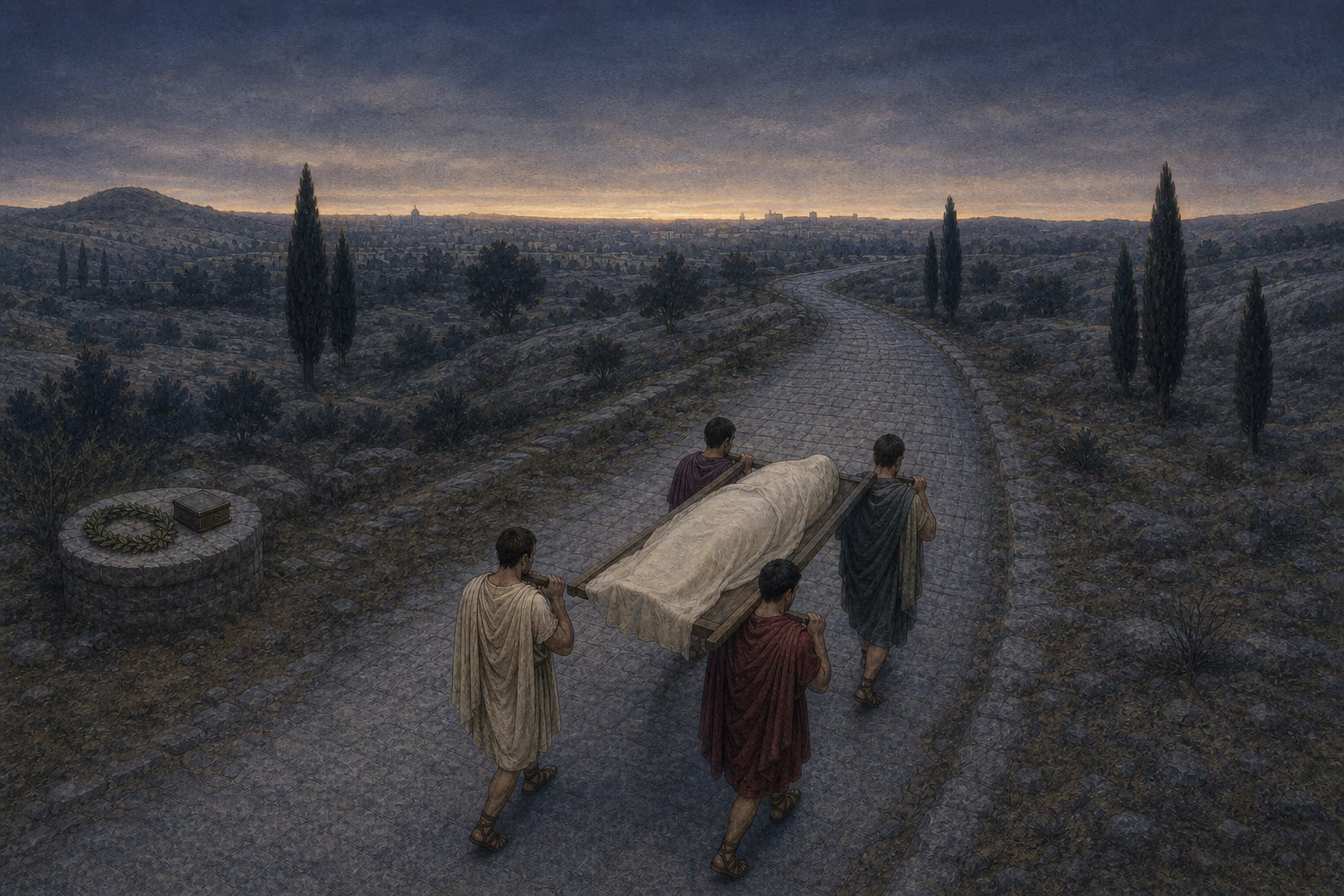
The son also, of the same Q. Metellus, who has given the above account of his father, is considered himself to have been one of the rarest instances of human felicity. For, in addition to the very considerable honours which he obtained, and the surname which he acquired from the conquest of Macedonia, he was carried to the funeral pile by his four sons, one of whom had been prætor, three of them consuls, two had obtained triumphs, and one had been censor; each of which honours falls to the lot of a very few only. And yet, in the very full-blown pride of his dignity, as he was returning from the Campus Martius at mid-day, when the Forum and the Capitol are deserted, he was seized by the tribune, Caius Atinius Labeo, surnamed Macerion, whom, during his censorship, he had ejected from the senate, and was dragged by him to the Tarpeian rock, for the purpose of being precipitated therefrom. The numerous band, however, who called him by the name of father, flew to his assistance, though tardily, and only just, as it were, at the very last moment, to attend his funeral obsequies, seeing that he could not lawfully offer resistance, or repel force by force in the sacred case of a tribune; and he was just on the very point of perishing, the victim of his virtues and the strictness of his censorship, when he was saved by the intervention of another tribune,—only obtained with the greatest difficulty,—and so rescued from the very jaws of death. He afterwards had to subsist on the bounty of others, his property having been consecrated by the very man whom he had degraded; and who, as if that had not satiated his vengeance, still farther wreaked his malice upon him, by throwing a rope around his neck, and twisting it with such extreme violence that the blood flowed from out of his ears. And for my part, too, I should look upon it as in the number of his misfortunes, to have been the enemy of the second Africanus; indeed, Macedonicus, in this instance, bears testimony against himself; for he said to his sons, “Go, my children, render the last duties to Scipio; you will never witness the funeral of a greater citizen than him;” and this speech he made to his sons, one of whom had already acquired the surname of Balearicus, and another of Diadematus, he himself at the time bearing that of Macedonicus.
Now, if we take into account the above injury alone, can any one justly pronounce that man happy, whose life was thus endangered by the caprice of an enemy, and that enemy, besides, not an Africanus? What victories over enemies could possibly be counterbalanced by such a price as this? What honours, what triumphs, did not Fortune cancel, in suffering a censor to be dragged through the middle of the city—indeed, that was his only resource for gaining time —dragged to that Capitol, whither he himself, in his triumph, had forborne to drag in a similar manner even the very captives whom he had taken in his conquests? This crime, too, must be looked upon as all the greater, from its having so nearly deprived Macedonicus of the honours of his funeral, so great and so glorious, in which he was borne to the pile by his triumphant children, he himself thus triumphing, as it were, in his very obsequies. Most assuredly, there is no happiness that can be called unalloyed, when the terror of our life has been interrupted by any outrage, and much more by such an outrage as this. As for the rest, I really am at a loss whether we ought most to commend the manners of the age, or to feel an increased degree of indignation, that, among so many members of the family of the Metelli, such wicked audacity as that of C. Atinius remained unpunished.