LIBER VII · CAPUT 60
WHEN THE FIRST TIME-PIECES WERE MADE
Latine · Mayhoff 1906
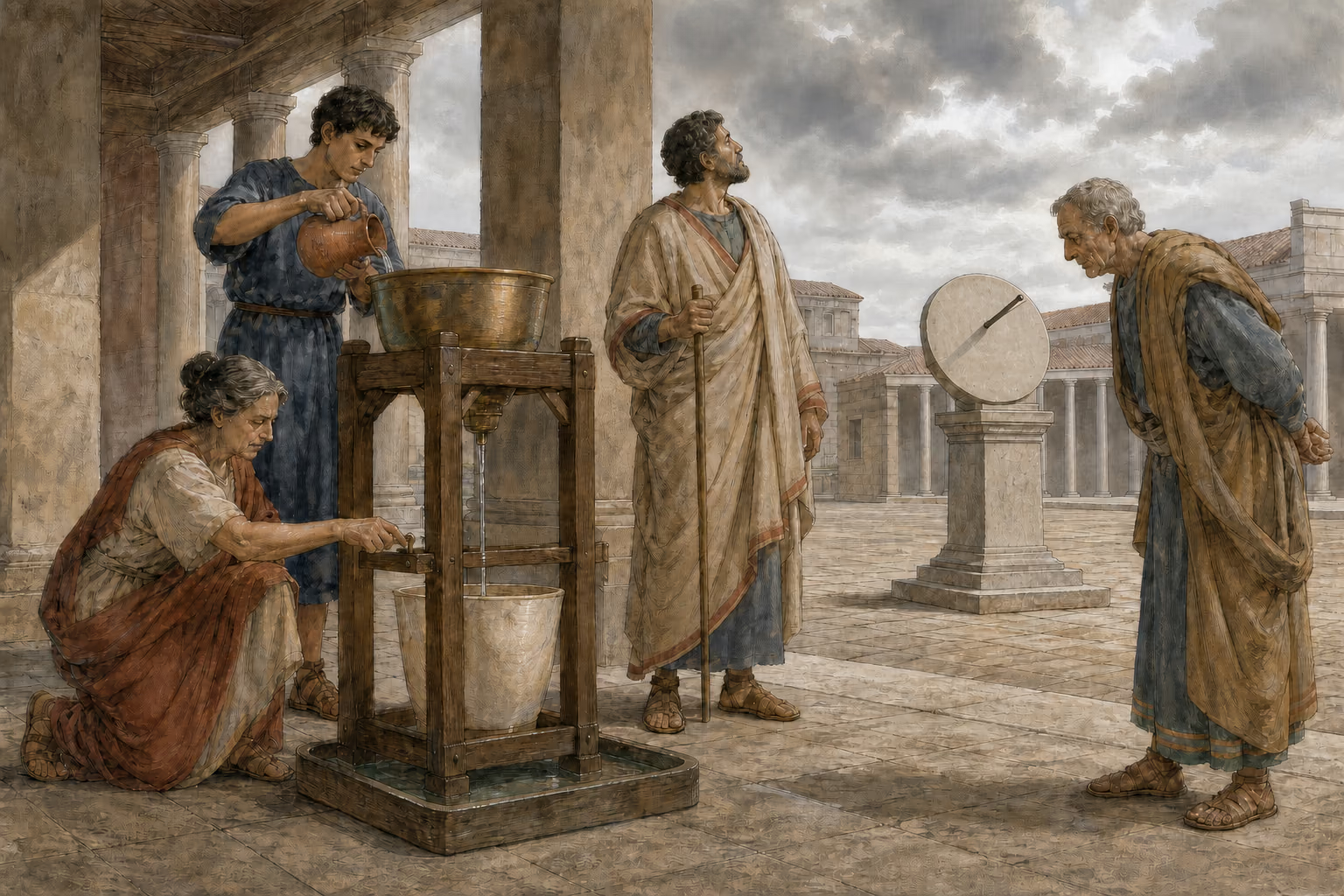
Tertius consensus fuit in horarum observatione, iam hic ratione accedens, quando et a quo in Graecia reperta, diximus secundo volumine. serius etiam hic Romae contigit. XII tabulis ortus tantum et occasus nominantur, post aliquot annos adiectus est et meridies, accenso consulum id pronuntiante, cum a curia inter Rostra et Graecostasin prospexisset solem; a columna Maenia ad carcerem inclinato sidere supremam pronuntiavit, sed hoc serenis tantum diebus, usque ad primum Punicum bellum. princeps solarium horologium statuisse ante XII annos quam cum Pyrro bellatum est ad aedem Quirini L. Papirius Cursor, cum eam dedicaret a patre suo votam, a Fabio Vestale proditur. sed neque facti horologii rationem vel artificem significat nec uude translatum sit aut apud quem scriptum id invenerit. M. Varro primum statutum in publico secundum Rostra in columna tradit bello Punico primo a M. Valerio Messala cos. Catina capta in Sicilia, deportatum inde post XXX annos quam de Papiriano horologio traditur, anno urbis CCCCLXXXX. nec congruebant ad horas eius lineae, paruerunt tamen ei annis undecentum, done Q. Marcius Philippus, qui cum L. Paulo fuit censor, diligentius ordinatum iuxta posuit, idque munus inter censoria opera gratissima acceptum est. etiamtum tamen nubilo incertae fuere horae usque ad proximum lustrum. tune Scipio Nasica collega Laenati primus aqua divisit horas aeque noctium ac dierum idque horologiumsub tecto dicavit anno urbis DXCV. tam diu populo Romano indiscreta lux fuit.
Nunc praevertemur ad reliqua animalia primumque terrestria.
English · Bostock & Riley 1855–57
The third point of universal agreement was the division of time, a subject which afterwards appealed to the reasoning faculties. We have already stated, in the Second Book, when and by whom this art was first invented in Greece; the same was also introduced at Rome, but at a later period. In the Twelve Tables, the rising and setting of the sun are the only things that are mentioned relative to time. Some years afterwards, the hour of midday was added, the summoner of the consuls proclaiming it aloud, as soon as, from the senate-house, he caught sight of the sun between the Rostra and the Græcostasis; he also proclaimed the last hour, when the sun had gone down from the Mænian column to the prison. This, however, could only be done in clear weather, but it was continued until the first Punic war. The first sun-dial is said to have been erected among the Romans twelve years before the war with Pyrrhus, by L. Papirius Cursor, at the temple of Quirinus, on which occasion he dedicated it in pursuance of a vow which had been made by his father. This is the account given by Fabius Vestalis; but he makes no mention of either the construction of the dial or the artist, nor does he inform us from what place it was brought, or in whose works he found this statement made.
M. Varro says that the first sun-dial, erected for the use of the public, was fixed upon a column near the Rostra, in the time of the first Punic war, by the consul M. Valerius Messala, and that it was brought from the capture of Catina, in Sicily: this being thirty years after the date assigned to the dial of Papirius, and the year of Rome 491. The lines in this dial did not exactly agree with the hours; it served, however, as the regulator of the Roman time ninety-nine years, until Q. Marcius Philippus, who was censor with L. Paulus, placed one near it, which was more carefully arranged: an act which was most gratefully acknowledged, as one of the very best of his censorship. The hours, however, still remained a matter of uncertainty, whenever the weather happened to be cloudy, until the ensuing lustrum; at which time Scipio Nasica, the colleague of Lænas, by means of a clepsydra, was the first to divide the hours of the day and the night into equal parts: and this time-piece he placed under cover and dedicated, in the year of Rome 595; for so long a period had the Romans remained without any exact division of the day. We will now return to the history of the other animals, and first to that of the terrestrial.