LIBER VIII · CAPUT 15
THE ANIMALS OF SCYTHIA; THE BISON
Latine · Mayhoff 1906
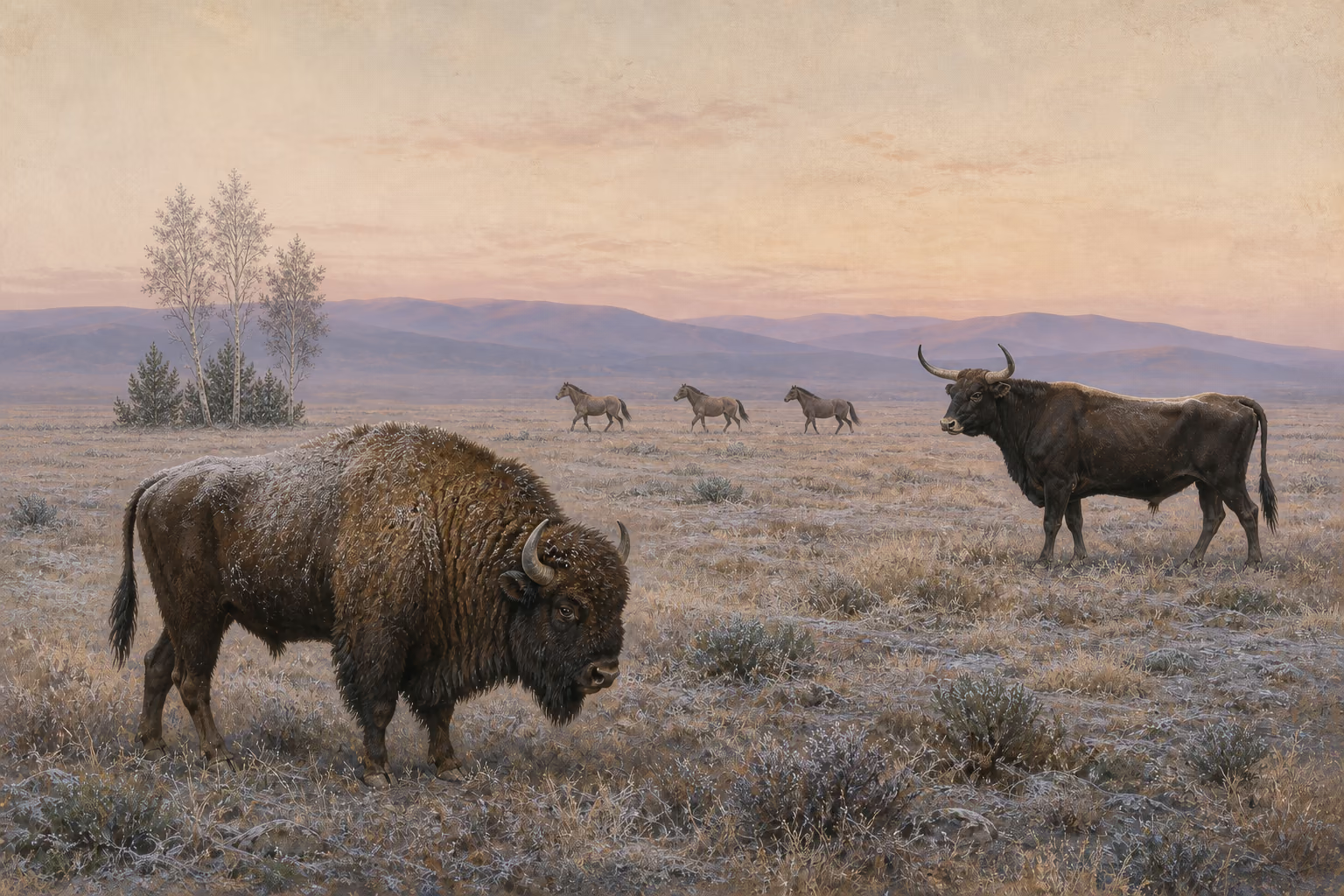
Ceterorum animalium, quae modo convecta undique Italiae contigere saepius, formas nihil attinet scrupulose referre. paucissima Scythia gignit inopia fruticum, pauca contermina illi Germania, insignia tamen boum ferorum genera, iubatos bisontes excellentique et vi et velocitate uros, quibus inperitum volgus bubalorum nomen inponit, cum id gignat Africa vituli potius cervique quadam similitudine. septentrio fert et equorum greges ferorum, sicut asinorum Asia et Africa, praeterea alcen iumento similem, ni proceritas aurium et cervicis distinguat; item natam in Scadinavia insula nec umquam visam in hoc orbe,multis tamen narratam achlin haud dissimilem illi, set nullo suffraginum flexu, ideoque non cubantem et adclinem arbori in somno eaque incisa ad insidias capi, alias velocitatis memoratae. labrum ei superius praegrande; ob id retrograditur in pascendo, ne in priora tendens involvatur. tradunt in Paeonia feram quae bonasus vocetur, equina iuba, cetera tauro similem, cornibus ita in se flexis, ut non sint utilia pugnae. quapropter fuga sibi auxiliari reddentem in ea fimum, interdum et trium iugerum longitudine, cuius contactus sequentes ut ignis aliquis amburat.
Mirum pardos, pantheras, leones et similia condito in corporis vaginas unguium mucrone, ne refringantur hebetenturve, ingredi aversisque falculis currere nec nisi in adpetendo plotendere.
English · Bostock & Riley 1855–57
Scythia produces but very few animals, in consequence of the scarcity of shrubs. Germany, which lies close adjoining it, has not many animals, though it has some very fine kinds of wild oxen: the bison, which has a mane, and the urus, possessed of remarkable strength and swiftness. To these, the vulgar, in their ignorance, have given the name of bubalus: whereas, that animal is really produced in Africa, and rather bears a resemblance to the calf and the stag.
The North, too, produces herds of wild horses, as Africa and Asia do of wild asses; there is, also, the elk, which strongly resembles our steers, except that it is distinguished by the length of the ears and of the neck. There is also the achlis, which is produced in the island of Scandinavia; it has never been seen in this city, although we have had descriptions of it from many persons; it is not unlike the elk, but has no joints in the hind leg. Hence, it never lies down, but reclines against a tree while it sleeps; it can only be taken by previously cutting into the tree, and thus laying a trap for it, as otherwise, it would escape through its swiftness. Its upper lip is so extremely large, for which reason it is obliged to go backwards when grazing; otherwise, by moving onwards, the lip would get doubled up. In Pæonia, it is said, there is a wild animal known as the bonasus; it has the mane of the horse, but is, in other respects, like the bull, with horns, however, so much bent inwards upon each other, as to be of no use for the purposes of combat. It has therefore to depend upon its flight, and, while in the act of flying, it sends forth its excrements, sometimes to a distance of even three jugera; the contact of which burns those who pursue the animal, just like a kind of fire.
It is a remarkable fact, that pards, panthers, lions, and other animals of this kind, walk with the points of their nails concealed in a sheath in the body, lest they should be broken or blunted; and that, when they run, their hooked claws are turned backwards, and are never extended, except in the act of seizing their prey.