LIBER VIII · CAPUT 18
CAMELS: THE DIFFERENT KINDS
Latine · Mayhoff 1906
Tigrim Hyrcani et Indi ferunt, animal velocitatis tremendae et maxime cognitae, dum capitur totus eius fetus, qui semper numerosus est. ab insidiante rapitur equo quam maxime pernici atque in recentes subinde transfertur. at ubi vacuum cubile reperit feta— maribus enim subolis cura non est —, fertur praeceps odore vestigans. raptor adpropinquante fremitu abicit unum ex catulis; tollit illa morsu et pondere etiam ocior acta remeat iterumque consequitur ac subinde, donec in navem regresso inrita feritas saevit in litore.
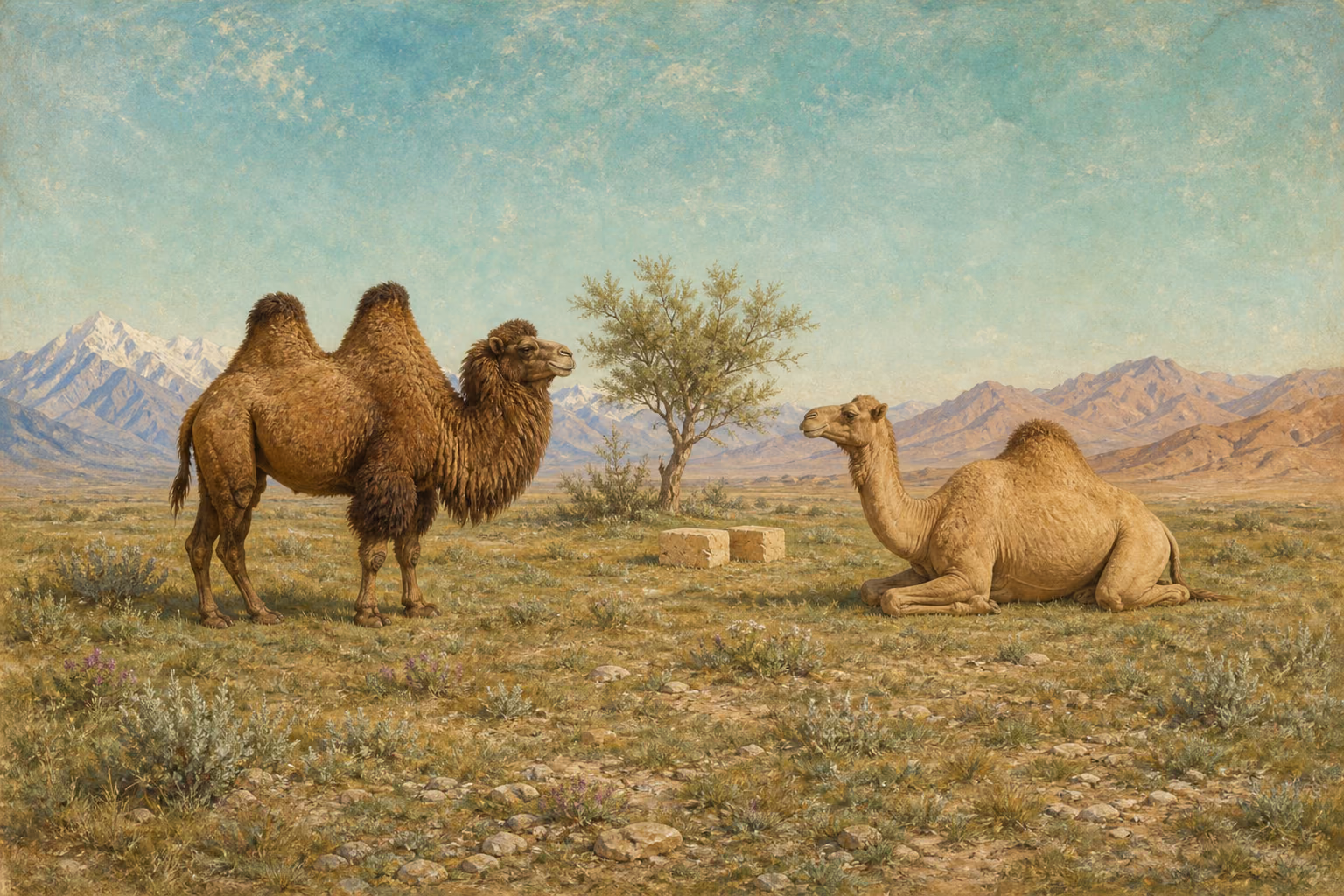
Camelos inter armenta pascit oriens, quarum duo genera, Bactriae et Arabiae; differunt, quod illae bina habent tubera in dorso, hae singula et sub pectore alterum, cui incumbant. dentium superiore ordine, ut boves, carent in utroque genere. omnes autem iumentorum ministeriis dorso funguntur atque etiam equitatus in proeliis. velocitas ut equo, sed sua cuique mensura sicuti vires. nec ultra adsuetum procedit spatium nec plus instituto onere recipit. odium adversus equos gerunt naturale. sitim et quadriduo tolerant inplenturque, cum bibendi occasio est, et in praeteritum et in futurum, obturbata proculcatione prius aqua: aliter potu non gaudent. vivunt quinquagenis annis, quaedam et centenis. utrimque rabiem et ipsae sentiunt. castrandi genus etiam feminas, quae bello praeparentur, inventum est: fortiores ita fiunt coitu negato.
Harum aliqua similitudo in duo transfertur animalia. Nabun Aethiopes vocant collo similem equo, pedibus et cruribus bovi, camelo capite, albis maculis rutilum colorem distinguentibus, unde appellata camelopardalis, dictatoris Caesaris circensibus ludis primum visa Romae. ex eo subinde cernitur, aspectu magis quam feritate conspicua, quare etiam ovis ferae nomen invenit.
English · Bostock & Riley 1855–57
Hyrcania and India produce the tiger, an animal of tremendous swiftness, a quality which is more especially tested when we deprive it of all its whelps, which are always very numerous. They are seized by the hunter, who lies in wait for them, being provided with the fleetest horse he can possibly obtain, and which he frequently changes for a fresh one. As soon as the female finds her lair empty—for the male takes no care whatever of his offspring—headlong she darts forth, and traces them by the smell. Her approach is made known by her cries, upon which the hunter throws down one of the whelps; this she snatches up with her teeth, and more swift, even, under the weight, returns to her lair, and then again sets out in pursuit; and this she continues to do, until the hunter has reached his vessel, while the animal vainly vents her fury upon the shore.
Camels are found feeding in herds in the East. Of these there are two different kinds, those of Bactria and those of Arabia; the former kind having two humps on the back, and the latter only one; they have also another hump under the breast, by means of which they support themselves when reclining. Both of these species, like the ox, have no teeth in the upper jaw. They are all of them employed as beasts of burthen, in carrying loads on the back, and they answer the purpose of cavalry in battle. Their speed is the same with that of the horse, but their power of holding out in this respect is proportioned in each to its natural strength: it will never go beyond its accustomed distance, nor will it receive more than its usual load. The camel has a natural antipathy to the horse. It can endure thirst for four days even, and when it has the opportunity of obtaining water, it drinks, as it were, both for past and future thirst, having first taken care to trouble the water by trampling in it; without doing which, it would find no pleasure in drinking. They live fifty years, some indeed as much as one hundred. These animals, too, are liable to fits of frenzy. A peculiar mode of castrating them, and the females, even, when required for the purposes of war, has been discovered; it renders them more courageous, by the destruction of all sexual feelings.
There are two other animals, which have some resemblance to the camel. One of these is called, by the Æthiopians, the nabun. It has a neck like that of the horse, feet and legs like those of the ox, a head like that of the camel, and is covered with white spots upon a red ground; from which peculiarities it has been called the cameleopard. It was first seen at Rome in the Circensian games held by Cæsar, the Dictator. Since that time too, it has been occasionally seen. It is more remarkable for the singularity of its appearance than for its fierceness; for which reason it has obtained the name of the wild sheep.