LIBER VIII · CAPUT 21
THE LYNX, THE SPHINX, THE CROCOTTA, AND THE MONKEY
Latine · Mayhoff 1906
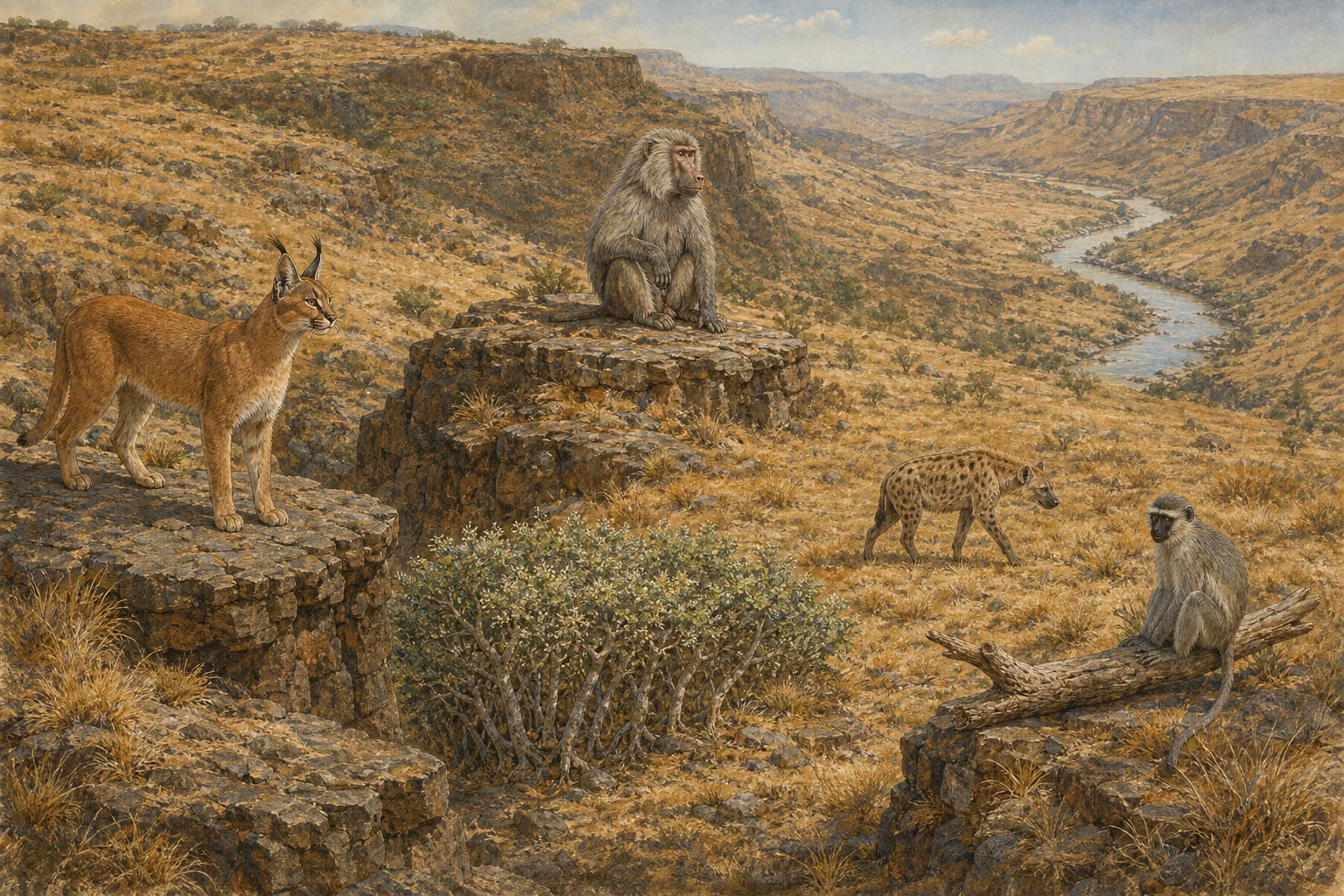
21. LyncasLyncas vulgo frequentes et sphingas, fusco pilo, mammis in pectore geminis, Aethiopia generat multaque alia monstris similia, pinnatos equos et cornibus armatos, quos pegasos vocant, crocotas velut ex cane lupoque conceptos, omnia dentibus frangentes protinusque devorata conficientes ventre, cercopithecos nigris capitibus, pilo asini et dissimiles ceteris voce, Indicos boves unicornes tricornesque, leucrocotam, pernicissimam feram asini feri magnitudine, clunibus cervinis, collo, cauda, pectore leonis, capite melium, bisulca ungula, ore ad aures usque rescisso, dentium locis osse perpetuo —(hanc feram humanas voces tradunt imitari. apud eosdem et quae vocatur eale, magnitudine equi fluviatilis, cauda elephanti, colore nigra vel fulva, maxillis apri, maiora cubitalibus cornua habens mobilia, quae alterna in pugna sistit variatque infesta aut obliqua, utcumque ratio monstravit) —, sed atrocissimos tauros silvestres, maiores agrestibus, velocitate ante omnes, colore fulvos, oculis caeruleis, pilo in contrarium verso, rictu ad aures dehiscente iuxta cornua mobilia. tergori duritia silicis, omne respuens vulnus. feras omnes venantur, ipsi non aliter quam foveis capti feritate semper intereunt. apud eosdem nasci Ctesias scribit quam mantichoran appellat, triplici dentium ordine pectinatim coeuntium, facie et auriculis hominis, oculis glaucis, colore sanguineo, corpore leonis, cauda scorpionis modo spicula infigentem, vocis ut si misceatur fistulae et tubae concentus, velocitatis magnae, humani corporis vel praecipue adpetentem. in India et boves solidis ungulis, unicornes, et feram nomine axin hinnulei pelle pluribus candidioribusque maculis, sacrorum Liberi patris — (Orsaei Indi simias candentes toto corpore venantur ) —, asperrimam autem feram monocerotem, reliquo corpore equo similem, capite cervo, pedibus elephanto, cauda apro, mugitu gravi, uno cornu nigro media fronte cubitorum duum eminente. hanc feram vivam negant capi.
Apud Hesperios Aethiopas fons est Nigris, ut plerique existimavere, Nili caput, ut argumenta quae diximus persuadent. iuxta hunc fera appellatur catoblepas, modica alioqui ceterisque membris iners, caput tantum praegrave aegre ferens — id deiectum semper in terram —, alias internicio humani generis, omnibus, qui oculos eius videre, confestim expirantibus.
Eadem et basilisci serpentis est vis. Cyrenaica hunc generat provincia, duodecim non amplius digitorum magnitudine, candida in capite macula ut quodam diademate insignem. sibilo omnes fugat serpentes nec flexu multiplici, ut reliquae, corpus inpellit, sed celsus et erectus in medio incedens, necat frutices, non contactos modo, verum et adflatos, exurit herbas, rumpit saxa: talis vis malo est. creditum quondam ex equo occisum hasta et per eam subeunte vi non equitem modo, sed equum quoque absumptum. atque huic tali monstro — saepe enim enectum concupivere reges videre — mustellarum virus exitio est: adeo naturae nihil placuit esse sine pare. inferciunt has cavernis facile cognitis soli tabe. necant illae simul odore moriunturque, et naturae pugna conficitur.
English · Bostock & Riley 1855–57
Æthiopia produces the lynx in abundance, and the sphinx, which has brown hair and two mammæ on the breast, as well as many monstrous kinds of a similar nature; horses with wings, and armed with horns, which are called pegasi; the crocotta, an animal which looks as though it had been produced by the union of the wolf and the dog, for it can break any thing with its teeth, and instantly on swallowing it digest it with the stomach; monkeys, too, with black heads, the hair of the ass, and a voice quite unlike that of any other animal. There are oxen, too, like those of India, some with one horn, and others with three; the leucrocotta, a wild beast of extraordinary swiftness, the size of the wild ass, with the legs of a stag, the neck, tail, and breast of a lion, the head of a badger, a cloven hoof, the mouth slit up as far as the ears, and one continuous bone instead of teeth; it is said, too, that this animal can imitate the human voice. Among the same people, there is also found an animal called eale; it is the size of the river-horse, has the tail of the elephant, and is of a black or tawny colour. It has also the jaws of the wild boar, and horns that are moveable, and more than a cubit in length, so that, in fighting, it can employ them alternately, and vary their position by presenting them directly or obliquely, according as necessity may dictate. But the wild bulls which this country produces are the fiercest of all; they are larger than our domestic bull, and exceed all the others in swiftness; are of a tawny colour, with azure eyes, and the hair turned the contrary way; while the jaws open as far as the ears, and the horns are as moveable as those of the eale. The hide of this animal is as hard as flint, and effectually resists all wounds. These creatures pursue all the other wild beasts, while they themselves can only be taken in pitfalls, where they always perish from excess of rage. Ctesias informs us, that among these same Æthiopians, there is an animal found, which he calls the mantichora; it has a triple row of teeth, which fit into each other like those of a comb, the face and ears of a man, and azure eyes, is of the colour of blood, has the body of the lion, and a tail ending in a sting, like that of the scorpion. Its voice resembles the union of the sound of the flute and the trumpet; it is of excessive swiftness, and is particularly fond of human flesh.
There are in India oxen also with solid hoofs and a single horn; and a wild beast called the axis, which has a skin like that of a fawn, but with numerous spots on it, and whiter; this animal is looked upon as sacred to Bacchus. The Orsæan Indians hunt down a kind of ape, which has the body white all over; as well as a very fierce animal called the monoceros, which has the head of the stag, the feet of the elephant, and the tail of the boar, while the rest of the body is like that of the horse; it makes a deep lowing noise, and has a single black horn, which projects from the middle of its forehead, two cubits in length. This animal, it is said, cannot be taken alive.
Among the Hesperian Æthiopians is the fountain of Nigris, by many, supposed to be the head of the Nile. I have already mentioned the arguments by which this opinion is supported. Near this fountain, there is found a wild beast, which is called the catoblepas; an animal of moderate size, and in other respects sluggish in the movement of the rest of its limbs; its head is remarkably heavy, and it only carries it with the greatest difficulty, being always bent down towards the earth. Were it not for this circumstance, it would prove the destruction of the human race; for all who behold its eyes, fall dead upon the spot.
There is the same power also in the serpent called the basilisk. It is produced in the province of Cyrene, being not more than twelve fingers in length. It has a white spot on the head, strongly resembling a sort of a diadem. When it hisses, all the other serpents fly from it: and it does not advance its body, like the others, by a succession of folds, but moves along upright and erect upon the middle. It destroys all shrubs, not only by its contact, but those even that it has breathed upon; it burns up all the grass too, and breaks the stones, so tremendous is its noxious influence. It was formerly a general belief that if a man on horseback killed one of these animals with a spear, the poison would run up the weapon and kill, not only the rider, but the horse as well. To this dreadful monster the effluvium of the weasel is fatal, a thing that has been tried with success, for kings have often desired to see its body when killed; so true is it that it has pleased Nature that there should be nothing without its antidote. The animal is thrown into the hole of the basilisk, which is easily known from the soil around it being infected. The weasel destroys the basilisk by its odour, but dies itself in this struggle of nature against its own self.