LIBER VIII · CAPUT 22
WOLVES; THE ORIGIN OF THE STORY OF VERSIPELLIS
Latine · Mayhoff 1906
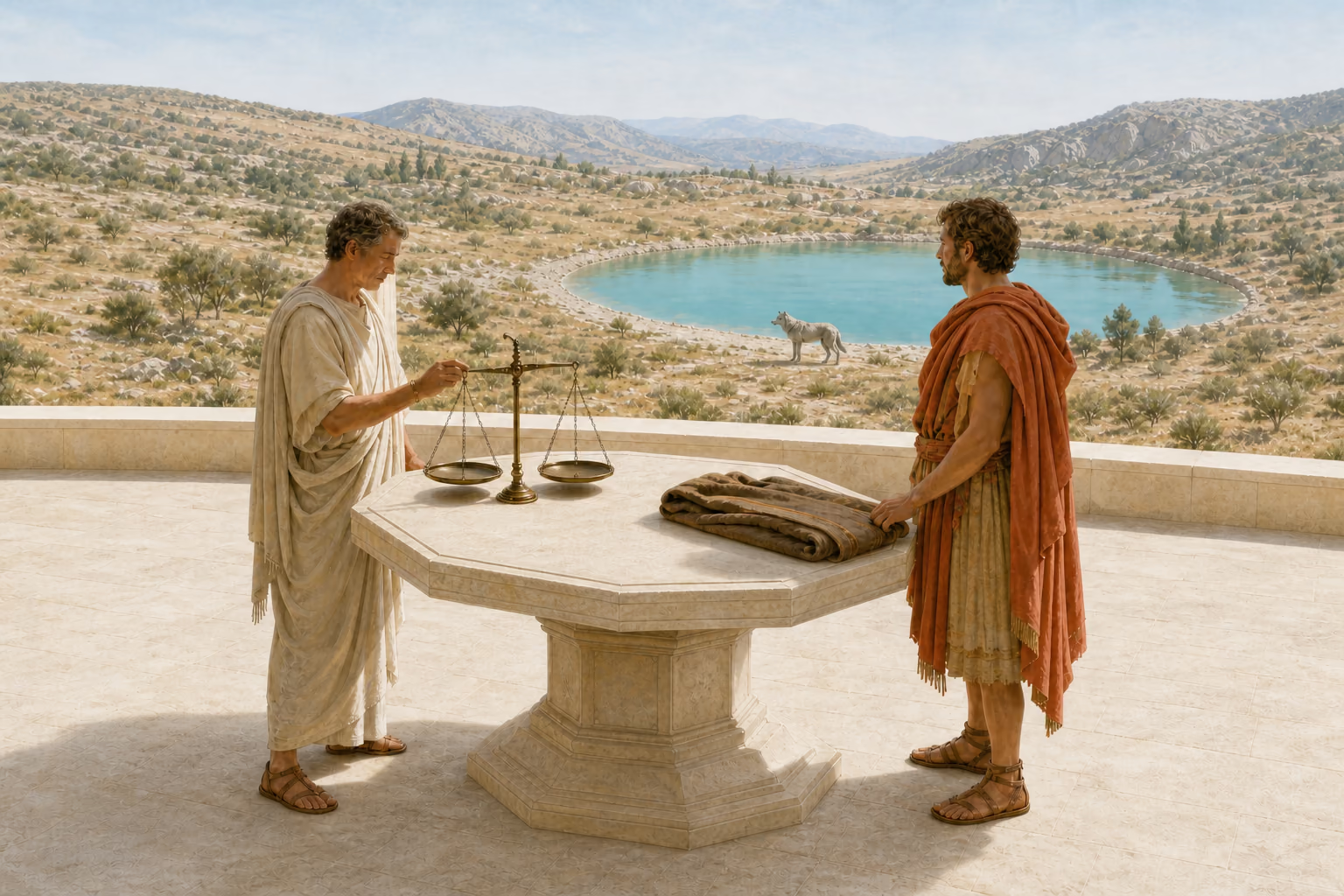
Sed in Italia quoque creditur luporum visus esse noxius vocemque homini, quem priores contemplentur, adimere ad praesens. inertes hos parvosque Africa et Aegyptus gignunt, asperos trucesque frigidior plaga. homines in lupos verti rursusque restitui sibi falsum esse confidenter existimare debemus aut credere omnia quae fabulosa tot saeculis conperimus. unde tamen ista vulgo infixa sit fama in tantum, ut in maledictis versipelles habeat, indicabitur. Euanthes, inter auctores Graeciae non spretus, scribit Arcadas tradere ex gente Anthi cuiusdam sorte familiae lectum ad stagnum quoddam regionis eius duci vestituque in quercu suspenso tranare atque abire in deserta transfigurarique in lupum et cum ceteris eiusdem generis congregari per annos VIIII. quo in tempore si homine se abstinuerit, reverti ad idem stagnum et, cum tranaverit, effigiem recipere, ad pristinum liabitum addito novem annorum senio. id quoque adicit, eandem recipere vestem. mirum est quo procedat Graeca credulitas! nullum tam inpudens mendacium est, ut teste careat. item Apollas, qui Olympionicas scripsit, narrat Demaenetum Parrhasium in sacrificio, quod Arcades lovi Lycaeo humana etiamtum hostia faciebant, immolati pueri exta degustasse et inlupum se convertisse, eundem X anno restitutum athleticaese exercuisse in pugilatu victoremque Olympia reversum. quin et caudae huius animalis creditur vulgo inesse amatorium virus exiguo in villo eumque, cum capiatur, abici nec idem pollere nisi viventi dereptum. dies, quibus coeat, toto anno non amplius duodecim. eundem in fame vesci terra inter auguria; ad dexteram commeantium praeciso itinere si pleno id ore fecerit, nullum ominum praestantius. sunt in eo genere qui cervari vocantur, qualem e Gallia in Pompei Magni harena spectatum diximus. huic quamvis in fame mandenti, si respexerit, oblivionem cibi subrepere aiunt digressumque quaerere aliud.
English · Bostock & Riley 1855–57
In Italy also it is believed that there is a noxious influence in the eye of a wolf; it is supposed that it will instantly take away the voice of a man, if it is the first to see him. Africa and Egypt produce wolves of a sluggish and stunted nature; those of the colder climates are fierce and savage. That men have been turned into wolves, and again restored to their original form, we must confidently look upon as untrue, unless, indeed, we are ready to believe all the tales, which, for so many ages, have been found to be fabulous. But, as the belief of it has become so firmly fixed in the minds of the common people, as to have caused the term “Versipellis” to be used as a common form of imprecation, I will here point out its origin. Euanthes, a Grecian author of no mean reputation, informs us that the Arcadians assert that a member of the family of one Anthus is chosen by lot, and then taken to a certain lake in that district, where, after suspending his clothes on an oak, he swims across the water and goes away into the desert, where he is changed into a wolf and associates with other animals of the same species for a space of nine years. If he has kept himself from beholding a man during the whole of that time, he returns to the same lake, and, after swimming across it, resumes his original form, only with the addition of nine years in age to his former appearance. To this Fabius adds, that he takes his former clothes as well. It is really wonderful to what a length the credulity of the Greeks will go! There is no falsehood, if ever so barefaced, to which some of them cannot be found to bear testimony.
So too, Agriopas, who wrote the Olympionics, informs us that Demænetus, the Parrhasian, during a sacrifice of human victims, which the Arcadians were offering up to the Lycæan Jupiter, tasted the entrails of a boy who had been slaughtered; upon which he was turned into a wolf, but, ten years afterwards, was restored to his original shape and his calling of an athlete, and returned victorious in the pugilistic contests at the Olympic games.
It is also commonly supposed, that the tail of this animal contains a small lock of hair, which possesses an amatory power; and that when the creature is caught, this hair is shed by it, but has no virtue whatever, unless it is procured from the animal while alive. It is said that these animals couple for no more than twelve days in the year; and that when pressed by hunger they will eat earth. Among the points of augury, to have our progress cut short to the right by a wolf, if at the time its mouth is full, is the best of omens. There is a species, which is known as the stag-wolf, such as we have already said were brought from Gaul and exhibited in the Circus by Pompeius Magnus. It is said, that however hungry this animal may chance to be, if it only turns its head while eating, it immediately becomes oblivious of the food that is before it, and takes its departure to seek it elsewhere.