LIBER VIII · CAPUT 23
DIFFERENT KINDS OF SERPENTS
Latine · Mayhoff 1906
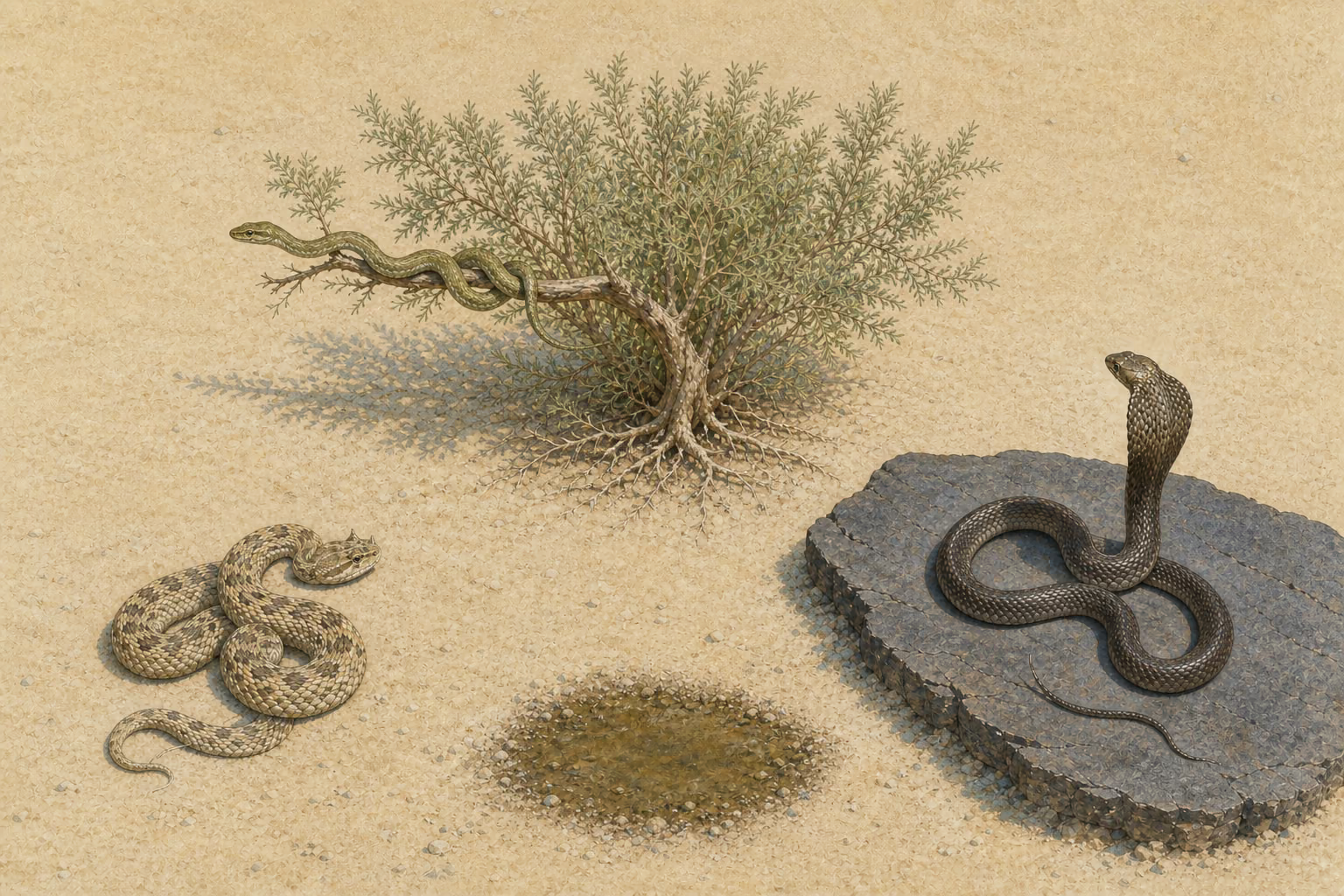
Quod ad serpentes attinet, vulgatum est colorem eius plerasque terrae habere, in qua occultentur. innumera esse genera. cerastis corpore eminere cornicula saepe quadrigemina, quorum motu, reliquo corpore occulto, sollicitent ad se aves. geminum caput amphisbaenae, hoc est et a cauda, tamquam parum esset uno ore fundi venenum. aliis squamas esse, aliis pictures, omnibus exitiale virus. iaculum ex arborum ramis vibrari, nec pedibus tantum pavendas serpentes, sed ut missile volare tormento. colla aspidum intumescere, nullo ictus remedio praeterquam si confestim partes contactae amputentur. unus huic tam pestifero animali sensus vel potius affectus est: coniugia ferme vagantur, nec nisi cum pari vita est. itaque alterutra interempta incredibilis ultionis alteri cura: persequitur interfectorem unumque eum in quantolibet populi agmine notitia quadam intestat, perrumpit omnes difficultates, permeat spatia nec nisi amnibus arcetur aut praeceleri fuga.
Non est fateri rerum natura largius mala an remedia genuerit. iam primum hebetes oculos huic malo dedit, eosque non in fionte adversos cernere, sed in temporibus— itaque excitatur saepius auditu quam visu —,
English · Bostock & Riley 1855–57
With reference to serpents, it is generally known, that they assume the colour of the soil in which they conceal themselves. The different species of them are innumerable. The cerastes has little horns, often four in number, projecting from the body, by the movement of which it attracts birds, while the rest of its body lies concealed. The amphisbæna has two heads, that is to say, it has a second one at the tail, as though one mouth were too little for the discharge of all its venom. Some serpents have scales, some a mottled skin, and they are all possessed of a deadly poison. The jaculus darts from the branches of trees; and it is not only to our feet that the serpent is formidable, for these fly through the air even, just as though they were hurled from an engine. The neck of the asp puffs out, and there is no remedy whatever against its sting, except the instant excision of the affected part. This reptile, which is thus deadly, is possessed of this one sense, or rather affection; the male and the female are generally found together, and the one cannot live without the other; hence it is that, if one of them happens to be killed, the other takes incredible pains to avenge its death. It follows the slayer of its mate, and will single him out among ever such a large number of people, by a sort of instinctive knowledge; with this object it overcomes all difficulties, travels any distance, and is only to be avoided by the intervention of rivers or an accelerated flight. It is really difficult to decide, whether Nature has altogether been more liberal of good or of evil. First of all, however, she has given to this pest but weak powers of sight, and has placed the eyes, not in the front of the head, so that it may see straight before it, but in the temples, so that it is more frequently put in motion by the approach of the footstep than through the sight.