LIBER VIII · CAPUT 30
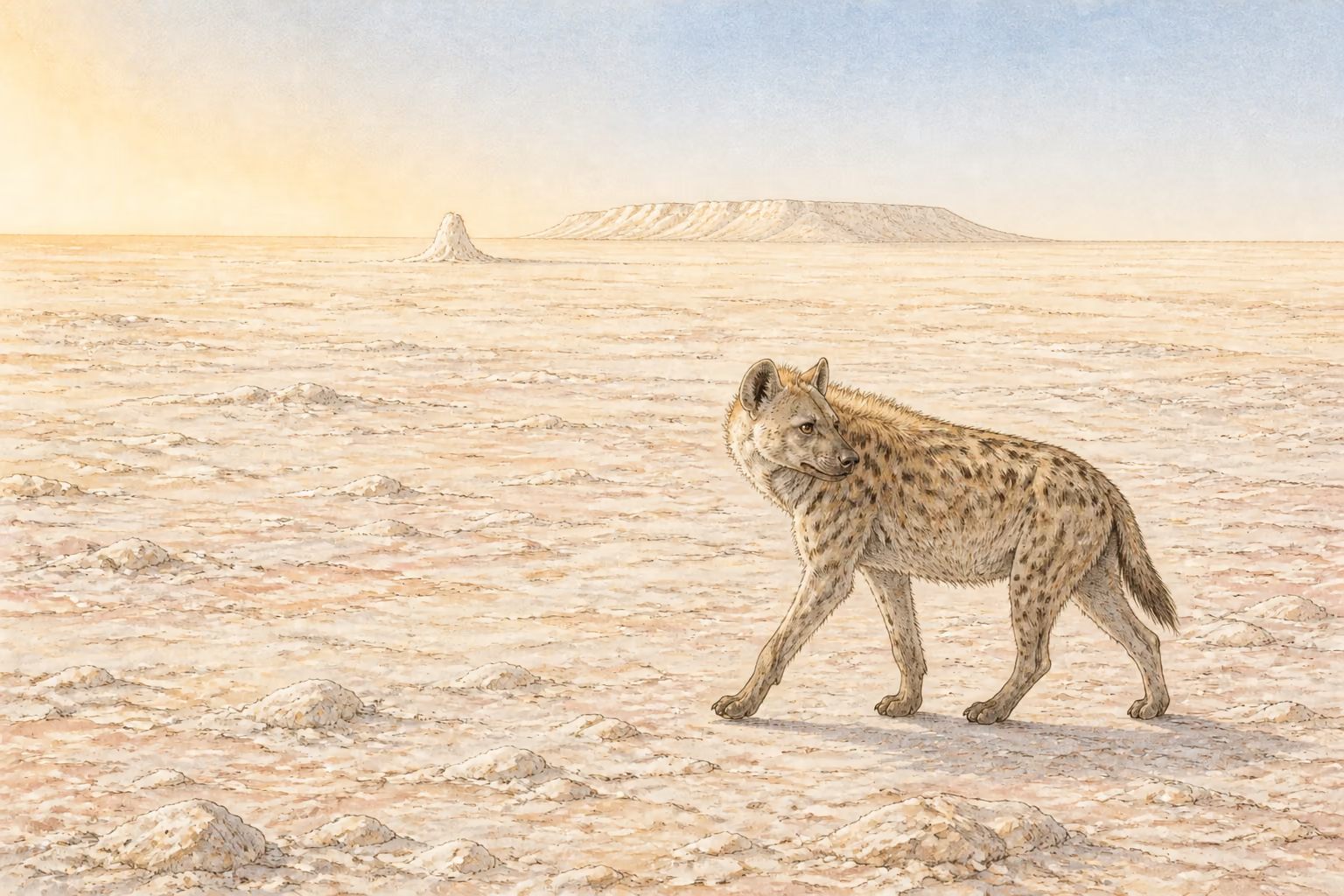
THE HYÆNA
Latine · Mayhoff 1906
Hyaenis utramque esse naturam et alternis annis mares, alternis feminas fieri, parere sine mare vulgus credit, Aristoteles negat. collumut iuba incontinuitatem spinae porrigitur flectique nisi circumactu totius corporis non quit. multa praeterea mira traduntur, sed maxime sermonem humanum inter pastorum stabula adsimulare nomenque alicuius addiscere, quem evocatum foris laceret, item vomitionem hominis imitari ad sollicitandos canes quos invadat. ab uno animali sepulcra erui inquisitione corporum. feminam raro capi. oculis mille esse varietates colorumque mutationes. praeterea umbrae eius contactu canes obmutescere, et quibusdam magicis artibus omne animal, quod ter lustraverit, in vestigio haerere.
Huius generis coitu leaena Aethiopica parit corocottam, similiter voces imitantem hominum pecorumque. acies ei perpetua, in utraque parte oris nullis gingivis, dente continuo: ne contrario occursu hebetetur, capsarum modo includitur. hominum sermones imitari et mantichoram in Aethiopia auctor est Iuba.
Hyaenae plurimae gignuntur in Africa, quae et asinorum silvestrium multitudinem fundit. mares in eo genere singuli feminarum gregibus imperitant; timent libidinis aemulos et ideo gravidas custodiunt morsuque natos mares caslrant. contra gravidae latebras petunt et parere furto cupiunt gaudentque copia libidinis.
Easdem partes sibi ipsi Pontici amputant fibri periculo urgente, ob hoc se peti gnari; castoreum id vocant medici. alias animal horrendi morsus arbores iuxta flumina ut ferro caedit, hominis parte conprehensa non ante quam fracta concrepuerint ossa morsus resolvit. cauda piscium his, cetera species lutrae. utrumque aquaticum, utrique mollior pluma pilus.
English · Bostock & Riley 1855–57
It is the vulgar notion, that the hyæna possesses in itself both sexes, being a male during one year, and a female the next, and that it becomes pregnant without the co-operation: of the male; Aristotle, however, denies this. The neck, with the mane, runs continuously into the back-bone, so that the animal cannot bend this part without turning round the whole body. Many other wonderful things are also related of this animal; and strangest of all, that it imitates the human voice among the stalls of the shepherds; and while there, learns the name of some one of them, and then calls him away, and devours him. It is said also, that it can imitate a man vomiting, and that, in this way, it attracts the dogs, and then falls upon them. It is the only animal that digs up graves, in order to obtain the bodies of the dead. The female is rarely caught: its eyes, it is said, are of a thousand various colours and changes of shade. It is said also, that on coming in contact with its shadow, dogs will lose their voice, and that, by certain magical influences, it can render any animal immoveable, round which it has walked three times.
By the union of the hyæna with the Æthiopian lioness, the corocotta is produced, which has the same faculty of imitating the voices of men and cattle. Its gaze is always fixed and immoveable; it has no gums in either of its jaws, and the teeth are one continuous piece of bone; they are enclosed in a sort of box as it were, that they may not be blunted by rubbing against each other. Juba informs us, that the mantichora of Æthiopia can also imitate the human speech.
Great numbers of hyænas are produced in Africa, which also gives birth to multitudes of wild asses. In this species each male rules over a herd of females. Fearing rivals in their lust, they carefully watch the pregnant females, and castrate the young males with their teeth, as soon as they are born. The pregnant females, on the other hand, seek concealment, and endeavour to bring forth in secret, being desirous to increase their opportunities of sexual indulgence.
The beavers of the Euxine, when they are closely pressed by danger, themselves cut off the same part, as they know that it is for this that they are pursued. This substance is called castoreum by the physicians. In addition to this, the bite of this animal is terrible; with its teeth it can cut down trees on the banks of rivers, just as though with a knife. If they seize a man by any part of his body, they will never loose their hold until his bones are broken and crackle under their teeth. The tail is like that of a fish; in the other parts of the body they resemble the otter; they are both of them aquatic animals, and both have hair softer than down.