LIBER VIII · CAPUT 33
THE CHAMELEON
Latine · Mayhoff 1906
Est eadem specie, barba tantum et armorum villo distans, quem tragelaphon vocant, non alibi quam iuxta Phasim amnem nascens.
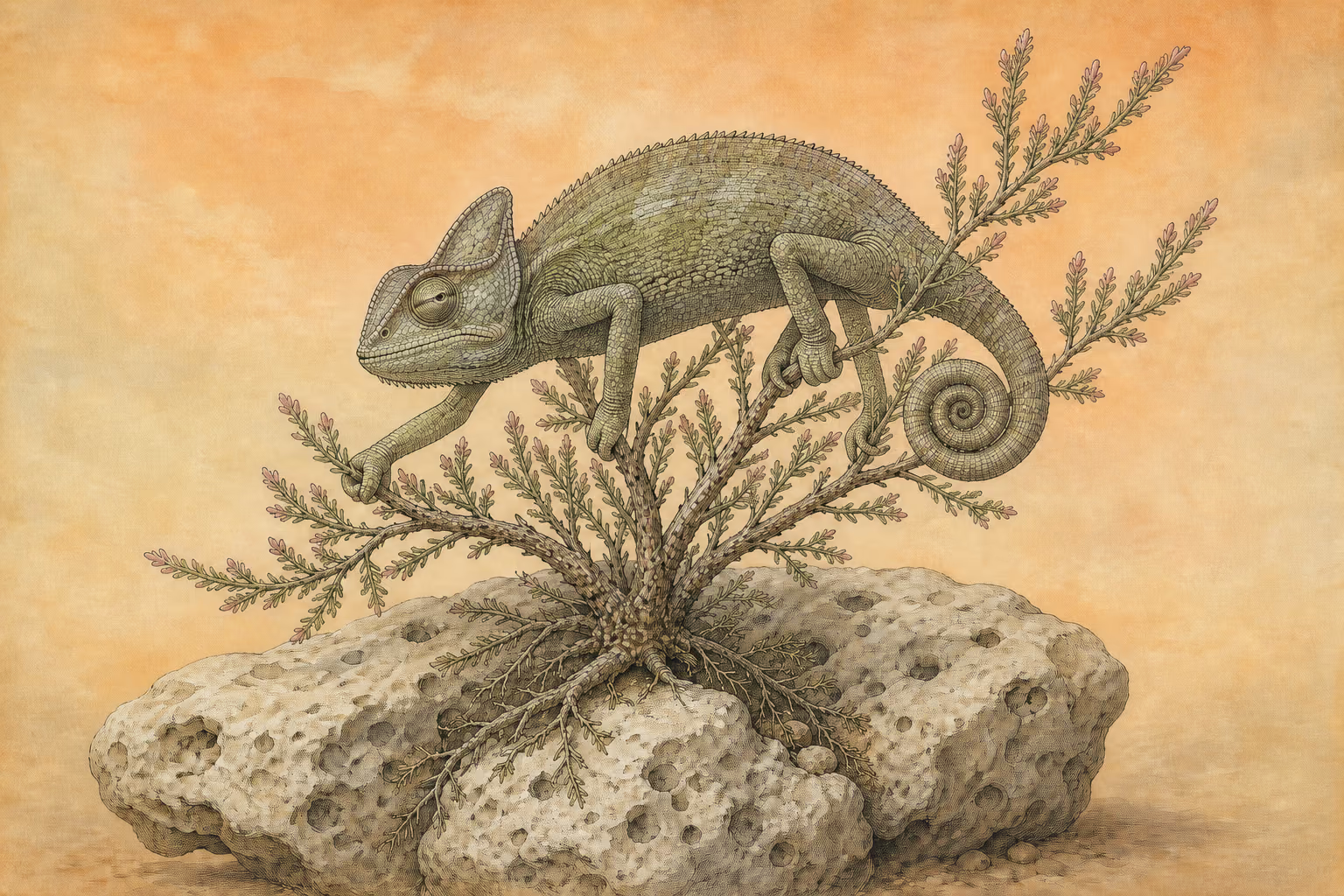
Cervos Africa propemodum sola non gignit, at chamaeleonem et ipsa, quamquam frequentior est Indiae. figura et magnitude erat lacerti, nisi crura essent recta et excelsiora. latera ventri iunguntur ut piscibus; et spina simili modo eminet. rostrum, ut in parvo, haut absimile suillo, cauda praelonga, in tenuitatem desinens, inplicans se viperinis orbibus, ungues adunci, motus tardior ut testudini, corpus asperum ceu crocodilo, oculi in recessu cavo, tenui discrimine, praegrandes et corpori concolores. numquam eos operit nec pupillae motu, sed totius oculi versatione circumaspicit. ipse celsus hianti semper ore solus animalium nec cibo nec potu alitur nec alio quam aēris alimento rictuterrifico fere, innoxius alioqui. et coloris natura mirabilior: mutat namque eum subinde et oculis et cauda et toto corpore redditque semper quemcumque proxime attingit praeter rubrum candidumque; defuncto pallor est. caro in capite et maxillis et ad commissuram caudae admodum exigua nec aliubi toto corpore; sanguis in corde et circa oculos tantum; viscera sine splene. hibernis mensibus latet, ut lacertae.
English · Bostock & Riley 1855–57
Of the same species is an animal, which only differs from the stag in having a beard and long hair about the shoulders: it is called tragelaphus, and is produced nowhere except on the banks of the Phasis.
Africa is almost the only country that does not produce the stag, but then it produces the chameleon, although it is much more commonly met with in India. Its figure and size are that of a lizard, only that its legs are straight and longer. Its sides unite under its belly, as in fishes, and its spine projects in a similar manner. Its muzzle is not unlike the snout of a small hog, so far as in so small an animal it can be. Its tail is very long, and becomes smaller towards the end, coiling up in folds like that of the viper. It has hooked claws, and a slow movement like that of the tortoise; its body is rough like that of the crocodile; its eyes are deep sunk in the orbits, placed very near each other, very large, and of the same colour as the body. It never closes them, and when the animal looks round, it does so, not by the motion of the pupil, but of the white of the eye. It always holds the head upright and the mouth open, and is the only animal which receives nourishment neither by meat nor drink, nor anything else, but from the air alone. Towards the end of the dog-days it is fierce, but at other times quite harmless. The nature of its colour, too, is very remarkable, for it is continually changing; its eyes, its tail, and its whole body always assuming the colour of whatever object is nearest, with the exception of white and red. After death, it becomes of a pale colour. It has a little flesh about the head, the jaws, and the root of the tail, but none whatever on the rest of the body. It has no blood whatever, except in the heart and about the eyes, and its entrails are without a spleen. It conceals itself during the winter months, just like the lizard.