LIBER VIII · CAPUT 32
STAGS
Latine · Mayhoff 1906
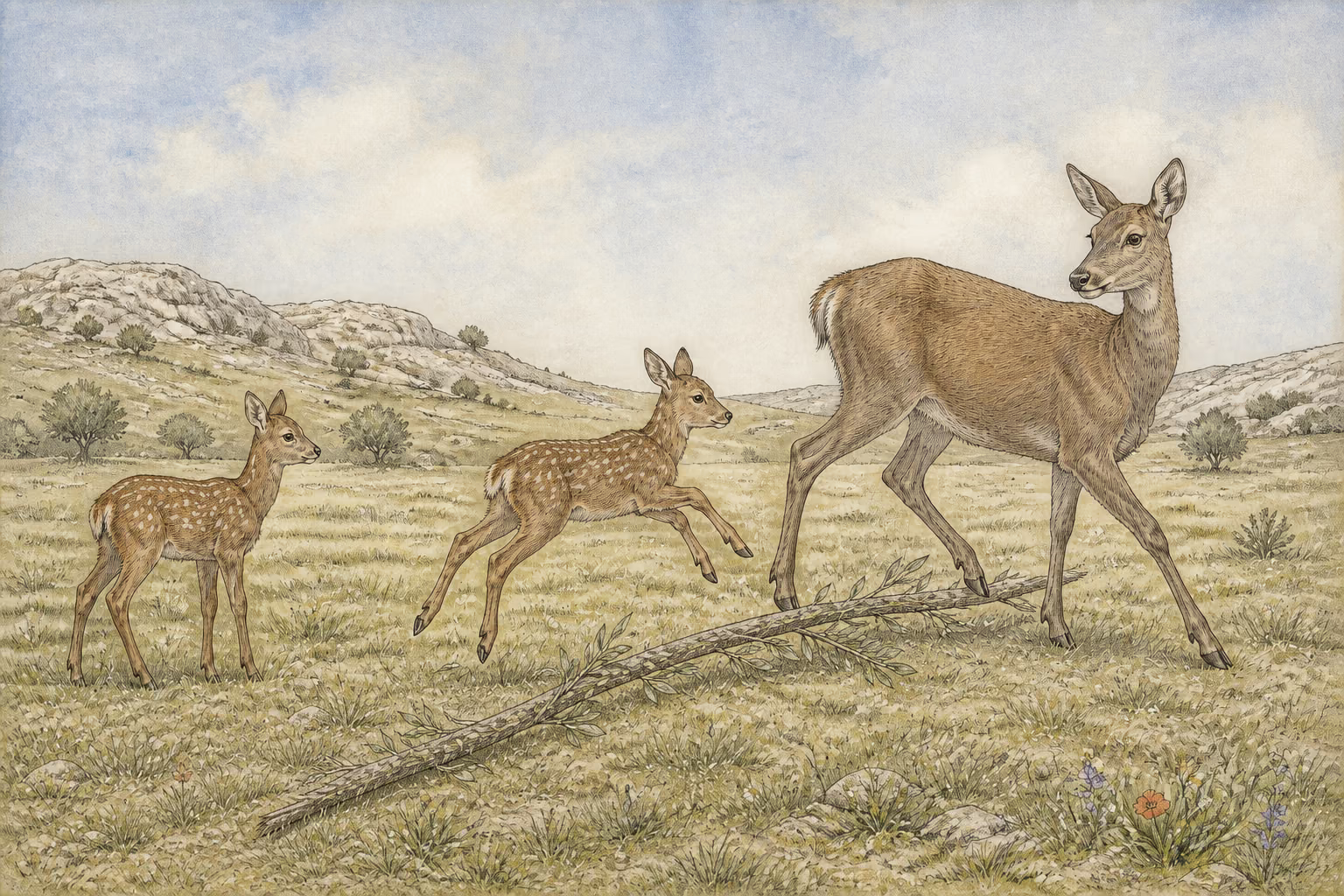
Cervis quoque est sua malignitas, quamquam placidissimo animalium. urgente vi canum ultro confugiunt ad hominem et in pariendo semitas minus cavent humanis vestigiis tritas quam secreta ac feris opportuna. conceptus earum post arcturi sidus. octonis mensibus ferunt partus, interim et geminos. a conceptu separant se, at mares relicti rabie libidinis saeviunt, fodiunt scrobes. tune rostra eorum nigrescunt, donec aliqui abluant imbres. feminae autem ante partum purgantur herba quadam, quae seselis dicitur, faciliore ita utentes utero; a partu duas, quae tamnus et seselis appellantur, pastae redeunt ad fetum: illis imbui Iactis primos volunt sucos quacumque de causa. editos partus exercent cursu et fugam meditari docent, ad praerupta ducunt saltumque demonstrant. iam mares soluti desiderio libidinis avide petunt pabula; ubi se praepingues sensere, latebras quaerunt fatentes incommodum pondus. et alias semper in fuga adquiescunt stantesque respiciunt, cum prope ventum est, rursus fugae praesidia repetentes. hoc fit intestini dolore tam infirmi, ut ictu levi rumpatur intus. fugiunt autem latratu canum audito secunda semper aura, ut vestigia cum ipsis abeant. mulcentur fistula pastorali et cantu, cum erexere aures, acerrimi auditus, cum remisere, surdi. cetero animal simplex et omnium rerum miraculo stupens in tantum, ut equo aut bucula accedente propius hominem iuxta venantem non cernant aut, si cernant, arcum ipsum sagittasque mirentur. maria trameant gregatim nantes porrecto ordine et capita inponentes praecedentium clunibus vicibu sque ad terga redeuntes. hoc maxime notatur a Cilicia Cyprum traicientibus. nec vident terras, sed in odorem earum natant. cornua mares habent solique animalium omnibus annis stato veris tempore amittunt. ideo sub ista die quam maxime invia petunt: latent amissis velut inermes, sed et hi bono suo invidentes. dextrum cornu negant inveniri ceu medicamento aliquo praeditum, idque mirabilius fatendum est, cum et in vivariis mutentomnibus annis. defodi ab iis putant. accensi autem utrius libeat odore et serpentes fugantur et comitiales morbi deprehenduntur. indicia quoque aetatis in illis gerunt, singulos annis adicientibus ramos usque ad sexennes; ab eo tempore similia revivescunt, nec potest aetas discerni; sed dentibus senecta declaratur: aut enim paucos aut nullos habent nec in cornibus imis ramos, alioqui ante frontem prominere solitos iunioribus. non decidunt castratis cornua nec nascuntur, erumpunt autem renascentibus tuberibus primo aridae cuti similia, dein teneris increscunt ferulis harundineas in paniculas molli plumata lanugine. quamdiu carent iis, noctibus procedunt ad pabula. increscentia solis vapore durant ad arbores subinde experientes; ubi placuit robur, in aperta prodeunt. captique iam sunt hedera in cornibus viridante, ex attritu arborum ut in aliquo ligno teneris, dum experiuntur, innata. suntaliquando et candido colore, qualem fuisse traditur Q. Sertorii cervam, quam esse fatidicam Hispaniae gentibus persuaserat. et his cum serpente pugna: vestigant cavernas nariumque spiritu extrahunt renitentes. ideo singulare abigendis serpentibus odor adusto cervino cornu, contra morsus vero praecipuum remedium ex coagulo hinnulei matris in utero occisi. vita cervis in confesso longa, post C annos aliquibus denuo captis cum torquibus aureis, quos Alexander Magnus addiderat, adopertis iam cute in magna obesitate. febrium morbos non sentit hoc animal, quin et medetur huic timori. quasdam modo principes feminas scimus omnibus diebus matutinis carnem eam degustare solitas et longo aevo caruisse febribus, quod ita demum existimant ratum, si vulnere uno interierit.
English · Bostock & Riley 1855–57
Stags, although the most mild of all animals, have still their own feelings of malignancy; when hard pressed by the hounds, of their own accord they fly for refuge to man; and when the females bring forth, they are less anxious to avoid the paths which bear traces of human footsteps, than solitary spots which offer a retreat to wild beasts. They become pregnant after the rising of the constellation Arcturus; they bring forth after a gestation of eight months, and sometimes produce two young ones. They separate after conception, but the males, upon being thus abandoned, become maddened with the fury of their passion; they dig up the earth, and their muzzles become quite black, until they have been washed by the rain. The females, before they bring forth, purge themselves by means of a certain herb, which is called seselis, by the use of which parturition is rendered more easy. After delivery, they take a mixture of the two plants called seselis and aros, and then return to the fawn; they seem desirous, for some reason or other, that their first milk, after parturition, should be impregnated with the juice of these plants. They then exercise the young ones in running, and teach them how to take to flight, leading them to precipices, and showing them how to leap. The sexual passion of the male having been now satisfied, he repairs to the pasture lands with the greatest eagerness. When they feel themselves becoming too fat, they seek some retired spot, thus acknowledging the inconvenience arising from their bulk. Besides this, they continually pause in their flight, stand still and look back, and then again resume their flight when the enemy approaches. This pause is occasioned by the intense pain which they feel in the intestines, a part which is so weak, that a very slight blow will cause them to break within. The barking of a dog instantly puts them to flight, and they always run with the wind, in order that no trace of them may be left. They are soothed by the shepherd’s pipe and his song; when their ears are erect, their sense of hearing is very acute, but when dropped, they become deaf.
In other respects the stag is a simple animal, which regards every thing as wonderful, and with a stupid astonishment; so much so, indeed, that if a horse or cow happens to approach it, it will not see the hunter, who may be close at hand, or, if it does see him, it only gazes upon his bow and arrow. Stags cross the sea in herds, swimming in a long line, the head of each resting on the haunches of the one that precedes it, each in its turn falling back to the rear. This has been particularly remarked when they pass over from Cilicia to the island of Cyprus. Though they do not see the land, they still are able to direct themselves by the smell. The males have horns, and are the only animals that shed them every year, at a stated time in the spring; at which period they seek out with the greatest care the most retired places, and after losing them, remain concealed, as though aware that they are unarmed. Still, however, they envy us the good that these might do us; for it is said the right horn, which possesses, as it were, certain medicinal properties, can never be found, a circumstance the more astonishing, from the fact that they change their horns every year, even when kept in parks; it is generally thought that they bury their horns in the ground. The odour of either horn, when burnt, drives away serpents and detects epilepsy. They also bear the marks of their age on the horns, every year, up to the sixth, a fresh antler being added; after which period the horns are renewed in the same state, so that by means of them their age cannot be ascertained. Their old age, however, is indicated by their teeth, for then they have only a few, or none at all; and we then no longer perceive, at the base of their horns, antlers projecting from the front of the forehead, as is usually the case with the animal when young.
When this animal is castrated it does not shed its horns, nor are they reproduced. When the horns begin to be reproduced, two projections are to be seen, much resembling, at first, dry skin; they grow with tender shoots, having upon them a soft down like that on the head of a reed. So long as they are without horns, they go to feed during the night. As the horns grow, they harden by the heat of the sun, and the animal, from time to time, tries their strength upon the trees; when satisfied with their strength, it leaves its retreat.
Stags, too, have been occasionally caught with ivy green and growing on their horns, the plant having taken root on them, as it would on any piece of wood, while the animal was rubbing them against the trees. The stag is sometimes found white, as is said to have been the case with the hind of Q. Sertorius, which he persuaded the nations of Spain to look upon as having the gift of prophecy. The stag, too, fights with the serpent: it traces out the serpent’s hole, and draws it forth by the breath of its nostrils, and hence it is that the smell of burnt stags’ horn has the remarkable power of driving away serpents. The very best remedy for the bite of a serpent is the rennet of a fawn that has been killed in the womb of its mother.
The stag is generally admitted to be very long lived; some were captured at the end of one hundred years with the golden collars which Alexander the Great had put upon them, and which were quite concealed by the folds of the skin, in consequence of the accumulation of fat. This animal is not subject to fever, and, indeed, it is a preservative against that complaint. We know that of late some women of princely rank have been in the habit of eating the flesh of the stag every morning, and that they have arrived at an extreme old age, free from all fevers. It is, however, generally supposed that the animal must be killed by a single wound to make sure of it possessing this virtue.