LIBER VIII · CAPUT 36
BEARS AND THEIR CUBS
Latine · Mayhoff 1906
Eorum coitus hiemis initio nec vulgari quadripedum more, sed ambobus cubantibus conplexisque; dein secessus in specus separatim, in quibus pariunt XXX die plurimum quinos. hi sunt candida informisque caro, paulo muribus maior, sine oculis, sine pilo; ungues tantum prominent. hanc lambendo paulatim figurant. nec quicquam rarius quam parientem videre ursam. ideo mares quadragenis diebus latent, feminae quaternis mensibus. specus si non habuere, ramorum fruticumque congerie aedificant, inpenetrabiles imbribus mollique fronde constratos. primis diebus bis septenis tam gravi somno premuntur, ut ne vulneribus quidem excitari queant. tune mirum in modum veterno pinguescunt. illi sunt adipes medicaminibus apti contraque defluvium capilli tenaces. ab his diebus residunt ac priorum pedum suctu vivunt. fetus rigentes adprimendo pectori fovent non alio incubitu quam ad ova volucres. mirum dictu, credit Theophrastus per id tempus coctas quoque ursorum carnes, si adserventur, increscere: cibi nulla tunc argumenta nec nisi umoris minimum in alvo inveniri, sanguinis exiguas circa corda tantum guttas, reliquo corpori nihil inesse. procedunt vere, sed mares praepingues, cuius rei causa non prompta est, quippe ne somno quidem saginatis, praeter XIIII dies, ut diximus. exeuntes herbam quandam arum nomine laxandis intestinis, alioqui concretis, devorant friantque surculos dentibus praedomantes ora. oculi eorum hebetantur, qua maxime causa favos expetunt, ut convulneratum ab apibus os levet sanguine gravedinem illam. invalidissimum urso caput, quod leoni firmissimum. ideo urgente vi praecipitaturi se ex aliqua rupe manibus cooperto iaciuntur ac saepe in harena colapho infracto exanimantur. cerebro veneficium inesse Hispaniae credunt occisorumque in spectaculis capita cremant testato, quoniam potum in ursinam rabiem agat. ingrediuntur et bipedes; arhorem aversi derepunt. tauros ex ore cornibusque eorum omnibus pedibus suspensi pondere fatigant. nec alteri animalium in maleficio stultitia sollertior. annalibus notatum est M. Pisone M. Messala cos. a. d. XIIII kal. Oct. Domitium Ahenobarbum aedilem curulem ursos Numidicos centum et totidem venatores Aethiopas in circo dedisse. miror adiectum Numidicos fuisse, cum in Africa ursum non gigni constet.
English · Bostock & Riley 1855–57
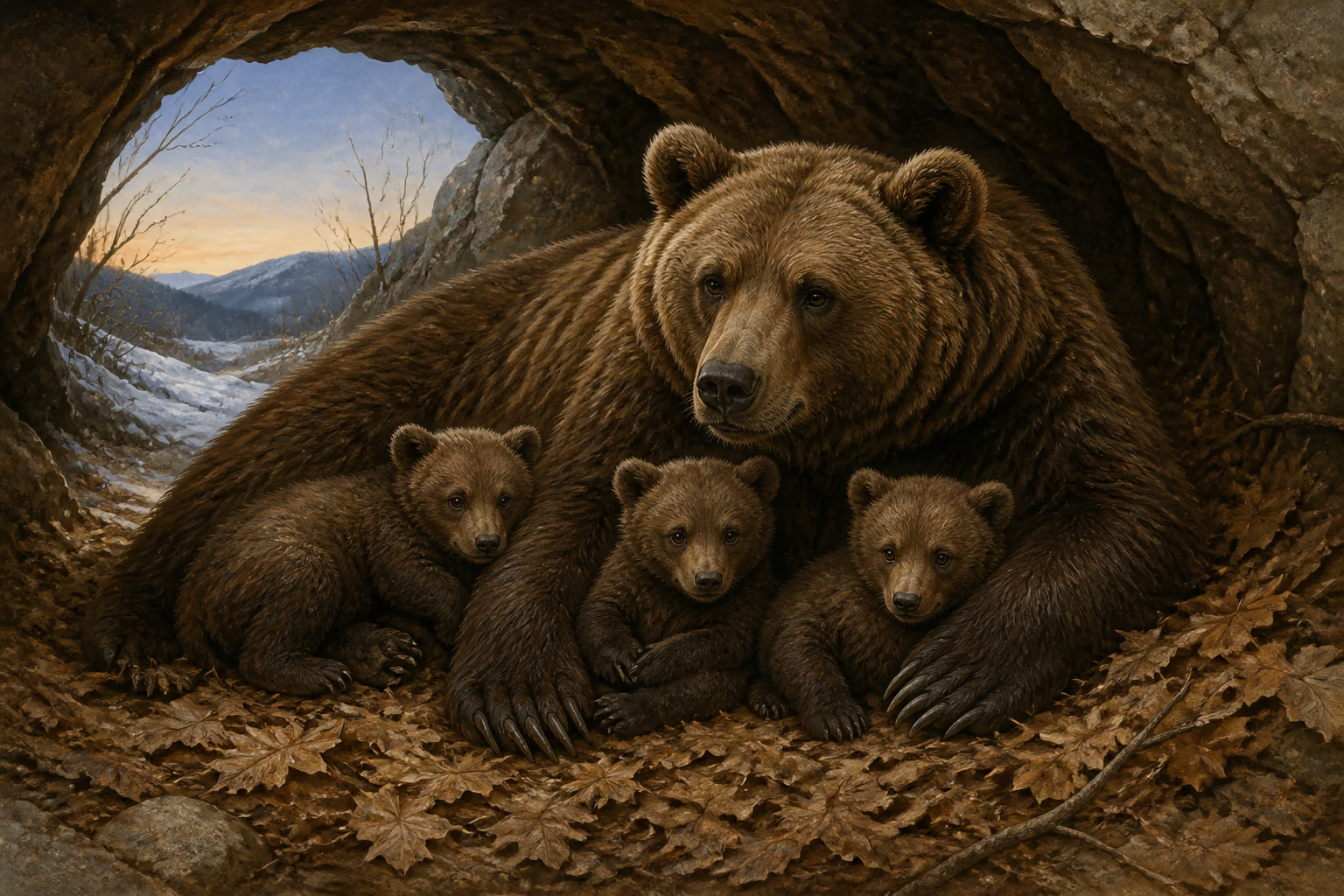
Bears couple in the beginning of winter, and not after the fashion of other quadrupeds; for both animals lie down and embrace each other. The female then retires by herself to a separate den, and there brings forth on the thirtieth day, mostly five young ones. When first born, they are shapeless masses of white flesh, a little larger than mice; their claws alone being prominent. The mother then licks them gradually into proper shape. There is nothing more uncommon than to see a she-bear in the act of parturition. The male remains in his retreat for forty days, the female four months. If they happen to have no den, they construct a retreat with branches and shrubs, which is made impenetrable to the rain and is lined with soft leaves. During the first fourteen days they are overcome by so deep a sleep, that they cannot be aroused by wounds even. They become wonderfully fat, too, while in this lethargic state. This fat is much used in medicine; and it is very useful in preventing the hair from falling off. At the end of these fourteen days they sit up, and find nourishment by sucking their fore-paws. They warm their cubs, when cold, by pressing them to the breast, not unlike the way in which birds brood over their eggs. It is a very astonishing thing, but Theophrastus believes it, that if we preserve the flesh of the bear, the animal being killed in its dormant state, it will increase in bulk, even though it may have been cooked. During this period no signs of food are to be found in the stomach of the animal, and only a very slight quantity of liquid; there are a few drops of blood only near the heart, but none whatever in any other part of the body. They leave their retreat in the spring, the males being remarkably fat: of this circumstance, however, we cannot give any satisfactory explanation, for the sleep, during which they increase so much in bulk, lasts, as we have already stated, only fourteen days. When they come out, they eat a certain plant, which is known as aros, in order to relax the bowels, which would otherwise become in a state of constipation; and they sharpen the edges of their teeth against the young shoots of the trees. Their eye-sight is dull, for which reason in especial, they seek the combs of bees, in order that from the bees stinging them in the throat and drawing blood, the oppression in the head may be relieved. The head of the bear is extremely weak, whereas, in the lion, it is remarkable for its strength: on which account it is, that when the bear, impelled by any alarm, is about to precipitate itself from a rock, it covers its head with its paws. In the arena of the Circus they are often to be seen killed by a blow on the head with the fist. The people of Spain have a belief, that there is some kind of magical poison in the brain of the bear, and therefore burn the heads of those that have been killed in their public games; for it is averred, that the brain, when mixed with drink, produces in man the rage of the bear. These animals walk on two feet, and climb down trees backwards. They can overcome the bull, by suspending themselves, by all four legs, from its muzzle and horns, thus wearing out its powers by their weight. In no other animal is stupidity found more adroit in devising mischief. It is recorded in our Annals, that on the fourteenth day before the calends of October, in the consulship of M. Piso and M. Messala, Domitius Ahenobarbus, the curule ædile, brought into the Circus one hundred Numidian bears, and as many Æthiopian hunters. I am surprised to find the word Numidian added, seeing that it is well known that there are no bears produced in Africa.