LIBER VIII · CAPUT 37
THE MICE OF PONTUS AND OF THE ALPS
Latine · Mayhoff 1906
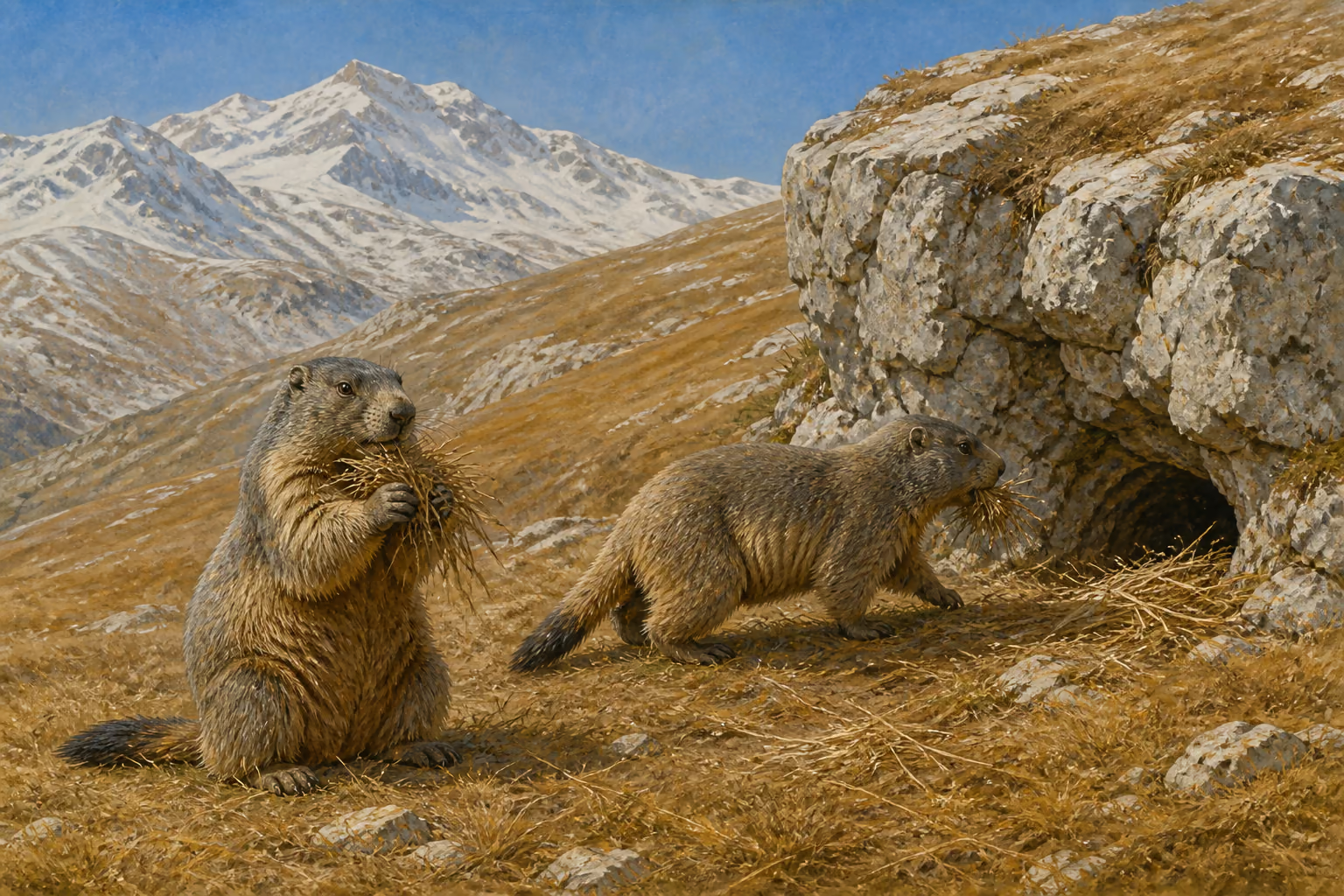
Conduntur hieme et Pontici mures, dumtaxat albi, quorum palatum in gustu sagacissimum auctores quonam modo intellexerint miror. conduntur et Alpini, quibus magnitudo melium est, sed hi pabulo ante in specus convecto, cum quidem narrant alternos marem ac feminam subrosae conplexos fascem herbae supinos, cauda mordicus adprehensa, invicem detrahi ad specum ideoque illo tempore detrito esse dorso. sunt his pares et in Aegypto similiterque resident in dunes et binis pedibus gradiuntur prioribusque ut manibus utuntur.
Praeparant hiemi et irenacei cibos ac volutati supra iacentia poma adfixa spinis, unum amplius tenentes ore, portant in cavas arbores. iidem mutationem aquilonis in austrum condentes se in cubile praesagiunt. ubi vero sensere venantem, contracto ore pedibusque ac parte omni inferiore, qua raram et innocuam habent lanuginem, convolvuntur in formam pilae, ne quid conprehendi possit praeter aculeos. in desperatione vero urinam in se reddunt tabificam, tergori suo spinisque noxiam, propter hoc se capi gnari. quam ob rem exinanita prius urina venari ars est, et tum praecipua dos tergori, alias corrupto, fragili, putribus spinis atque deciduis, etiam si vivat subtractus fuga. ob id non nisi in novissima spe maleficio eo perfunditur, quippe et ipsi odere suum veneficium, ita parcentes sibi terminumque supremum opperientes, ut ferme ante captivitas occupet. calidae postea aquae adspersu resolvitur pila, adprehensusque pes alter e posterioribus suspendiosa fame necat. aliter non est occidere et tergori parcere.ipsum animal non, ut remur plerique, vitae hominum supervacuum est, si non sint illi aculei, frustra vellerum mollitia in pecude mortalibus data: hac cute expoliuntur vestes. magnum fraus et ibi lucrum monopolio invenit, de nulla re crebrioribus senatus consultis nulloque non principe adito querimoniis provincialibus.
English · Bostock & Riley 1855–57
The mice of Pontus also conceal themselves during the winter; but only the white ones. I wonder how those authors, who have asserted that the sense of taste in these animals is very acute, found out that such is the fact. The Alpine mice, which are the same size as badgers, also conceal themselves; but they first carry a store of provisions into their retreat. Some writers, indeed, say that the male and female, lying on their backs alternately, hold in their paws a bundle of gnawed herbs, and, the tail of each in its turn being seized by the teeth of the other, in this way, they are dragged into their hole; hence it is, that at this season their hair is found to be rubbed off their backs. There is a similar animal also in Egypt, which sits, in the same way, upon its haunches, and walks on two feet, using the fore feet as hands.
Hedgehogs also lay up food for the winter; rolling themselves on apples as they lie on the ground, they pierce one with their quills, and then take up another in the mouth, and so carry them into the hollows of trees. These animals also, when they conceal themselves in their holes, afford a sure sign that the wind is about to change from north-east to south. When they perceive the approach of the hunter, they draw in the head and feet, and all the lower part of the body, which is covered by a thin and defenceless down only, and then roll themselves up into the form of a ball, so that there is no way of taking hold of them but by their quills. When they are reduced to a state of desperation, they discharge a corrosive urine, which injures their skin and quills, as they are aware that it is for the sake of them that they are hunted. A skilful hunter, therefore, will only pursue them when they have just discharged their urine. In this case the skin retains its value; while in the other case, it becomes spoilt and easily torn, the quills rotting and falling off, even though the animal should escape with its life. For this reason it is that it never moistens itself with this poisonous fluid, except when reduced to the last stage of desperation; for it has a perfect hatred for its own venomous distillation, and so careful is the animal, so determined to wait till the very last moment, that it is generally caught before it has employed this means of defence.
They force it to unroll itself, by sprinkling warm water upon it, and then, suspended by one of its hind legs, it is left to die of hunger; for there is no other mode of destroying it, without doing injury to its skin. This animal is not, as many of us imagine, entirely useless to man. If it were not for the quills which it produces, the soft fleece of the sheep would have been given in vain to mankind; for it is by means of its skin, that our woollen cloth is dressed. From the monopoly of this article, great frauds and great profits have resulted; there is no subject on which the senate has more frequently passed decrees, and there is not one of the Emperors, who has not received from the provinces complaints respecting it.