LIBER VIII · CAPUT 5
THE INSTINCT OF WILD ANIMALS IN PERCEIVING DANGER
Latine · Mayhoff 1906
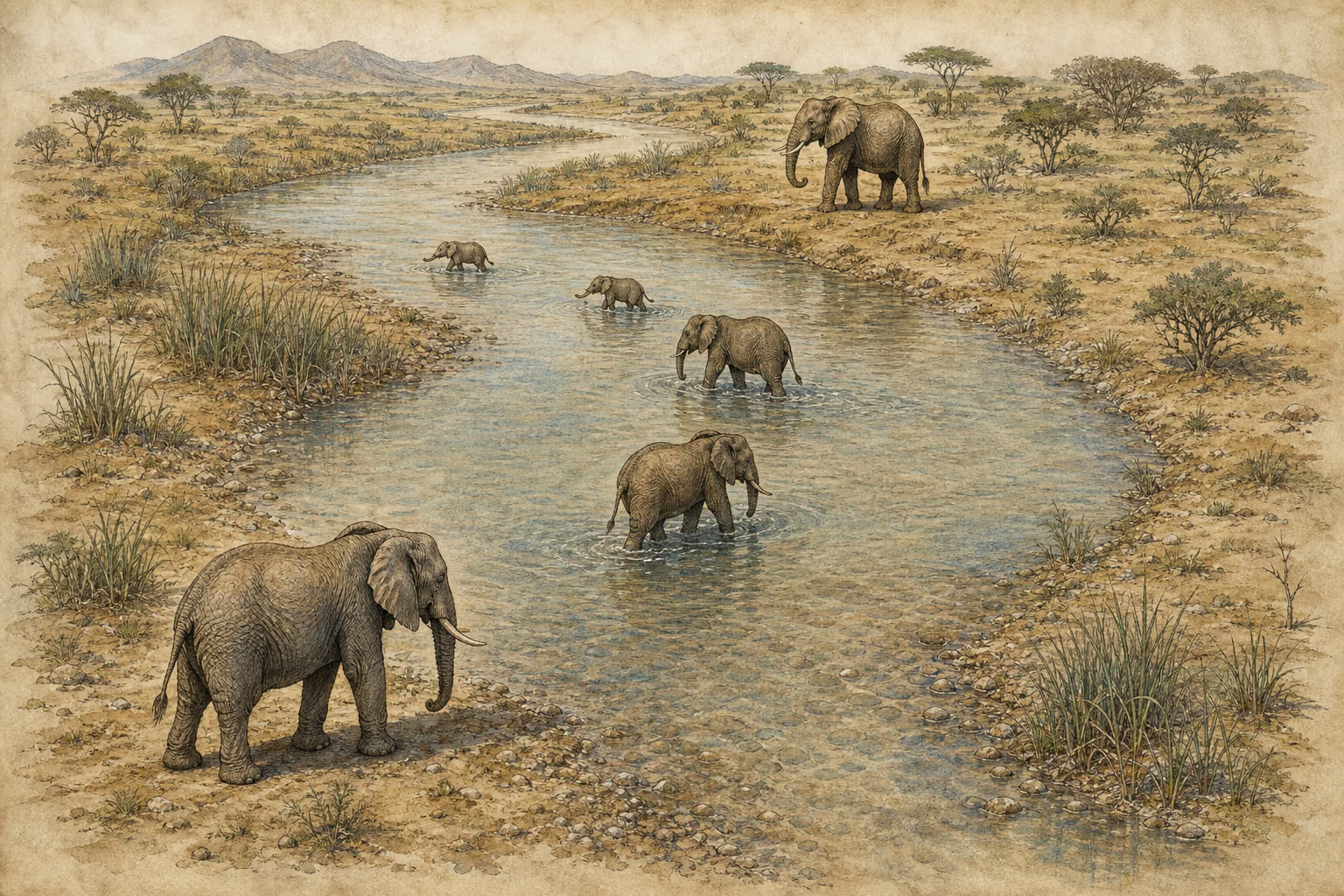
Elephanti gregatim semper ingrediuntur. ducit agmen maximus natu, cogit aetate proximus. amnem transitulri minimos praemittunt, ne maiorum ingressu atterente alveum crescat gurgiti altitudo. Antipater auctor est duos Antiocho regi in bellicis usibus celebres etiam cognominibus fuisse; etenim novere ea. certe Cato, cum imperatorum nomina annalibus detraxerit, eum, qui fortissime proeliatus esset in Punica acie, Surum tradidit vocatum altero dente mutilato. Antiocho vadum fluminis experienti renuit Aiax, alioqui dux agminis semper. tum pronuntiatum eius fore principatum qui transisset, ausumque Patroclum ob id phaleris argenteis, quo maxime gaudent, et reliquo omni primatu donavit. ille, qui notabatur, inedia mortem ignominiae praetulit. mirus namque pudor est, victusque vocem fugit victoris, terram ac verbenas porrigit. pudore numquam nisi in abdito coeunt, mas quinquennis, femina decennis. initur autem biennio quinis, ut ferunt, cuiusque anni diebus, nec amplius; sexto perfunduntur amne, non ante reduces ad agmen. nec adulteria novere nullave propter feminas inter se proelia ceteris animalibus pernicialia, nec quia desit illis amoris vis, namque traditur unus amasse quandam in Aegypto corollas vendentem ac,ne quis vulgariter electam putet, mire gratam Aristophani celeberrimo in arte grammatica, alius Menandrum Syracusanum incipientis iuventae in exercitu Ptolemaei, desiderium eius, quotiens non videret, inedia testatus. et unguentariam quandam dilectam Iuba tradit. omnium amoris fuere argumenta gaudium a conspectu blanditiaeque inconditae, stipes, quas populus dedisset, servatae et in sinum effusae. nec mirum esse amorem quibus sit memoria. idem namque tradit agnitum in senecta multos post annos qui rector in iuventa fuisset; idem divinationem quandam iustitiae, cum Bocchus rex triginta elephantis totidem, in quos saevire instituerat, stipitibus adligatos obiecisse t, procursantibus inter eos qui lacesserent, nec potuisse effici ut crudelitatis alienae ministerio fungerentur.
English · Bostock & Riley 1855–57
Elephants always move in herds. The oldest takes the lead, and the next in age brings up the rear. When they are crossing a river, they first send over the smallest, for fear lest the weight of the larger ones may increase the depth of the channel, by working away the bed of the river. We learn from Antipater, that King Antiochus had two elephants, which he employed in his wars, and to which he had given the names of celebrated men; and that they were aware too of this mark of distinction. Cato, in his Annals, while he has passed over in silence the names of the generals, has given that of an elephant called Surus, which fought with the greatest valour in the Carthaginian army, and had lost one of its tusks. When Antiochus was sounding the ford of a river, an elephant named Ajax, which on other occasions had always led the van, refused to enter the stream; upon which proclamation was made, that the first rank should belong to the one which should take the lead in passing over. One called Patroclus hazarded the attempt, and as a reward, the king presented it with some silver pendants, a kind of ornament with which these animals are particularly delighted, and assigned it all the other marks of command. Upon this, the elephant that had been degraded refused to take its food, and so preferred death to ignominy. Indeed their sense of shame is wonderful, and when one of them has been conquered, it flies at the voice of the conqueror, and presents him with earth and vervain.
These animals are sensible to feelings of modesty; they never couple but in secret: the male after it has attained its fifth year, the female after the age of ten. It is said, that their intercourse takes place only every second year, and for five days only, and no more; on the sixth day they plunge into a river, before doing which they will not rejoin the herd. Adulterous intercourse is unknown to them, and they have none of those deadly combats for the possession of the female, which take place among the other animals. Nor is this because they are uninfluenced by the passion of love. One in Egypt, we are told, fell in love with a woman, who was a seller of garlands; and let no one suppose that he made a vulgar choice, for she was the especial object of the love of Aristophanes, who held the very highest rank as a grammarian. Another became attached to the youth Menander, a native of Syracuse, in the army of Ptolemy; whenever it did not see him, it would manifest the regret which it experienced, by refusing its food. Juba gives an account also of a female who dealt in perfumes, to whom one of these creatures formed an attachment. All these animals manifested their attachment by their signs of joy at the sight of the person, by their awkward caresses, and by keeping for them and throwing into their bosom the pieces of money which the public had given them. Nor, indeed, ought we to be surprised, that an animal which possesses memory should be sensible of affection: for the same author relates, that an elephant recognized, after the lapse of many years, an old man who had been its keeper in his youth. They would seem also to have an instinctive feeling of justice. King Bocchus once fastened thirty elephants to the stake, with the determination of wreaking his vengeance on them, by means of thirty others; but though men kept sallying forth among them to goad them on, he could not, with all his endeavours, force them to become the ministers of the cruelty of others.