LIBER VIII · CAPUT 4
THE INSTINCT OF WILD ANIMALS IN PERCEIVING DANGER
Latine · Mayhoff 1906
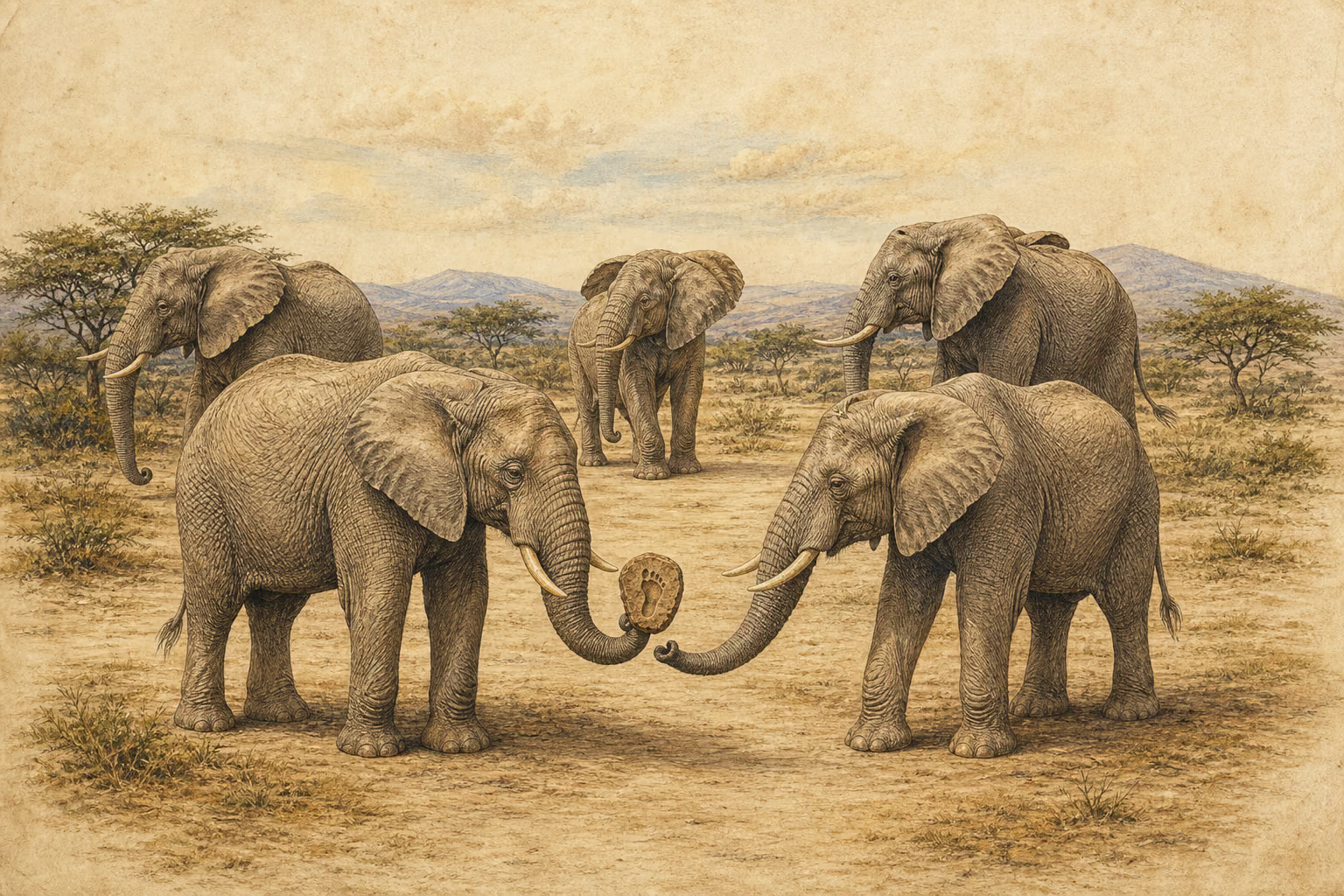
Mirum in plerisque animalium scire quare petantur, sed et fere cuncta quid caveant. elephans homine obvio forte in solitudine et simpliciter oberrante clemens placidusque etiam demonstrare viam traditur; idem vestigio hominis animadverso prius quam homine intremescere insidiarum metu, subsistere ab olfactu, circumspectare, iras proflare nec calcare, sed erutum proximo tradere, ilium sequenti, simili nuntio usque ad extremum, tunc agmen circumagi et reverti aciemque derigi. adeo omnium odori durare virus illud maiore ex parte ne nudorum quidem pedum. sic et tigris, etiam feris ceteris truculenta atque ipsa elephanti quoque spernens vestigia, hominis viso transferre dicitur protinus catulos, quonam modo agnito, ubi ante conspecto illo quem timet? etenim tales silvas minime frequentari certum est. sane mirentur ipsam vestigii raritatem. sed unde sciunt timendi esse? immo vero cur vel ipsius conspectum paveant, tanto viribus, magnitudine, velocitate praestantiores? nimirum haec est natura rerum, haec potentia eius, saevissimas ferarum maximasque numquam vidisse, quod debeant timere, et statim intellegere, cum sit timendum.
English · Bostock & Riley 1855–57
It is a wonderful thing, that most animals are aware why it is that they are sought after, and what it is, that, under all circumstances, they have to guard against. When an elephant happens to meet a man in the desert, who is merely wandering about, the animal, it is said, shows himself both merciful and kind, and even points out the way. But the very same animal, if he meets with the traces of a man, before he meets the man himself, trembles in every limb, for fear of an ambush, stops short and scents the wind, looks around him, and snorts aloud with rage; and then, without trampling upon the object, digs it up, and passes it to the next one, who again passes it to the one that follows, and so on from one to the other, till it comes to the very last. The herd then faces about, returns, and ranges itself in order of battle; so strongly does the odour, in all cases, attach itself to the human footstep, even though, as is most frequently the case, the foot itself is not naked. In the same way, too, the tigress, which is the dread of the other wild beasts, and which sees, without alarm, the traces even of the elephant itself, is said at once, upon seeing the footsteps of man, to carry off her whelps. How has the animal acquired this knowledge? And where has it seen him before, of whom it stands in such dread? Doubt there can be none, that forests such as it haunts are but little frequented by man! It is not to be wondered at, if they are astonished at the print of a footstep before unknown; but how should they know that there is anything that they ought to dread? And, what is still more, why should they dread even the very sight of man, seeing that they are so far superior to him in strength, size, and swiftness? No doubt, such is the law of Nature, such is the influence of her power—the most savage and the very largest of wild beasts have never seen that which they have reason to fear, and yet instantly have an instinctive feeling of dread, when the moment has come for them to fear.