LIBER VIII · CAPUT 50
GOATS AND THEIR PROPAGATION
Latine · Mayhoff 1906
Caprae pariunt et quaternos, sed raro admodum; ferunt V mensibus, ut oves. capri pinguitudine sterilescunt. ante trimos minus utiliter generant et in senecta nec ultra quadriennium. incipiunt septimo mense et adhuc lactentes. mutilum in utroque sexu utilius. primus in die coitus non implet, sequens efficacior ac deinde. concipiunt Novembri mense, ut Martio pariant turgescentibus virgultis, aliquando anniculae, semper bimae, nisi in trimatu inutiles. pariunt octonis annis. abortus frigori obnoxius. oculos suffusos capra iunci punctu sanguine exonerat, caper rubi. sollertiam eius animalis Mucianus visam sibi prodidit in ponte praetenui duabus obviis e diverso: cum circumactum angustiae non caperent nec reciprocationem longitude in exilitate caecam, torrente rapido minaciter subterfluente, alteram decubuisse atque ita alteram proculcatae supergressam. mares quam maxime simos, longis auribus infractisque, armis quam villosissimis probant; feminarum generositatis insigne laciniae corporibus e cervice binae dependentes. non omnibus cornua, sed quibus sunt, in his et indicia annorum per incrementa nodorum. mutilis lactis maior ubertas. auribus eas spirare, non naribus, nec umquam febri carere Archelaus auctor est. ideo fortassis anima iis quam ovibus ardentior calidioresque concubitus. tradunt et noctu non minus cernere quam interdiu: ideo, si caprinum iecur vescantur, restitui vespertinam aciem iis quos nyctalopas vocant. in Cilicia circaque Syrtes villo tonsili vestiuntur. capras in occasum declini sole in pascuis negant contueri inter sese, sed aversas iacere, reliquis autem horis adversas et inter cognationes. dependet omnium mento villus, quem aruncum vocant. hoc si quis adprehensam ex grege unam trahat, ceterae stupentes spectant; id evenit et cum quandam herbam aliqua ex iis momorderit. morsus earum arbori est exitialis. olivam lambendo quoque sterilem faciunt eaque ex causa Minervae non immolantur.
English · Bostock & Riley 1855–57
The goat occasionally brings forth as many as four at a birth; but this is rarely the case. It is pregnant five months, like the sheep. Goats become barren when very fat. There is little advantage to be derived from their bringing forth before their third year, or after the fourth, when they begin to grow old. They are capable of generating in the seventh month, and while they are still sucking. In both sexes those that have no horns are considered the most valuable. A single coupling in the day is not sufficient; the second and the following ones are more effectual. They conceive in the month of November, so as to bring forth in the month of March, when the buds are bursting; this is sometimes the case with them when only one year old, and always with those of the second year; but the produce of those which are three years old is the most valuable. They continue to bring forth for a period of eight years. Cold produces abortion. When their eyes are surcharged, the female discharges the blood from the eye by pricking it with the point of a bulrush, and the male with the thorn of a bramble.
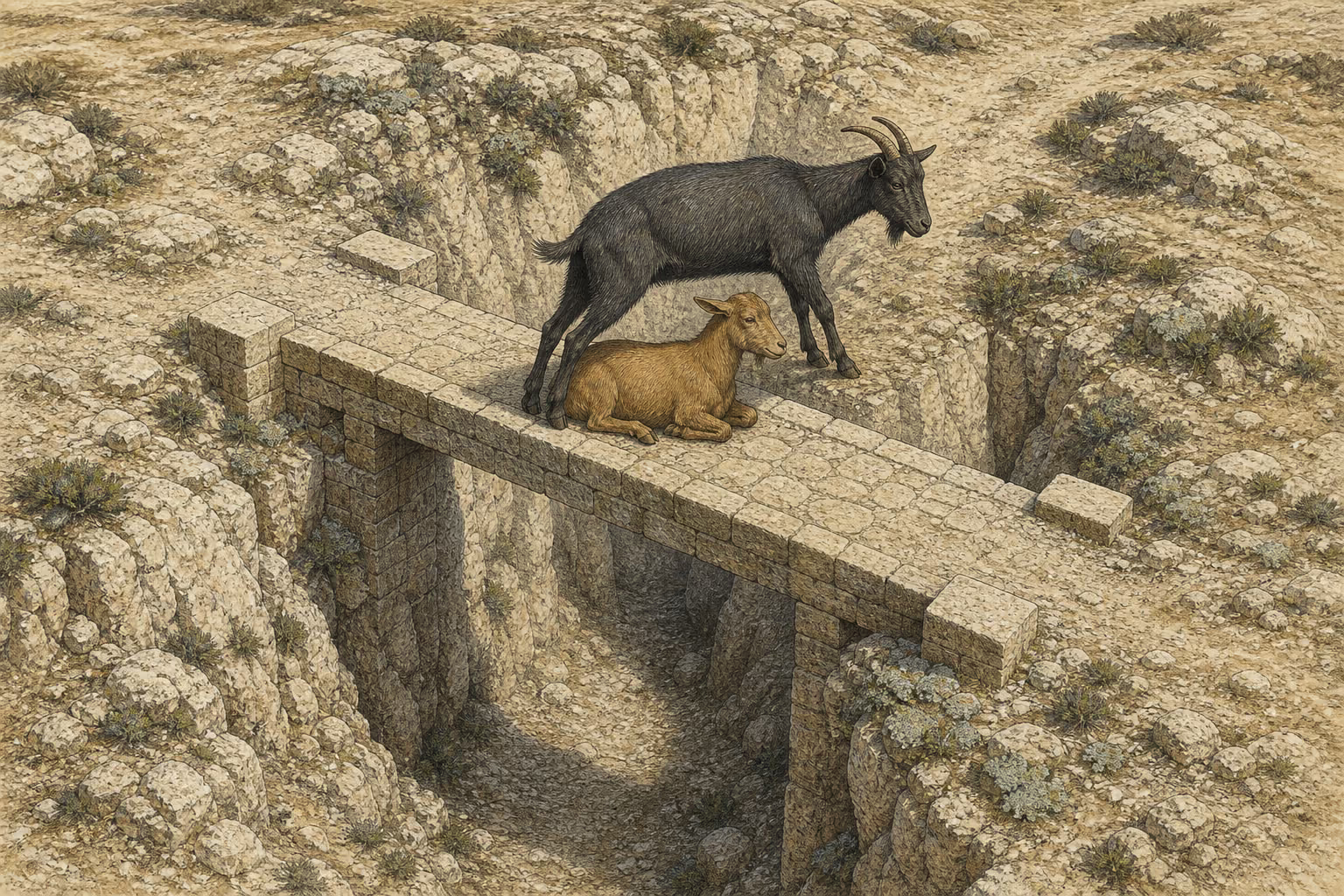
Mutianus relates an instance of the intelligence of this animal, of which he himself was an eye-witness. Two goats, coming from opposite directions, met on a very narrow bridge, which would not admit of either of them turning round, and in consequence of its great length, they could not safely go backwards, there being no sure footing on account of its narrowness, while at the same time an impetuous torrent was rapidly rushing beneath; accordingly, one of the animals lay down flat, while the other walked over it.
Among the males, those are the most esteemed which have flat noses and long hanging ears, the shoulders being covered with very thick shaggy hair; the mark of the most valuable among the females is the having two folds hanging down the body from under the neck. Some of these animals have no horns; but where there are horns, the age of the animal is denoted by the number of knots on them. Those that have no horns give the most milk. According to Archelaus, they breathe, not through the nose, but the ears, and they are never entirely free from fever, from which circumstance it is, probably, that they are more animated than sheep, more ardent, and have stronger sexual passions. It is said also, that they have the power of seeing by night as well as in the day, for which reason those persons who are called Nyctalopes, recover the power of seeing in the evening, by eating the liver of the he-goat. In Cilicia, and in the vicinity of the Syrtes, the inhabitants shear the goat for the purpose of clothing themselves. It is said that the she-goats in the pastures will never look at each other at sun-set, but lie with their backs towards one another, while at other times of the day they lie facing each other and in family groups. They all have long hair hanging down from the chin, which is called by us aruncus. If any one of the flock is taken hold of and dragged by this hair, all the rest gaze on in stupid astonishment; and the same happens when any one of them has eaten of a certain herb. Their bite is very destructive to trees, and they make the olive barren by licking it; for which reason they are not sacrificed to Minerva.