LIBER VIII · CAPUT 51
THE HOG
Latine · Mayhoff 1906
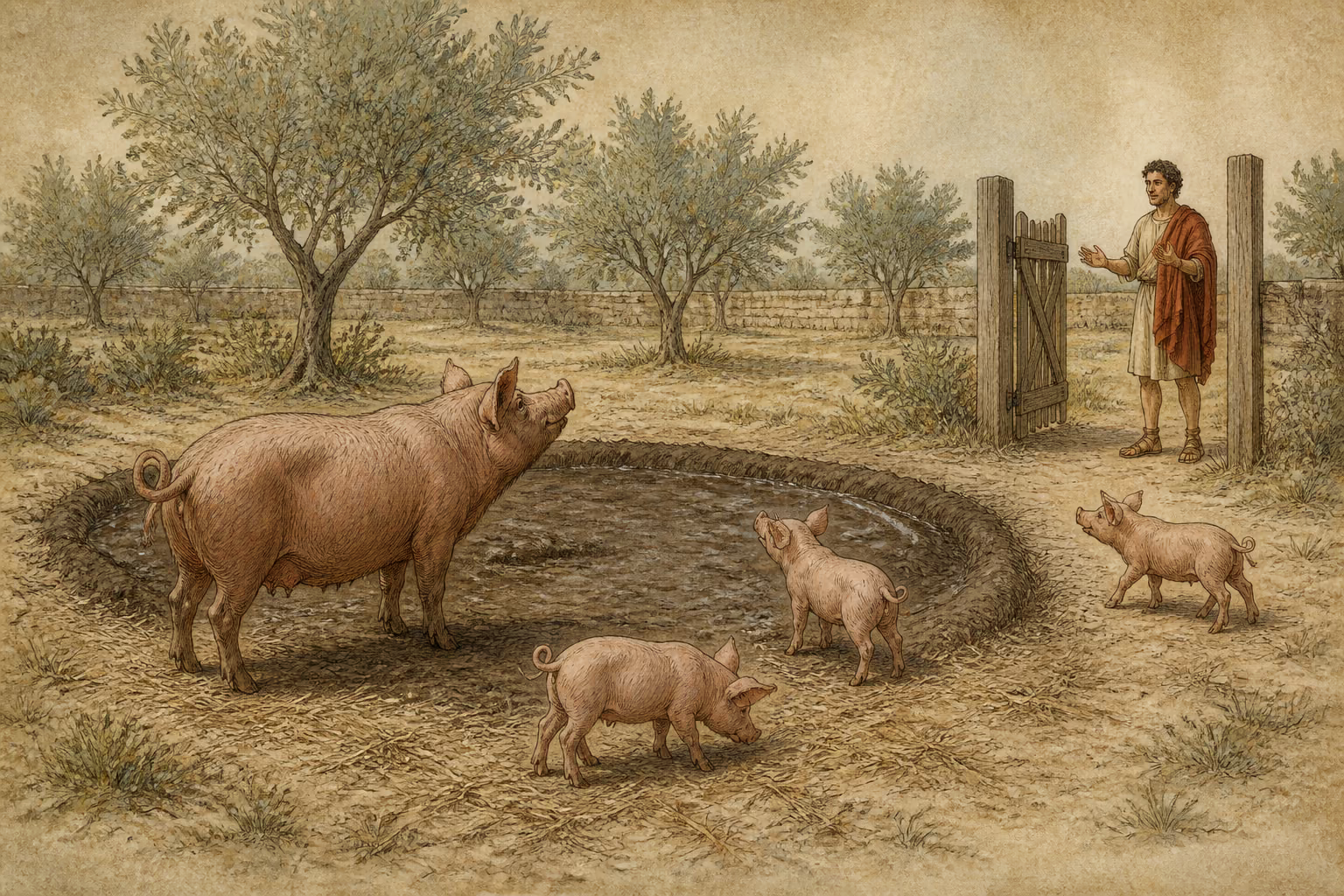
Suilli pecoris admissura a favonio ad aequinoctium vernum, aetas octavo mense, quibusdam in locis etiam quarto, usque ad octavum annum. partus bis anno, tempus utero quattuor mensum, numerus fecunditati ad vicenos, sed educare nequeunt tam multos. diebus X circa brumam statim dentatos nasci Nigidius tradit. implentur uno coitu, qui et geminatur propter facilitatem aboriendi. remedium, ne prima subatione neque ante flaccidas aures coitus fiat. mares non ultra trimatum generant. feminae senectute fessae cubantes coeunt. comesse fetus in his non est prodigium. suis fetus sacrificio die quinto purus est, pecoris die VII, bovis XXX. Coruncanius ruminales hostias, donec bidentes fierent, puras negavit. suem oculo amisso putant cito extingui; alioqui vita ad XV annos, quibusdam et vicenos. verum efferantur, et alias obnoxium genus morbis, anginae maxime et strumae. index suis invalidae cruor in radice saetae dorso evolsae, caput obliquum in incessu. paenuriam lactis praepingues sentiunt et primo fetu minus sunt numerosae. in luto volutatio generi grata. intorta cauda; id etiam notatum, facilius litare in dexterum quam in laevum detorta. pinguescunt LX diebus, sed magis tridui inedia saginatione orsa. animalium hoc maxime brutum animamque ei pro sale datam non inlepide existimabatur. compertum agnitam vocem suarii furto abactis, mersoque navigio inclinatione lateris unius remeasse. quin et duces in urbe forum nundinarium domosque petere discunt, et feri sapiunt vestigia palude confundere, urina fugam levare. castrantur feminae quoque, sicuti et cameli, post bidui inediam suspensae pernis prioribus vulva recisa; celerius ita pinguescunt. adhibetur et ars iecori feminarum sicut anserum, inventum M. Apici, fico arida saginatis ac satie necatis repente mulsi potu dato. neque alio ex animali numerosior materia ganeae: quinquaginta prope sapores, cum ceteris singuli. hinc censoriarum legum paginae interdictaque cenis abdomina, glandia, testiculi, vulvae, sincipita verrina, ut tamen Publili mimorum poetae cena, postquam servitutem exuerat, nulla memoretur sine abdomine, etiam vocabulo suminis ab eo inposito.
Placuere autem et feri sues. iam Catonis censoris orationes aprunum exprobrant callum. in tres tamen partes diviso media ponebatur, lumbus aprunus appellata. solidum aprum Romanorum primus in epulis adposuit P. Servilius, pater eius Rulli, qui Ciceronis consulatu legem agrariam promulgavit: tam propinqua origo nunc cotidianae rei est. et hoc annales notarunt, horum scilicet ad emendationem morum, quibus non tota quidem cena, sed in principio bini ternique pariter manduntur apri.
English · Bostock & Riley 1855–57
The period for coupling the hog lasts from the return of the west wind to the vernal equinox; the proper age commences in the eighth month, indeed, in some places, in the fourth even, and continues until the eighth year. They bring forth twice in the year, the time of gestation being four months; the number at a birth amounts to twenty even, but they cannot rear so large a number. Nigidius informs us, that those which are produced within ten days of the winter solstice are born with teeth. One coupling is sufficient, but it is repeated, on account of their extreme liability to abortion; the remedy for which is not to allow coupling the first time the female is in heat, nor until its ears are flaccid and pendant. The males do not generate after they are three years old. When the females become feeble from old age, they receive the males lying down. It is not looked upon as anything portentous when they eat their young. The young of the hog is considered in a state of purity for sacrifice when five days old, the lamb on the seventh day, and the calf on the thirtieth. Coruncanius asserts, that ruminant animals are not proper for victims until they have two teeth. It has been supposed, that when a pig has lost one eye, it will not live long; otherwise, these animals generally live up to fifteen, or sometimes twenty years. They sometimes become mad; besides which, they are liable to other diseases, especially to quinsy and to scrofula. It is an indication that the hog is diseased, when blood is found at the root of a bristle pulled from its back, and when it holds its head on one side while walking. When the female becomes too fat, she has a deficiency of milk; the first litter is always the least numerous. Animals of this kind delight in rolling in the mud. The tail is curled, and it has also been remarked, that those are a more acceptable offering to the gods, whose tail is turned to the right than those which have it turned to the left. They may be fattened in sixty days, and more especially if they have been kept without food for three days before fattening. The swine is by far the most brutish of all the animals, and it has been said, and not unaptly, that life has been given them in place of salt. And yet it has been known, that these animals, when carried away by thieves, have recognized the voice of their keeper; and when a vessel has been under water through the inclination of one of its sides, they have had the sense to go over to the other side. The leader of the herd will even learn to go to market, and to different houses in the city. In the wild state also, they have the sense to pass their urine in plashy places, that they may destroy all traces of them, and so lighten themselves for flight. The female is spayed, just as is done with the camel; after they have fasted two days, they are suspended by the hind feet, and the orifice of the womb is cut; after this operation, they fatten more quickly.
M. Apicius made the discovery, that we may employ the same artificial method of increasing the size of the liver of the sow, as of that of the goose; it consists in cramming them with dried figs, and when they are fat enough, they are drenched with wine mixed with honey, and immediately killed. There is no animal that affords a greater variety to the palate of the epicure; all the others have their own peculiar flavour, but the flesh of the hog has nearly fifty different flavours. Hence it is, that there are whole pages of regulations made by the censors, forbidding the serving up at banquets of the belly, the kernels, the testicles, the womb, and the cheeks. However, notwithstanding all this, the poet Publius, the author of the Mimes, when he ceased to be a slave, is said to have given no entertainment without serving up the belly of a sow, to which he also gave the name of “sumen.”
The flesh of the wild boar is also much esteemed. Cato, the Censor, in his orations, strongly declaimed against the use of the brawn of the wild boar. The animal used to be divided into three portions, the middle part of which was laid by, and is called boar’s chine. P. Servilius Rullus was the first Roman who served up a whole boar at a banquet; the father of that Rullus, who, in the consulship of Cicero, proposed the Agrarian law. So recent is the introduction of a thing which is now in daily use. The Annalists have taken notice of such a fact as this, clearly as a hint to us to mend our manners; seeing that now-a-days two or three boars are consumed, not at one entertainment, but as forming the first course only.