LIBER IX · CAPUT 2
WHY THE LARGEST ANIMALS ARE FOUND IN THE SEA
Latine · Mayhoff 1906
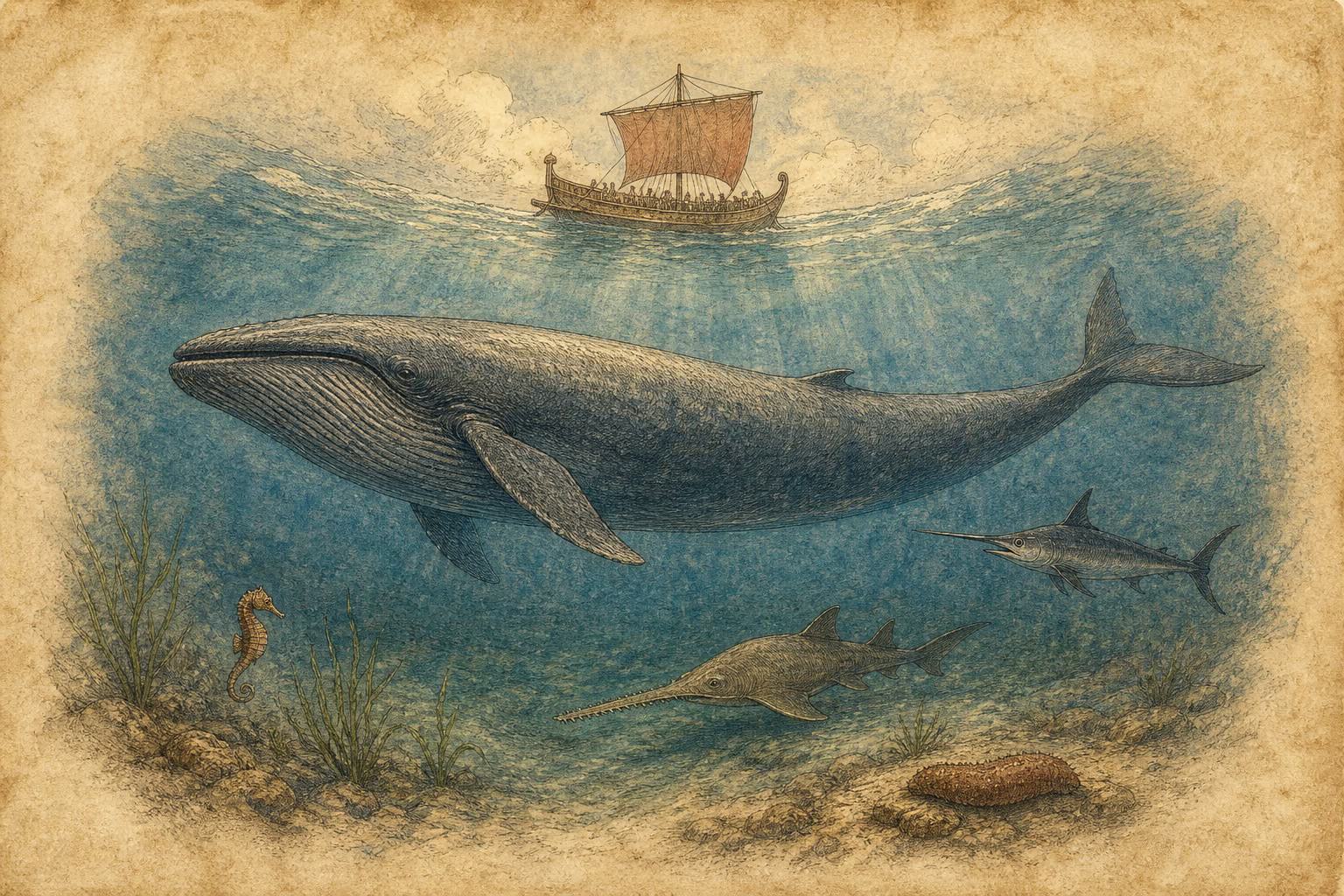
Sunt autem conplura in his maiora etiam terrestribus. causa evidens umoris luxuria. alia sors alitum quibus vita pendentibus. in mari autem, tam late supino mollique ac fertili nutrimento, accipiente causas genitales e sublimi semperque pariente natura pleraque etiam monstrifica reperiuntur, perplexis et in semet aliter atque aliter nunc flatu nunc fluctu convolutis seminibus atque principiis, vera ut fiat vulgi opinio, quicquid nascatur in parte naturae ulla, et in maria esse praeterque multa quae nusquam alibi. rerum quidem, non solum animalium, simulacra inesse licet intellegere intuentibus uvam, gladium, serras, cucumin vero et colore et odore similem, quo minus miremur equorum capita in tam parvis eminere cocleis.
English · Bostock & Riley 1855–57
Among these there are many to be found that exceed in size any of the terrestrial animals even; the evident cause of which is the superabundance of moisture with which they are supplied. Very different is the lot of the winged animals, whose life is passed soaring aloft in the air. But in the seas, spread out as they are far and wide, forming an element at once so delicate and so vivifying, and receiving the generating principles from the regions of the air, as they are ever produced by Nature, many animals are to be found, and indeed, most of those that are of monstrous form; from the fact, no doubt, that these seeds and first principles of being are so utterly conglomerated and so involved, the one with the other, from being whirled to and fro, now by the action of the winds and now by the waves. Hence it is that the vulgar notion may very possibly be true, that whatever is produced in any other department of Nature, is to be found in the sea as well; while, at the same time, many other productions are there to be found which nowhere else exist. That there are to be found in the sea the forms, not only of terrestrial animals, but of inanimate objects even, is easily to be understood by all who will take the trouble to examine the grape-fish, the sword-fish, the saw-fish, and the cucumber-fish, which last so strongly resembles the real cucumber both in colour and in smell. We shall find the less reason then to be surprised to find that in so small an object as a shell-fish the head of the horse is to be seen protruding from the shell.