LIBER IX · CAPUT 3
THE SEA MONSTERS OF THE INDIAN OCEAN
Latine · Mayhoff 1906
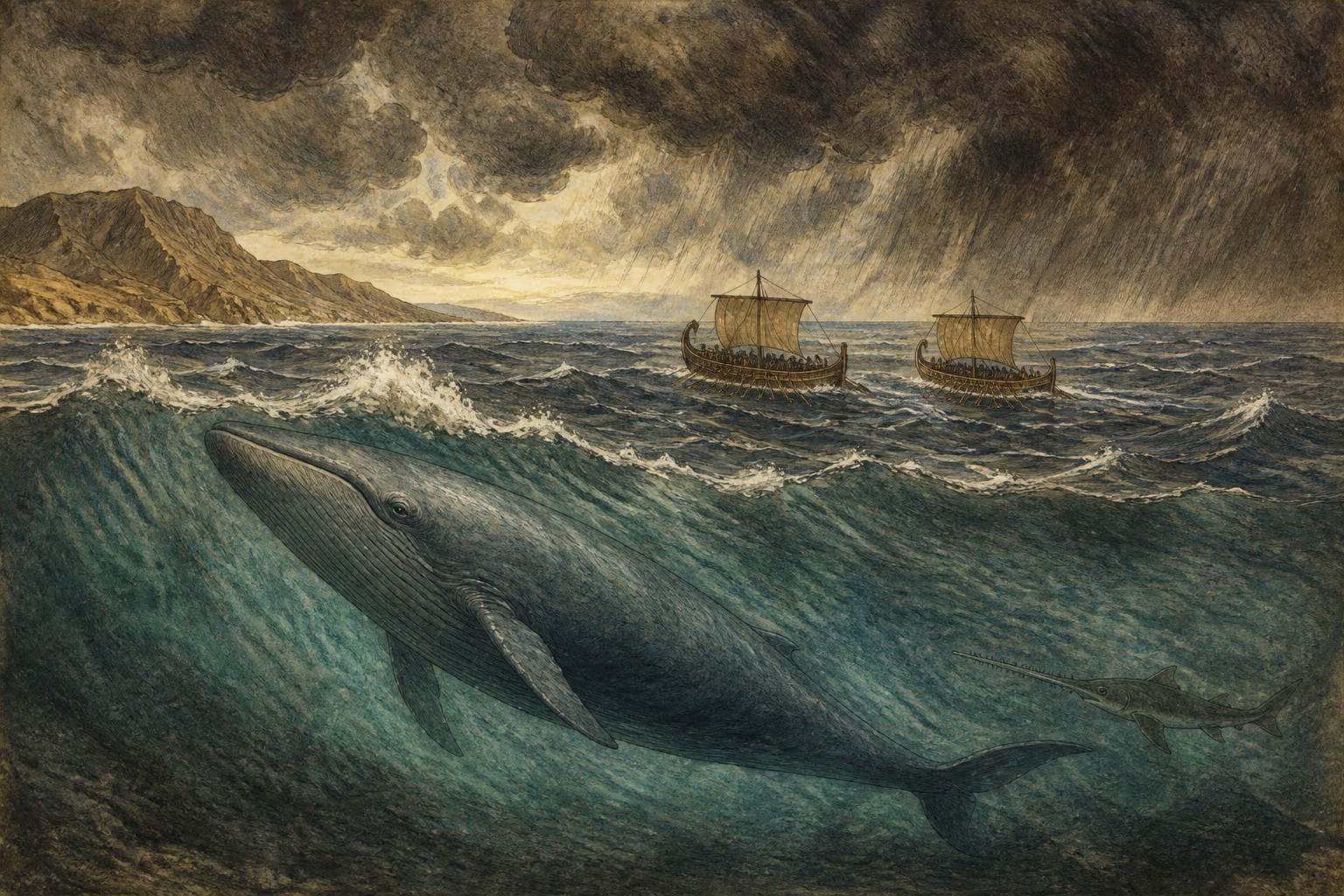
Plurima autem et maxima animalia in Indico mari, ex quibus ballaenae quaternum iugerum, pristes ducenum cubitorum, quippe ubi locustae quaterna cubita impleant, anguillae quoque in Gange amne tricenos pedes. sed in mari beluae circa solstitia maxime visuntur. tune illic ruunt turbines, tune imbres, tune deiectae montium iugis procellae ab imo vertunt maria pulsatasque ex profundo beluas cum fluctibus volvunt tanta, ut alias thynnorum, multitudine, ut Magni Alexandri classis haut alio modo quam 5 hostium acie obvia contrarium agmen adversa fronte derexerit: aliter sparsis non erat evadere. non voce, non sonitu, non ictu, sed fragore terrentur nec nisi ruina turbantur. Cadara appellatur Rubri maris paeninsula ingens; huius obiectu vastus efficitur sinus, XII dierum et noctium remigio enavigatus Ptolemaeo regi, quando nullius aurae recipit afflatum. huius loci quiete praecipue ad inmobilem magnitudinem beluae adolescunt. Gedrosos, qui Arabim amnem accolunt, Alexandri Magni classium praefecti prodiderunt in domibus fores maxillis beluarum facere, ossibus tecta contignare, ex quibus multa quadragenum cubitorum longitudinis reperta. exeunt et pecori similes beluae ibi in terram pastaeque radices fruticum remeant et quaedam equorum, asinorum, taurorum capitibus, quae depascuntur sata.
English · Bostock & Riley 1855–57
But the most numerous and largest of all these animals are those found in the Indian seas; among which there are balænae, four jugera in extent, and the pristis, two hundred cubits long: here also are found cray-fish four cubits in length, and in the river Ganges there are to be seen eels three hundred feet long. But at sea it is more especially about the time of the solstices that these monsters are to be seen. For then it is that in these regions the whirlwind comes sweeping on, the rains descend, the hurricane comes rushing down, hurled from the mountain heights, while the sea is stirred up from the very bottom, and the monsters are driven from their depths and rolled upwards on the crest of the billow. At other times again, there are such vast multitudes of tunnies met with, that the fleet of Alexander the Great was able to make head against them only by facing them in order of battle, just as it would have done an enemy’s fleet. Had the ships not done this, but proceeded in a straggling manner, they could not possibly have made their escape. No noises, no sounds, no blows had any effect on these fish; by nothing short of the clash of battle were they to be terrified, and by nothing less than their utter destruction were they overpowered.
There is a large peninsula in the Red Sea, known by the name of Cadara: as it projects into the deep it forms a vast gulf, which it took the fleet of King Ptolemy twelve whole days and nights to traverse by dint of rowing, for not a breath of wind was to be perceived. In the recesses of this becalmed spot more particularly, the sea-monsters attain so vast a size that they are quite unable to move. The commanders of the fleets of Alexander the Great have related that the Gedrosi, who dwell upon the banks of the river Arabis, are in the habit of making the doors of their houses with the jaw-bones of fishes, and raftering the roofs with their bones, many of which were found as much as forty cubits in length. At this place, too, the sea-monsters, just like so many cattle, were in the habit of coming on shore, and, after feeding on the roots of shrubs, they would return; some of them, which had the heads of horses, asses, and bulls, found a pasture in the crops of grain.