LIBER IX · CAPUT 23
THE MURÆNA
Latine · Mayhoff 1906
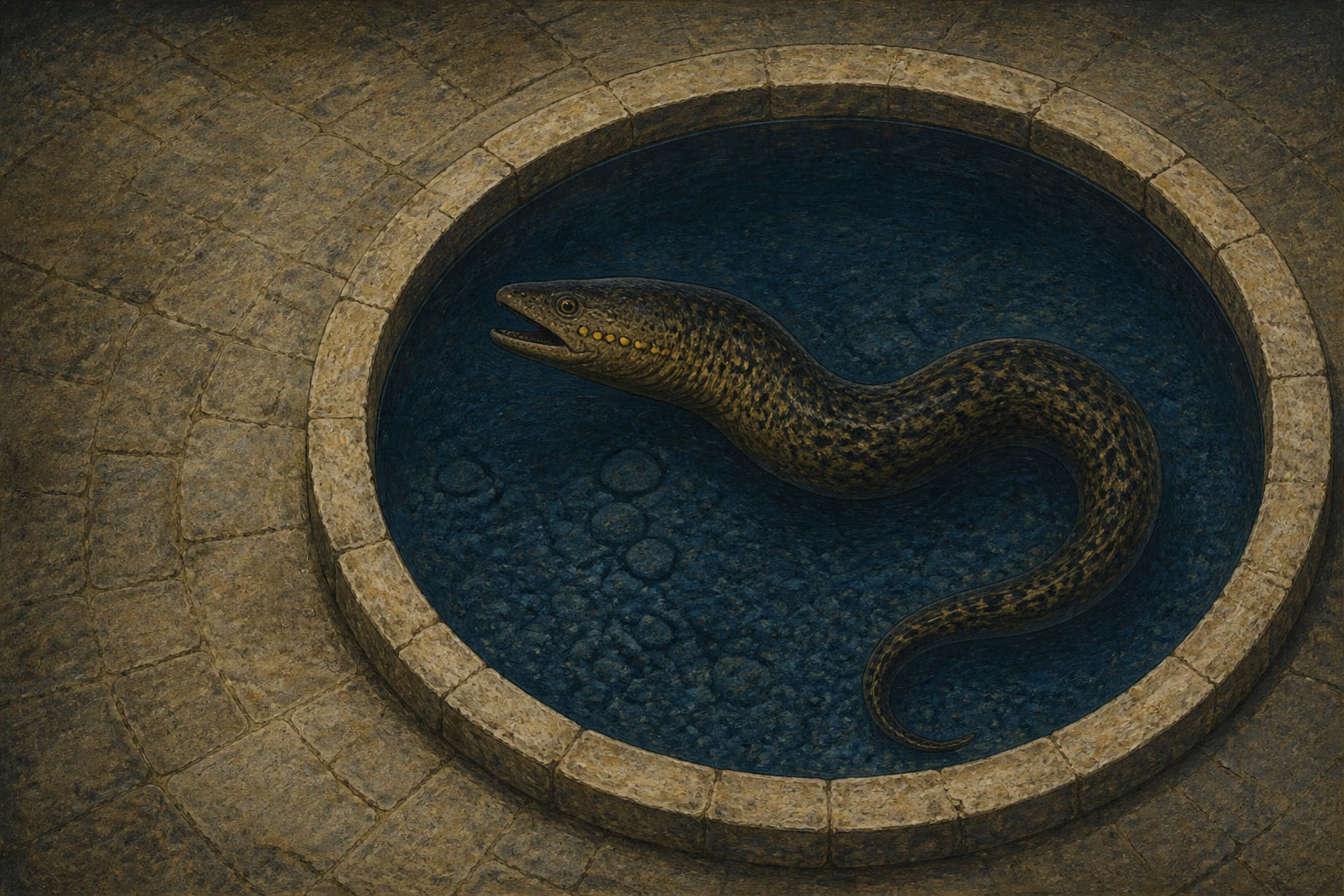
Murena quocumque mense parit, cum ceteri pisces stato pariant. ova eius citissime crescunt. in sicca litora elapsas vulgus coitu serpentium impleri putat. Aristoteles zmyrum vocat marem qui generet; discrimen esse quod murena varia et infirma sit, zmvrus unicolor et robustus dentesque et extra os habeat. in Gallia septentrionali murenis omnibus dextera in maxilla septenae maculae ad formam septentrionis aureo colore fulgent, dumtaxat viventibus, pariterque cum anima extinguuntur. invenit in hoc animali documenta saevitiae Vedius Pollio, eques Romanus ex amicis Divi Augusti, vivariis earum inmergens damnata mancipia, non tamquam ad hoc feris terrarum non sufficientibus, sed quia in alio genere totum pariter homi- nem distrahi spectare non poterat. ferunt aceti gustu praecipue eas in rabiem agi. tenuissimum iis tergus, contra anguillis crassius, eoque verberari solitos tradit Verrius praetextatos et ob id multam iis dici non institutum.
English · Bostock & Riley 1855–57
The muræna brings forth every month, while all the other fishes spawn only at stated periods: the eggs of this fish increase with the greatest rapidity. It is a vulgar belief that the muræna comes on shore, and is there impregnated by intercourse with serpents. Aristotle calls the male, which impregnates the female, by the name of “zmyrus;” and says that there is a difference between them, the muræna being spotted and weakly, while the zmyrus is all of one colour and hardy, and has teeth which project beyond the mouth. In northern Gaul all the murænæ have on the right jaw seven spots, which bear a resemblance to the constellation of the Septentriones, and are of a gold colour, shining as long as the animal is alive, but disappearing as soon as it is dead. Vedius Pollio, a Roman of equestrian rank, and one of the friends of the late Emperor Augustus, found a method of exercising his cruelty by means of this animal, for he caused such slaves as had been condemned by him, to be thrown into preserves filled with murænæ; not that the land animals would not have fully sufficed for this purpose, but because he could not see a man so aptly torn to pieces all at once by any other kind of animal. It is said that these fish are driven to madness by the taste of vinegar. Their skin is exceedingly thin; while that of the eel, on the other hand, is much thicker. Verrius informs us that formerly the children of the Roman citizens, while wearing the prætexta, were flogged with eel-skins, and that, for this reason, no pecuniary penalty could by law be inflicted upon them.