LIBER IX · CAPUT 24
VARIOUS KINDS OF FLAT FISH
Latine · Mayhoff 1906
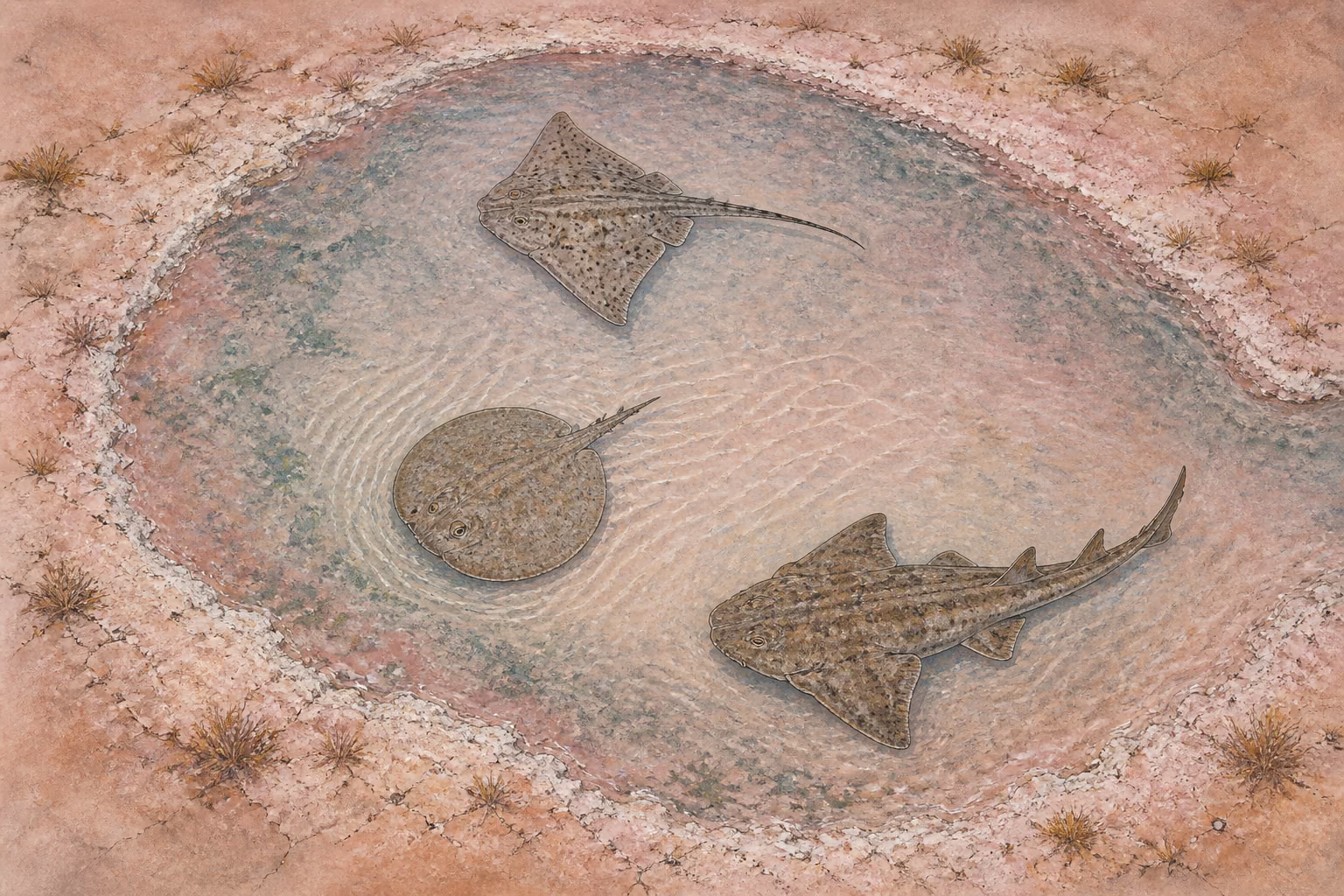
Planorum piscium alterum est genus, quod pro spina cartilaginem habet, ut raiae, pastinacae, squatinae, torpedo et quos bovis, lamiae, aquilae, ranae nominibus Graeci appellant. quo in numero sunt squali quoque, quam- vis non plani. haec Graece in universum σελάχη appellavit Aristoteles primus hoc nomineiis inposito. nos distinguere non possumus, nisi si cartilaginea appellare libeat. omnia autem carnivora sunt talia et supina vescuntur, ut in delphinis diximus, et cum ceteri pisces ova pariant, hoc genus solum, ut ea quae cete appellant, animal parit, excepta quam ranam vocant.
English · Bostock & Riley 1855–57
There is another kind of flat fish, which, instead of bones, has cartilage, such, for instance, as the raia, the pastinaca, the squatina, the torpedo, and those which, under their respective Greek names, are known as the ox, the lamia, the eagle, and the frog. In this number, also, the squali ought to be included, although they are not flat fish. Aristotle was the first to call these fish by the one generic name of σελάχη, which he has given them: we, however, have no mode of distinguishing them, unless, indeed, we choose to call them the “cartilaginous” fishes. All these fish are carnivorous, and feed lying on their backs, just as dolphins do, as already noticed; while the other fishes, too, are oviparous, this one kind, with the exception of that known as the sea-frog, is viviparous, like the cetacea.