LIBER IX · CAPUT 25
THE ECHENEIS, AND ITS USES IN ENCHANTMENTS
Latine · Mayhoff 1906
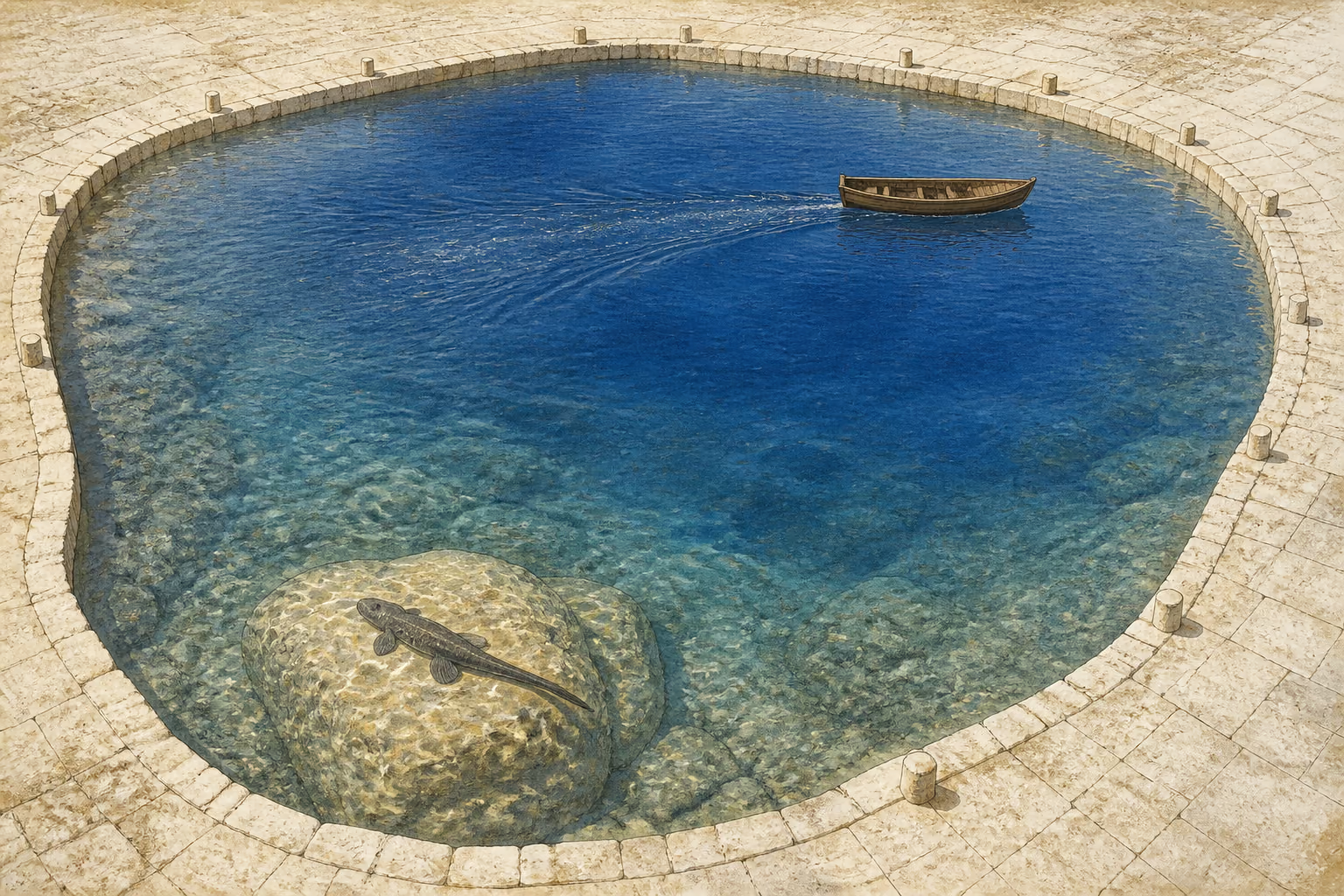
Est parvus admodum piscis adsuetus petris, echeneis appellatus. hoc carinis adhaerente naves tardius ire creduntur, inde nomine inposito. quam ob causam amatoriis quoque veneficiis infamis est et iudiciorum ac litium mora, quae crimina una laude pensat fluxus gravidarum utero sistens partusque continens ad puerperium. in cibos tamen non admittitur. pedes eum habere arbitrantur, Ari- stoteles... it apposita pinnarum similitudine. Mucianus muricem esse latiorem purpura, neque aspero neque rotundo ore neque in angulos prodeunte rostro, sed sicut concha utroque latere sese colligente. quibus inhaerentibus plenam venti stetisse navem Periandri portantem, ut castrarentur, nobiles pueros; conchas, quae id praestiterint, apud Cnidiorum Venerem coli. Trebius Niger pedalem esse et crassitudine quinque digitorum, naves morari; praeterea hanc esse vim eius adservati in sale, ut aurum, quod deciderit in altissimos puteos, admotus extrahat.
English · Bostock & Riley 1855–57
There is a very small fish that is in the habit of living among the rocks, and is known as the echeneis. It is believed that when this has attached itself to the keel of a ship its progress is impeded, and that it is from this circumstance that it takes its name. For this reason, also, it has a disgraceful repute, as being employed in love philtres, and for the purpose of retarding judgments and legal proceedings—evil properties, which are only compensated by a single merit that it possesses—it is good for staying fluxes of the womb in pregnant women, and preserves the fœtus up to birth: it is never used, however, for food. Aristotle is of opinion that this fish has feet, so strong is the resemblance, by reason of the form and position of the fins.
Mucianus speaks of a murex of larger size than the purple, with a head that is neither rough nor round; and the shell of which is single, and falls in folds on either side. He tells us, also, that some of these creatures once attached themselves to a ship freighted with children of noble birth, who were being sent by Periander for the purpose of being castrated, and that they stopped its course in full sail; and he further says, that the shell-fish which did this service are duly honoured in the temple of Venus, at Cnidos. Trebius Niger says that this fish is a foot in length, and that it can retard the course of vessels, five fingers in thickness; besides which, it has another peculiar property—when preserved in salt, and applied, it is able to draw up gold which has fallen into a well, however deep it may happen to be.