LIBER IX · CAPUT 31
THE VARIOUS KINDS OF CRABS; THE PINNOTHERES, THE SEA URCHIN, COCKLES, AND SCALLOPS
Latine · Mayhoff 1906
vivunt petrosis locis, cancri mollibus. hieme aprica litora sectantur, aestate in opaca gurgitum recedunt. omnia eius generis hieme laeduntur, autumno et vere pinguescunt et plenilunio magis, quia noctes sidus tepido fulgore mitificat.
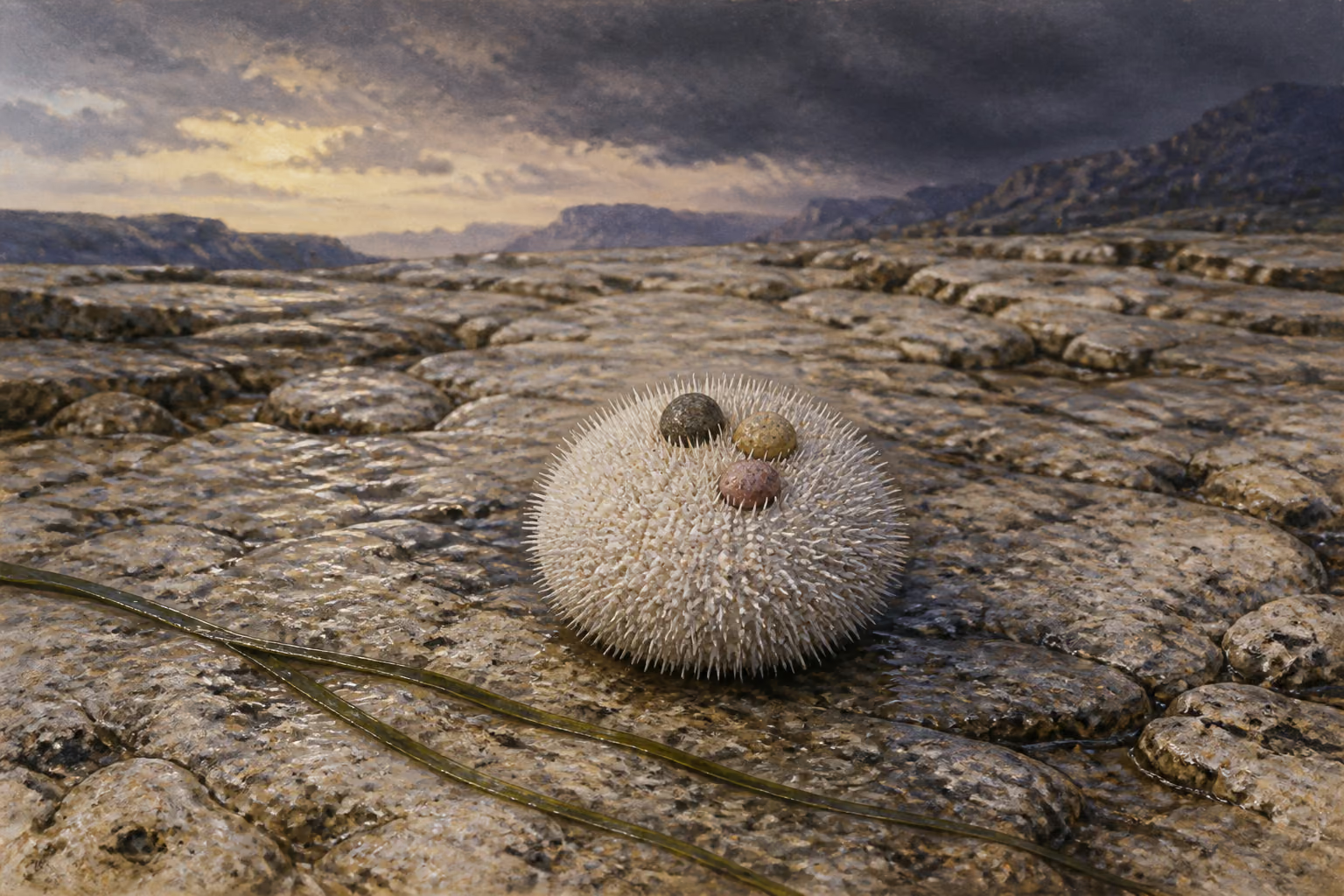
Cancrorum genera carabi, astaci, maeae, paguri, Heracleotici, leones et alia ignobiliora. carabi cauda a ceteris cancris distant. in Phoenice hippoe vocantur, tantae velocitatis, ut consequi non sit. cancris vita longa, pedes octoni, omnes in obliquum flexi. feminae primus pes duplex, mari simplex. praeterea bina bracchia denticulatis forcipibus. superior pars in primoribus his movetur, inferiore inmobili. dexterum bracchium omnibus maius. universi aliquando congregantur. os Ponti evincere non valent; quam ob rem egressi circumeunt apparetque tritum iter. 5 pinotheras vocatur minimus ex omni genere, ideo opportunus iniuriae. huic sollertia est inanium ostrearum testis se condere et, cum adcreverit, migrare in capaciores. cancri in pavore et retrorsi pari velocitate redeunt. dimicant inter se ut arietes adversis cornibus incursantes. contra serpentium ictus medentur. sole cancri signum transeunte et ipsorum, cum exanimati sint, corpus transfigurari in scorpiones narratur in sicco. ex eodem genere sunt echini, quibus spinae pro pedibus. ingredi est iis in orbem volvi, itaque detritis saepe aculeis inveniuntur. ex his echinometrae appellantur quorum spinae longissimae, calyces minimi. nec omnibus idem vitreus color, circa Toronen candidi nascuntur, spina parva. ova omnium amara, quina numero. ora in medio corpore in terram versa. tradunt saevitiam maris praesagire eos correptisque opperiri lapillis, mobilitatem pondere stabilientes; nolunt volutatione spinas atterere. quod ubi videre nautici, statim pluribus ancoris navigia infrenant.
English · Bostock & Riley 1855–57
The cray-fish frequents rocky places, the crab spots which present a soft surface. In winter they both choose such parts of the shore as are exposed to the heat of the sun, and in summer they withdraw to the shady recesses of deep inlets of the sea. All fish of this kind suffer from the cold of winter, but become fat during autumn and spring, and more particularly during the full moon; for the warmth of that luminary, as it shines in the night, renders the temperature of the weather more moderate.
There are various kinds of crabs, known as carabi, astaci, maiæ, paguri, heracleotici, lions, and others of less note. The carabus differs from other crabs, in having a tail: in Phœnicia they are called hippoi, or horses, being of such extraordinary swiftness, that it is impossible to overtake them. Crabs are long-lived, and have eight feet, all of which are bent obliquely. In the female the first foot is double, in the male single; besides which, the animal has two claws with indented pincers. The upper part only of these fore-feet is moveable, the lower being immoveable: the right claw is the largest in them all. Sometimes they assemble together in large bodies; but as they are unable to cross the mouth of the Euxine, they turn back again and go round by land, and the road by which they travel is to be seen all beaten down with their foot-marks.
The smallest crab of any is that known as the pinnotheres, and hence it is peculiarly exposed to danger; its shrewdness, however, is evinced by its concealing itself in the shell of the oyster; and as it grows larger, it removes to those of a larger size.
Crabs, when alarmed, go backwards as swiftly as when moving forwards. They fight with one another like rams, butting at each other with their horns. They have a mode of curing themselves of the bites of serpents. It is said, that while the sun is passing through the sign of Cancer, the dead bodies of the crabs, which are lying thrown up on the shore, are transformed into serpents.
To the same class also belongs the sea-urchin, which has spines in place of feet; its mode of moving along is to roll like a ball, hence it is that these animals are often found with their prickles rubbed off. Those among them which have the longest spines of all, are known by the name of echinometræ, while at the same time their body is the very smallest. They are not all of them of the same glassy colour; in the vicinity of Torone they are white, with very short spines. The eggs of all of them are bitter, and are five in number; the mouth is situate in the middle of the body, and faces the earth. It is said that these creatures foreknow the approach of a storm at sea, and that they take up little stones with which they cover themselves, and so provide a sort of ballast against their volubility, for they are very unwilling by rolling along to wear away their prickles. As soon as seafaring persons observe this, they at once moor their ship with several anchors.