LIBER IX · CAPUT 39
WHEN PURPLE WAS FIRST USED AT ROME: WHEN THE LATICLAVE VESTMENT AND THE PRÆTEXTA WERE FIRST WORN
Latine · Mayhoff 1906
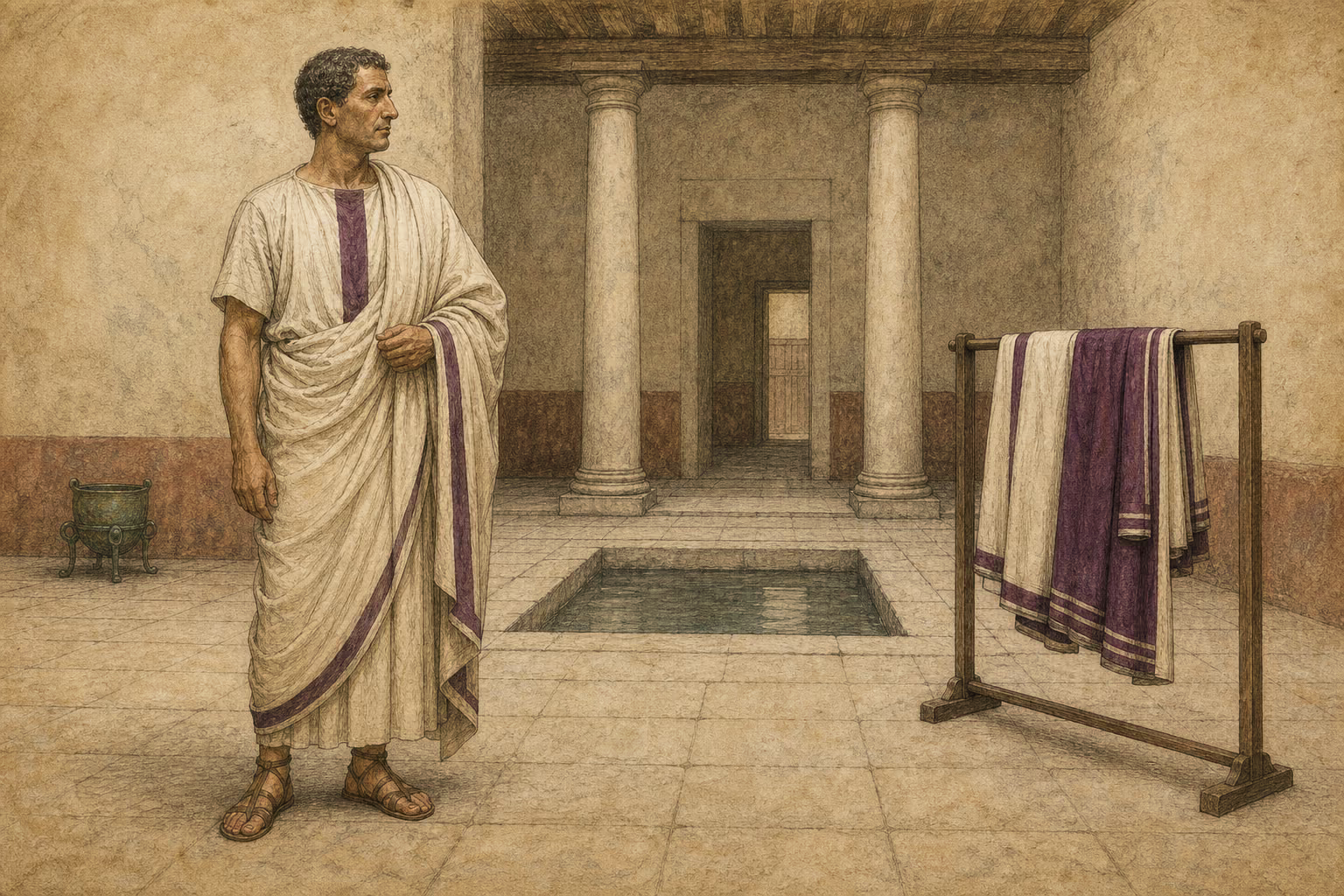
Purpurae usum Romae semper fuisse video, sed Romulo in trabea. nam toga praetexta et latiore clavo Tullum Hostilium e regibus primum usum Etruscis devictis satis constat. Nepos Cornelius, qui Divi Augusti principatu obiit: Me, inquit, iuvene violacea purpura vigebat, cuius libra denariis centum venibat, nec multo post rubra Tarentina. huic successit dibapha Tyria, quae in libras denariis mille non poterat emi. hac P. Lentulus Spinther aedilis curulis primus in praetexta usus inprobabatur. qua purpura quis non iam, inquit, tricliniaria facit? Spinther aedilis fuit urbis conditae anno DCXCI Cicerone consule. dibapha tune dicebatur quae bis tincta esset, veluti magnifico inpendio, qualiter nunc omnes paene commodiores purpurae tinguuntur.
In conchyliata veste cetera eadem sine bucino, praeterque ius temperatur aqua et pro indiviso humani potus excremento. dimidia et medicamina adduntur. sic gignitur laudatus ille pallor saturitate fraudata tantoque dilutior, quanto magis vellera esuriunt.
English · Bostock & Riley 1855–57
I find that, from the very first, purple has been in use at Rome, but that Romulus employed it for the trabea. As to the toga prætexta and the laticlave vestment, it is a fact well ascertained, that Tullus Hostilius was the first king who made use of them, and that after the conquest of the Etruscans. Cornelius Nepos, who died in the reign of the late Emperor Augustus, has left the following remarks: “In the days of my youth,” says he, “the violet purple was in favour, a pound of which used to sell at one hundred denarii; and not long after, the Tarentine red was all the fashion. This last was succeeded by the Tyrian dibapha, which could not be bought for even one thousand denarii per pound. P. Lentulus Spinther, the curule ædile, was the first who used the dibapha for the prætexta, and he was greatly censured for it; whereas now-a-days,” says he, “who is there that does not have purple hangings to his banqueting-couches, even?”
This Spinther was ædile in the consulship of Cicero, and in the year from the Building of the City, 691. “Dibapha” was the name given to textures that had been doubly dyed, and these were looked upon as a mighty piece of costly extravagance; while now, at the present day, nearly all the purple cloths that are reckoned of any account are dyed in a similar manner.
Fabrics that are called conchyliated are subjected to the same process in all other respects, but without any admixture of the juice of the buccinum; in addition to which, the liquid is mixed with water and human urine in equal parts, one-half only of the proportion of dye being used for the same quantity of wool. From this mixture a full colour is not obtained, but that pale tint, which is so highly esteemed; and the clearer it is, the less of it the wool has imbibed.