LIBER IX · CAPUT 41
THE AMETHYST, THE TYRIAN, THE HYSGINIAN, AND THE CRIMSON TINTS
Latine · Mayhoff 1906
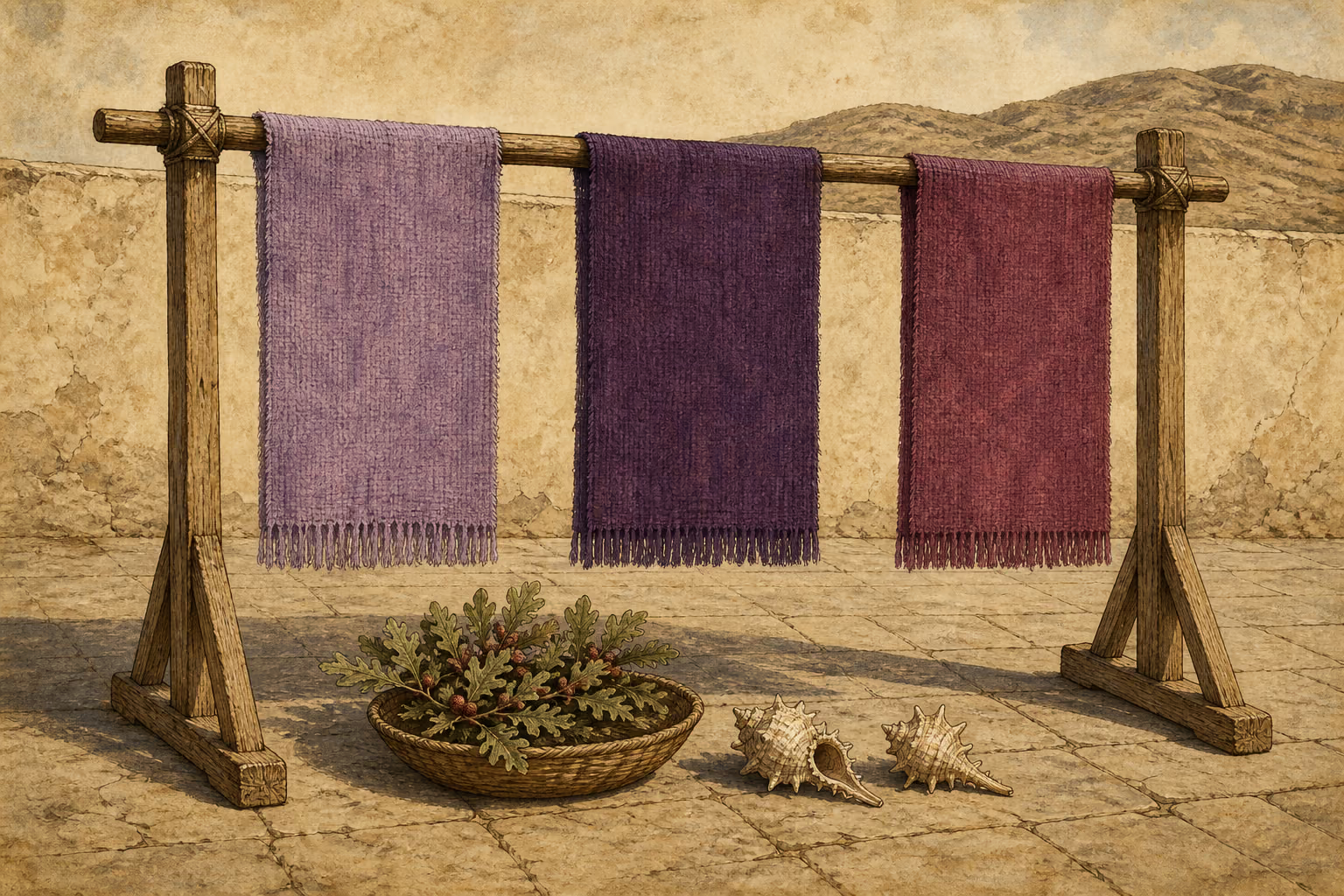
non est satis abstulisse gemmae nomen amethystum; rursum absolutum inebriatur Tyrio, ut sit ex utroque nomen inprobum simulque luxuria duplex, et cum confecere conchylia transire melius in Tyrium putant. paenitentia hoc primo debet invenisse, artifice mutante quod damnabat. inde ratio nata, votum quoque factum e vitio portentosis ingeniis, et gemina demonstrata via luxuriae, ut color alius operiretur alio, suavior ita fieri leniorque dictus; quin et terrena miscere coccoque tinctum Tyrio tinguere, ut fieret hysginum. coccum Galatiae, rubens granum, ut dicemus in terrestribus, aut circa Emeritam Lusitaniae in maxima laude est. verum, ut simul peragantur nobilia pigmenta, anniculo grano languidus sucus, idem a quadrimo evanidus. ita nec recenti vires neque senescenti. abunde tractata est ratio qua se virorum iuxta feminarumque forma credit amplissimam fieri.
English · Bostock & Riley 1855–57
It was not sufficient to have borrowed from a precious stone the name of “amethyst” for a dye, but when we have obtained this colour we must drench it over again with Tyrian tints, so that we may have an upstart name compounded of both, and at the same moment a two-fold display of luxury; for as soon as ever people have succeeded in obtaining the conchyliated colour, they immediately begin to think that it will do better as a state of transition to the Tyrian hues. There can be little doubt that this invention is due to some artist who happened to change his mind, and alter a tint with which he was not pleased: hence a system has taken its rise, and spirits, ever on the rack for creating wonders, have transformed what was originally a blunder into something quite desirable; while, at the same time, a double path has been pointed out to luxury, in thus making one colour carry another, and thereby become, as they say, softer and more mellow. And what is even more than this, human ingenuity has even learned to mingle with these dyes the productions of the earth, and to steep in Tyrian purple fabrics already dyed crimson with the berry of the kermes, in order to produce the hysginian tint. The kermes of Galatia, a red berry which we shall mention when we come to speak of the productions of the earth, is the most esteemed of all, except, perhaps, the one that grows in the vicinity of Emerita, in Lusitania. However, to make an end, once for all, of my description of these precious dyes, I shall remark, that the colour yielded by this grain when a year old, is of a pallid hue, and that if it is more than four years old, it is quickly discharged: hence we find that its energies are not developed either when it is too young or when old.
I have now abundantly treated of an art, by means of which men, just as much as women, have an idea that their appearance may be set off to the greatest possible advantage.