LIBER IX · CAPUT 42
THE PINNA, AND THE PINNOTHERES
Latine · Mayhoff 1906
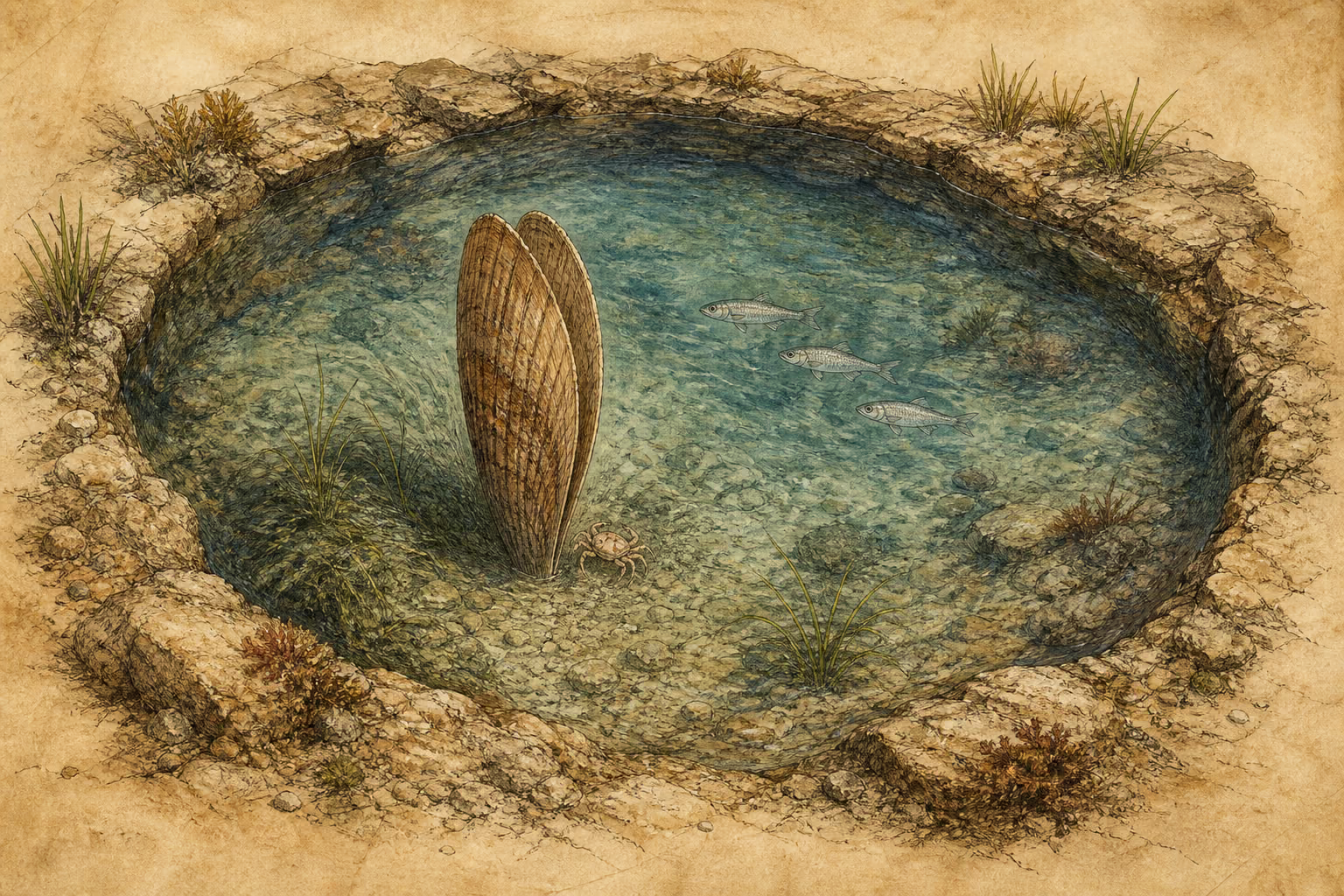
Concharum generis et pina est. nascitur in limosis, subrecta semper nec umquam sine comite, quem pinoteren vocant, alii pinophylacem; is est squilla parva, aliubi cancer dapis adsectator. pandit se pina, luminibus orbum corpus intus minutis piscibus praebens. adsultant illi protinus et, ubi licentia audacia crevit, implent eam. hoc tempus speculatus index morsu levi significat. illa conpress u quicquid inclusit exanimat partemque socio tribuit.
Quo magis miror quosdam existimasse aquatilibus nullum inesse sensum. novit torpedo vim suam ipsa non torpens, mersaque in limo se occultat, piscium qui securi supernatantes obtorpuere corripiens.— huius iecori teneritas nulla praefertur.— nec minor sollertia ranae, quae in mari piscatrix vocatur. eminentia sub oculis cornicula turbato limo exerit, adsultantibus pisciculis praetrahens, done tam prope accedant, ut adsiliat. simili modo squatina et rhombus abditi pinnas exertas movent specie vermiculorum, item quae vocantur raiae. nam pastinaca latrocinatur ex occulto transeuntes radio, quod telum est ei, figens. argumenta sollertiae huius, quod tardissimi piscium hi mugilem velocissimum omnium habentes in ventre reperiuntur.
English · Bostock & Riley 1855–57
Belonging to the shell-fish tribe there is the pinna also: it is found in slimy spots, always lying upright, and never without a companion, which some writers call the pinnotheres, and others, again, pinnophylax, being a small kind of shrimp, or else a parasitical crab. The pinna, which is destitute of sight, opens its shell, and in so doing exposes its body within to the attacks of the small fish, which immediately rush upon it, and finding that they can do so with impunity, become bolder and bolder, till at last they quite fill the shell. The pinnotheres, looking out for the opportunity, gives notice to the pinna at the critical moment by a gentle bite, upon which the other instantly closes its shell, and so kills whatever it has caught there; after which, it divides the spoil with its companion.
Upon reflecting on such facts as these, I am the more inclined to wonder at the circumstance that some persons have been found who were of opinion that the water animals are devoid of all sense. The torpedo is very well aware of the extent of its own powers, and that, too, although it experiences no benumbing effects from them itself. Lying concealed in the mud, it awaits the approach of the fish, and, at the moment that they are swimming above in supposed security, communicates the shock, and instantly darts upon them: there is no delicate morsel in existence that is preferred to the liver of this fish. And no less wonderful, too, is the shrewdness manifested by the sea-frog, which is known by us as the “fisher.” Stirring up the mud, it protrudes from the surface two little horns, which project from beneath the eyes, and so attracts the small fish which are sporting around it, until at last they approach so close that it is able to seize them. In a similar manner, too, the squatina and the rhombus conceal themselves, but extend their fins, which, as they move to and fro, resemble little worms; the ray also does the same. The pastinaca, too, lies lurking in ambush, and pierces the fish as they pass with the sting with which it is armed. Another proof of instinctive shrewdness is the fact, that although the ray is the very slowest of all the fish in its movements, it is found with the mullet in its belly, which is the swiftest of them all.