LIBER IX · CAPUT 43
THE SENSITIVENESS OF WATER ANIMALS; THE TORPEDO, THE PASTINACA, THE SCOLOPENDRA, THE GLANIS, AND THE RAM-FISH
Latine · Mayhoff 1906
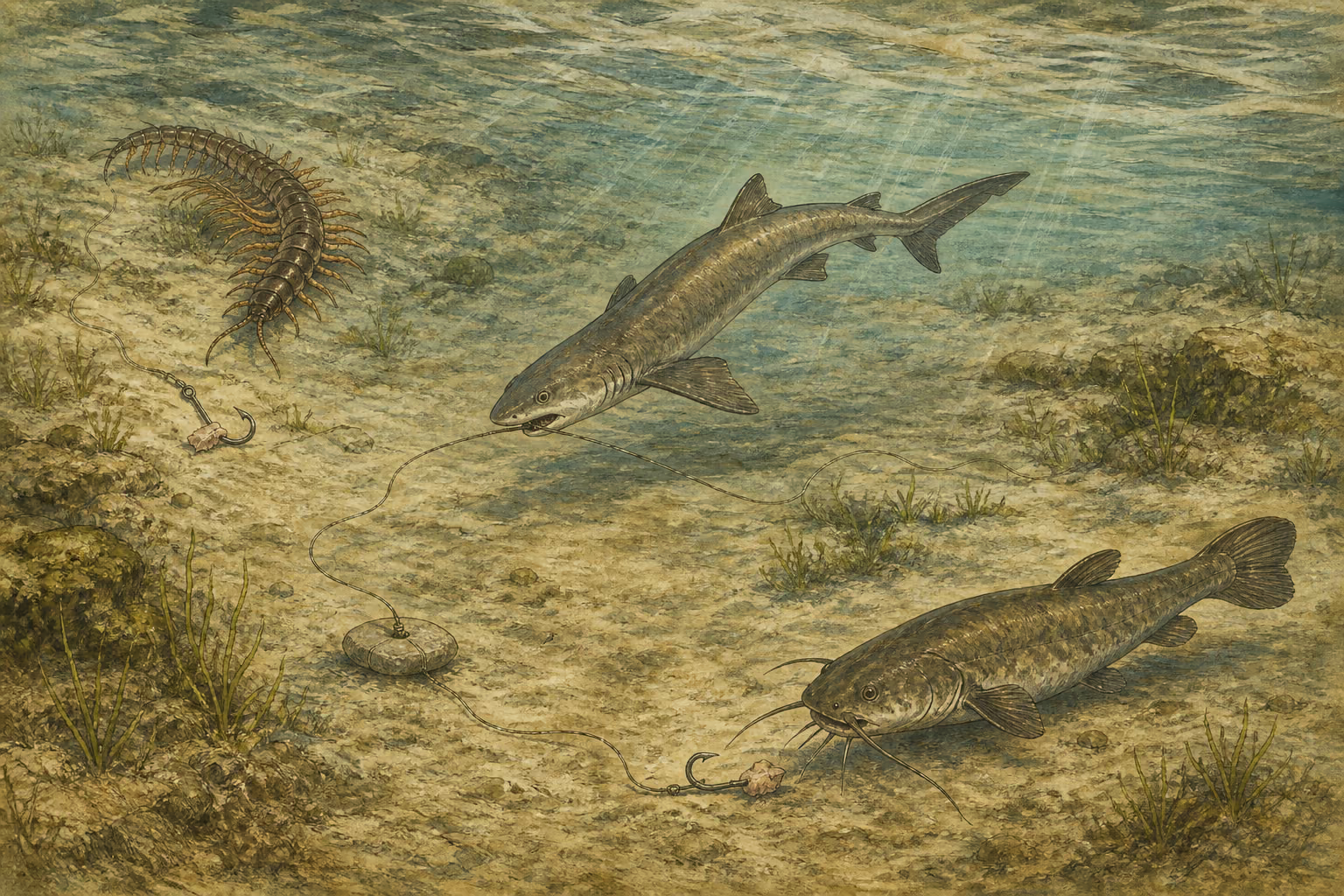
Scolopendrae, terrestribus similes, quas centipedes vocant, hamo devorato omnia interanea evomunt, donec hamum egerant, dein resorbent. at vulpes marinae simili in periculo gluttiunt amplius usque ad infirma lineae, qua facile praerodant. cautius qui glanis vocatur aversos mordet hamos nec devorat, sed esca spoliat.
English · Bostock & Riley 1855–57
The scolopendra, which bears a strong resemblance to the land insect which we call a centipede, if it chances to swallow a hook, will vomit forth all its intestines, until it has disengaged itself, after which it will suck them in again. The sea-fox too, when exposed to a similar peril, goes on swallowing the line until it meets with a weak part of it, and then with its teeth snaps it asunder with the greatest ease. The fish called the glanis is more cautious; it bites at the hooks from behind, and does not swallow them, but only strips them of the bait.