LIBER IX · CAPUT 5
THE FORMS OF THE TRITONS AND NEREIDS. THE FORMS OF SEA ELEPHANTS
Latine · Mayhoff 1906
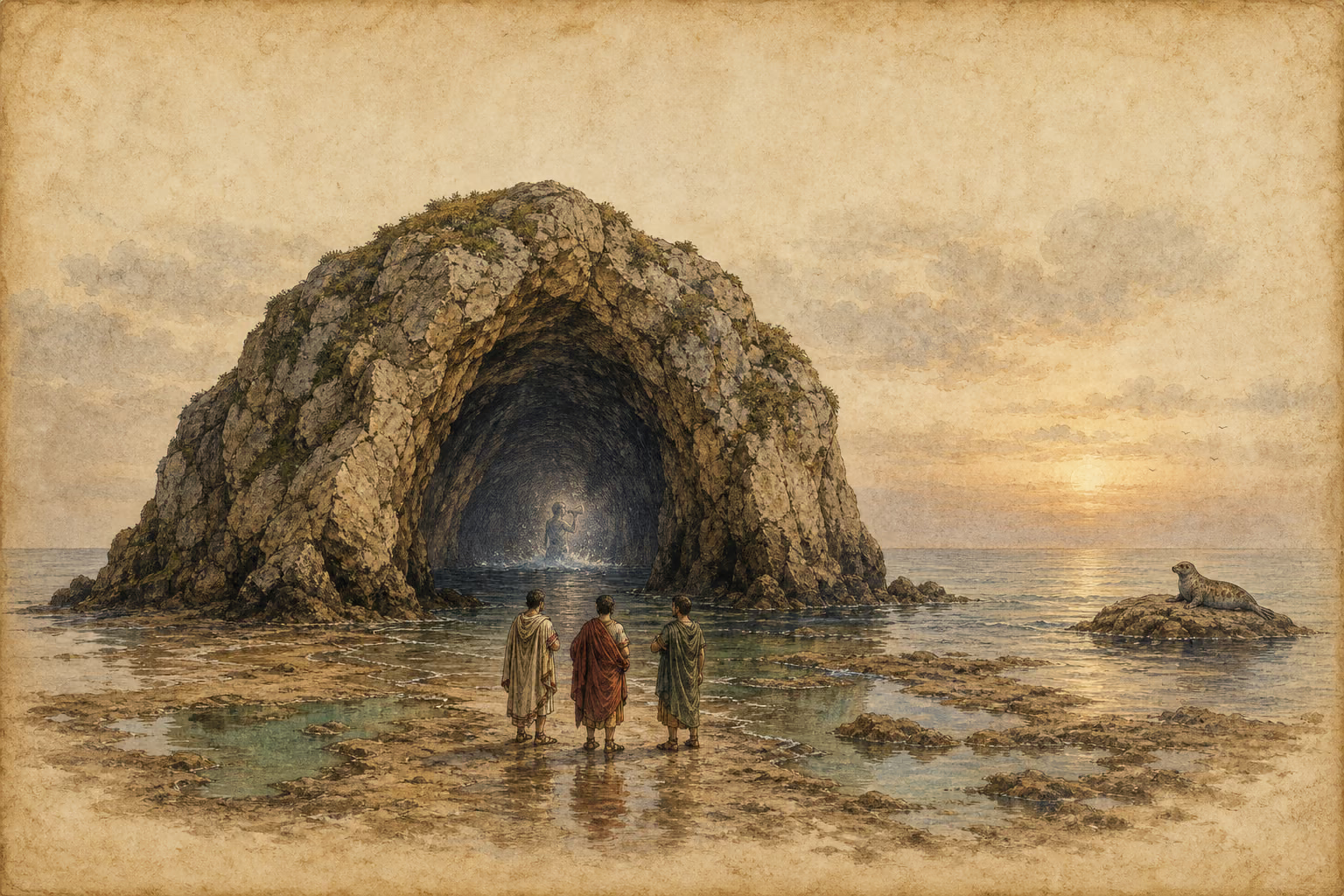
Tiberio principi nuntiavit Olisiponensium legatio ob id missa, visum auditumque in quodam specu concha canentem Tritonem qua noscitur forma. et Nereidum falsa non est, squamis modo hispido corpore etiamn qua humanam effigiem habet. namque haec in eodem spectata litore est, cuius morientis etiam cantum tristem accolae audivere longe, et Divo Augusto legatus Galliae conplures in litore apparere exanimes Nereidas scripsit. auctores habeo in equestri ordine splendentes, visum ab iis in Gaditano oceano marinum hominem toto corpore absoluta similitudine; ascendere eum navigia nocturnis temporibus statimque degravari quas insederit partes et, si diutius permaneat, etiam mergi. Tiberio principe contra Lugdunensis provinciae litus in insula simul trecentas amplius beluas reciprocans destituit oceanus, mirae varietatis et magnitudinis, nec pauciores in Santonum litore interque reliquas elephantos et arietes candore tantum cornibus adsimulatis, Nereidas vero multas. Turranius prodidit expulsam beluam in Gaditana litora, cuius inter duas pinnas ultimae caudae cubita sedecim fuissent, dentes eiusdem CXX, maximi dodrantium mensura, minimi semipedum. beluae, cui dicebatur exposita fuisse Andromeda, ossa Romae apportata ex oppido ludaeae lope ostendit inter reliqua miracula in aedilitate sua M. Scaurus longitudine pedum XL, altitudine costarum Indicos elephantos excedente, spinae crassitudine sesquipedali.
English · Bostock & Riley 1855–57
A deputation of persons from Olisipo, that had been sent for the purpose, brought word to the Emperor Tiberius that a triton had been both seen and heard in a certain cavern, blowing a conch-shell, and of the form under which they are usually represented. Nor yet is the figure generally attributed to the nereids at all a fiction; only in them, the portion of the body that resembles the human figure is still rough all over with scales. For one of these creatures was seen upon the same shores, and as it died, its plaintive murmurs were heard even by the inhabitants at a distance. The legatus of Gaul, too, wrote word to the late Emperor Augustus that a considerable number of nereids had been found dead upon the sea-shore. I have, too, some distinguished informants of equestrian rank, who state that they themselves once saw in the ocean of Gades a sea-man, which bore in every part of his body a perfect resemblance to a human being, and that during the night he would climb up into ships; upon which the side of the vessel where he seated himself would instantly sink downward, and if he remained there any considerable time, even go under water.
In the reign of the Emperor Tiberius, a subsidence of the ocean left exposed on the shores of an island which faces the province of Lugdunum as many as three hundred animals or more, all at once, quite marvellous for their varied shapes and enormous size, and no less a number upon the shores of the Santones; among the rest there were elephants and rams, which last, however, had only a white spot to represent horns. Turranius has also left accounts of several nereids, and he speaks of a monster that was thrown up on the shore at Gades, the distance between the two fins at the end of the tail of which was sixteen cubits, and its teeth one hundred and twenty in number; the largest being nine, and the smallest six inches in length.
M. Scaurus, in his ædileship, exhibited at Rome, among other wonderful things, the bones of the monster to which Andromeda was said to have been exposed, and which he had brought from Joppa, a city of Judæa. These bones exceeded forty feet in length, and the ribs were higher than those of the Indian elephant, while the back-bone was a foot and a half in thickness.