LIBER IX · CAPUT 6
THE BALÆNA AND THE ORCA
Latine · Mayhoff 1906
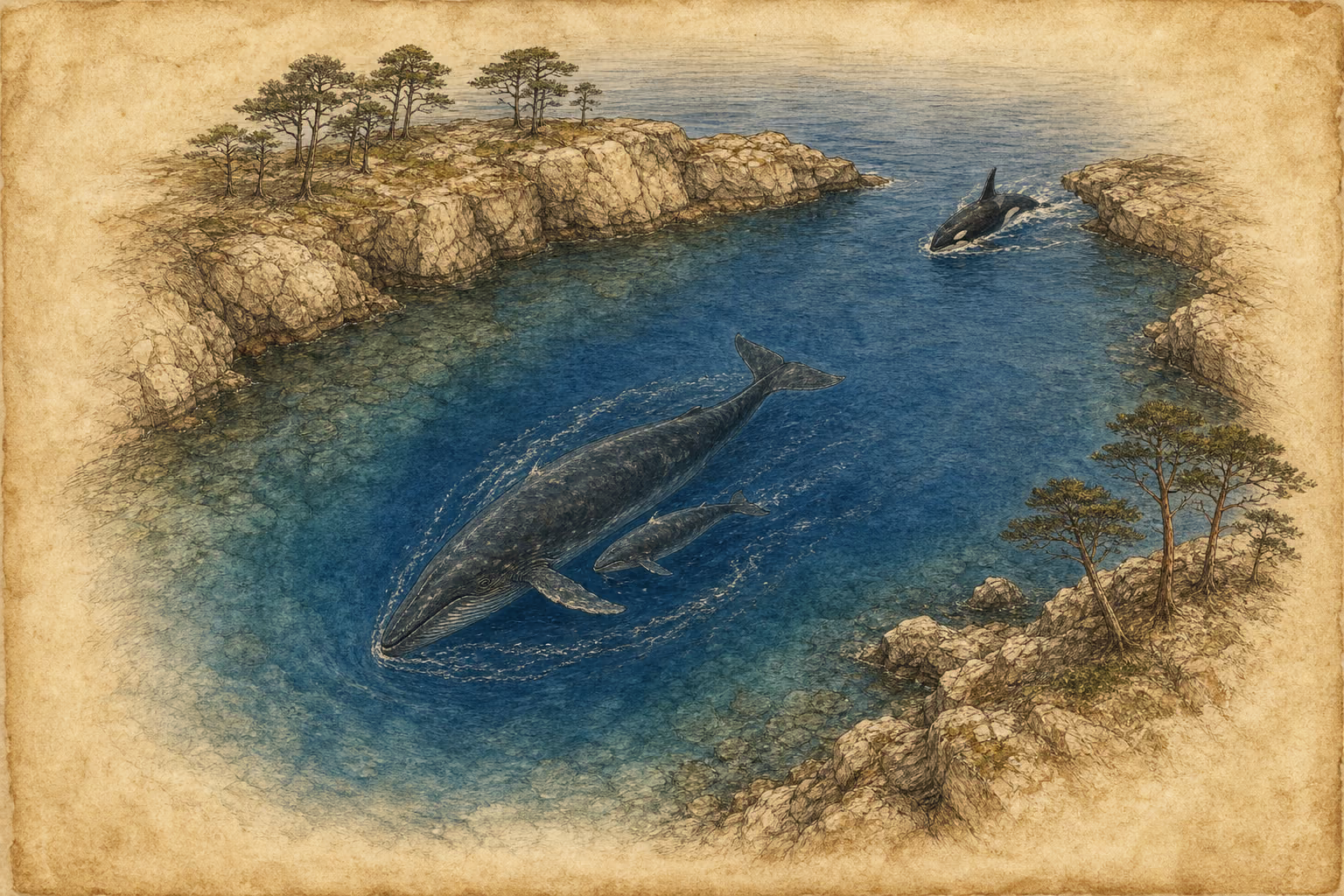
Ballaenae et in nostra maria penetrant. in Gaditano oceano non ante brumam conspici eas tradunt, condi autem statis temporibus in quodam sinu placido et capaci, mire gaudentes ibi parere. hoc scire orcas, infestam iis beluam et cuius imago nulla repraesentatione exprimi possit alia quam carnis inmensae dentibus truculentae. inrumpunt ergo in secreta ac vitulos earum aut fetas vel etiamnum gravidas lancinant morsu incursuque ceu Liburnicarum rostris fodiunt. illae ad flexum inmobiles, ad repugnandum inertes et pondere suo oneratae, tune quidem et utero graves pariendive poenis invalidae, solum auxilium novere in altum profugere et se tuto defendere oceano. contra orcae occurrere laborant seseque opponere et caveatas angustiis trucidare, in vada urguere, saxis inlidere. spectantur ea proelia ceu mari ipso sibi irato, nullis in sinu ventis, fluctibus vero ad anhelitus ictusque quantos nulli turbines volvant. orca et in portu Ostiensi visa est oppugnata a Claudio principe. venerat tum exaedificante eo portum, invitata naufragiis tergorum advectorum e Gallia, satiansque se per conplures dies alveum in vado sulcaverat, adtumulata fluctibus in tantum, ut circumagi nullo modo posset et, dum saginam persequitur in litus fluctibus propulsam, emineret dorso multum super aquas carinae vice inversae. praetendi iussit Caesar plagas multiplices inter ora portus profectusque ipse cum praetorianis cohortibus populo Romano spectaculum praebuit, lanceas congerente milite e navigiis adsultantibus, quorum unum mergi vidimus reflatu beluae oppletum unda.
English · Bostock & Riley 1855–57
The balæna penetrates to our seas even. It is said that they are not to be seen in the ocean of Gades before the winter solstice, and that at periodical seasons they retire and conceal themselves in some calm capacious bay, in which they take a delight in bringing forth. This fact, however, is known to the orca, an animal which is peculiarly hostile to the balæna, and the form of which cannot be in any way adequately described, but as an enormous mass of flesh armed with teeth. This animal attacks the balæna in its places of retirement, and with its teeth tears its young, or else attacks the females which have just brought forth, and, indeed, while they are still pregnant; and as they rush upon them, it pierces them just as though they had been attacked by the beak of a Liburnian galley. The female balænæ, devoid of all flexibility, without energy to defend themselves, and over-burdened by their own weight, weakened, too, by gestation, or else the pains of recent parturition, are well aware that their only resource is to take to flight in the open sea and to range over the whole face of the ocean; while the orcæ, on the other hand, do all in their power to meet them in their flight, throw themselves in their way, and kill them either cooped up in a narrow passage, or else drive them on a shoal, or dash them to pieces against the rocks. When these battles are witnessed, it appears just as though the sea were infuriate against itself; not a breath of wind is there to be felt in the bay, and yet the waves by their pantings and their repeated blows are heaved aloft in a way which no whirlwind could effect.
An orca has been seen even in the port of Ostia, where it was attacked by the Emperor Claudius. It was while he was constructing the harbour there that this orca came, attracted by some hides which, having been brought from Gaul, had happened to fall overboard there. By feeding upon these for several days it had quite glutted itself, having made for itself a channel in the shoaly water. Here, however, the sand was thrown up by the action of the wind to such an extent, that the creature found it quite impossible to turn round; and while in the act of pursuing its prey, it was propelled by the waves towards the shore, so that its back came to be perceived above the level of the water, very much resembling in appearance the keel of a vessel turned bottom upwards. Upon this, Cæsar ordered a great number of nets to be extended at the mouth of the harbour, from shore to shore, while he himself went there with the prætorian cohorts, and so afforded a spectacle to the Roman people; for boats assailed the monster, while the soldiers on board showered lances upon it. I myself saw one of the boats sunk by the water which the animal, as it respired, showered down upon it.
Balænæ have the mouth in the forehead; and hence it is that, as they swim on the surface of the water, they discharge vast showers of water in the air.