LIBER IX · CAPUT 7
WHETHER FISHES RESPIRE, AND WHETHER THEY SLEEP
Latine · Mayhoff 1906
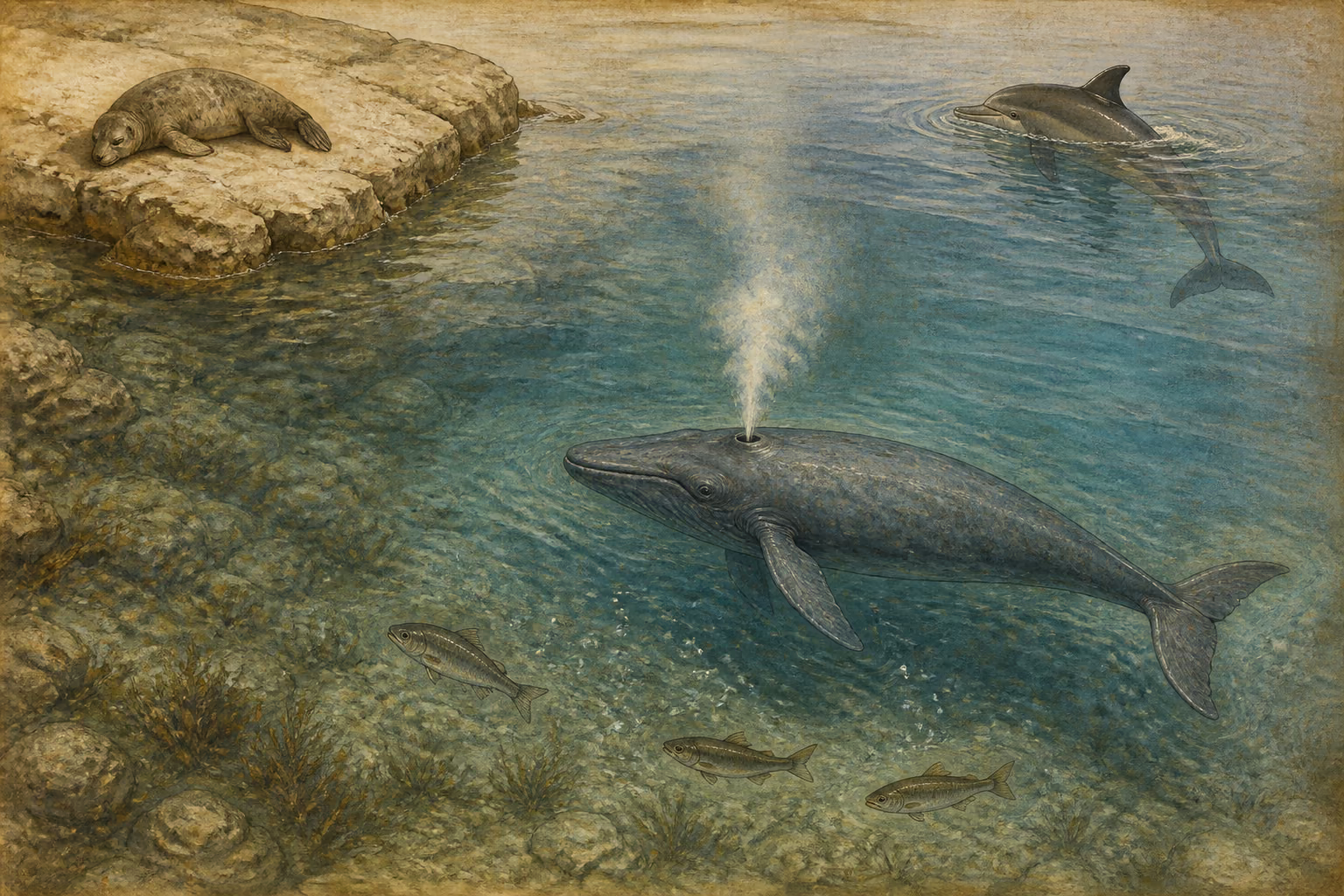
Ora ballaenae habent in frontibus ideoque summa aqua natantes in sublime nimbos efflant. spirant autem confessione omnium et paucissima alia in mari, quae internorum viscerum pulmonem habent, quoniam sine eo spirare animal nullum putatur. nec piscium branchias habentes anhelitum reddere ac per vices recipere existimant quorum haec opinio est, nec multa alia genera etiam branchiis carentia, in qua sententia fuisse Aristotelem video et multis persuasisse doctrina insignibus. nec me protinus huic opinioni eorum accedere haut dissimulo, quoniam et pulmonum vice alia possint spirabilia inesse viscera ita volente natura, sicut et pro sanguine est multis alius umor. in aquas quidem penetrare vitalem hunc halitum quis miretur, qui etiam reddi ab his eum cernat et in terras quoque, tanto spissiorem naturae partem, penetrare argumento animalium quae semper defossa vivunt, ceu talpae? accedunt apud me certe efficacia ut credam, etiam omnia in aquis spirare naturae suae sorte, primum saepe adnotata piscium aestivo calore quaedam anhelatio et alia tranquillo velut oscitatio, ipsorum quoque, qui sunt in adversa opinione, de somno piscium confessio — quis enim sine respiratione somno locus?—, praeterea bullantium aquarum sufflatio lunaeque effectu concharum quoque corpora augescentia. super omnia est quod esse auditum et odoratum piscibus non erit dubium, ex aēris utrumque materia. odorem quidem non aliud quam infectum aëra intellegi possit. quam ob rem de his opinetur ut cuique libitum erit. branchiae non sunt ballaenis nec delphinis. haec duo genera fistula spirant, quae ad pulmonem pertinet, ballaenis a fronte, delphinis a dorso. et vituli marini, quos vocant phocas, spirant ac dormiunt in terra; item testudines, de quibus mox plura.
English · Bostock & Riley 1855–57
It is universally agreed, however, that they respire, as do a very few other animals in the sea, which have lungs among the internal viscera; for without lungs it is generally supposed that no animal can breathe. Those, too, who are of this opinion are of opinion also that no fishes that have gills are so constituted as to inhale and exhale alternately, nor, in fact, many other kinds of animals even, which are entirely destitute of gills. This, I find, was the opinion of Aristotle, who, by his learned researches on the subject, has induced many others to be of the same way of thinking. I shall not, however, conceal the fact, that I for one do not by any means at once subscribe to this opinion, for it is very possible, if such be the will of Nature, that there may be other organs fitted for the purposes of respiration, and acting in the place of lungs; just as in many animals a different liquid altogether takes the place of blood. And who, in fact, can find any ground for surprise that the breath of life can penetrate the waters of the deep, when he sees that it is even exhaled from them? and when we find, too, that it can even enter the very depths of the earth, an element of so much greater density, a thing that is proved by the case of animals which always live under ground, the mole for instance? There are other weighty reasons as well, which induce me to be of opinion that all aquatic animals respire, conformably to their natural organization; for, in the first place, there has been often remarked in fishes a certain degree of anhelation during the heat of summer, and at other times again, a kind of leisurely gaping, as it were. And then, besides, we have the admission of those who are of the contrary opinion, that fishes do sleep; but what possibility is there of sleeping without respiring as well? And again, we see their breath disengaged in bubbles which rise to the water’s surface, and the influence too of the moon makes even the very shells grow in bulk.
But the most convincing reason of all is, the undoubted fact that fishes have the power of hearing and of smelling, two senses for the operation of both of which the air is a necessary vehicle; for by smell we understand nothing else than the air being charged with certain particles. However, let every person form his own opinion on these subjects, just in such way as he may think best.
Neither the balæna nor the dolphin has any gills. Both of these animals respire through vent-holes, which communicate with the lungs; in the balæna they are on the forehead, and in the dolphin on the back. Sea-calves, too, which we call “phocæ,” breathe and sleep upon dry land—sea-tortoises also, of which we shall have more to say hereafter.