LIBER X · CAPUT 2
THE PHŒNIX
Latine · Mayhoff 1906
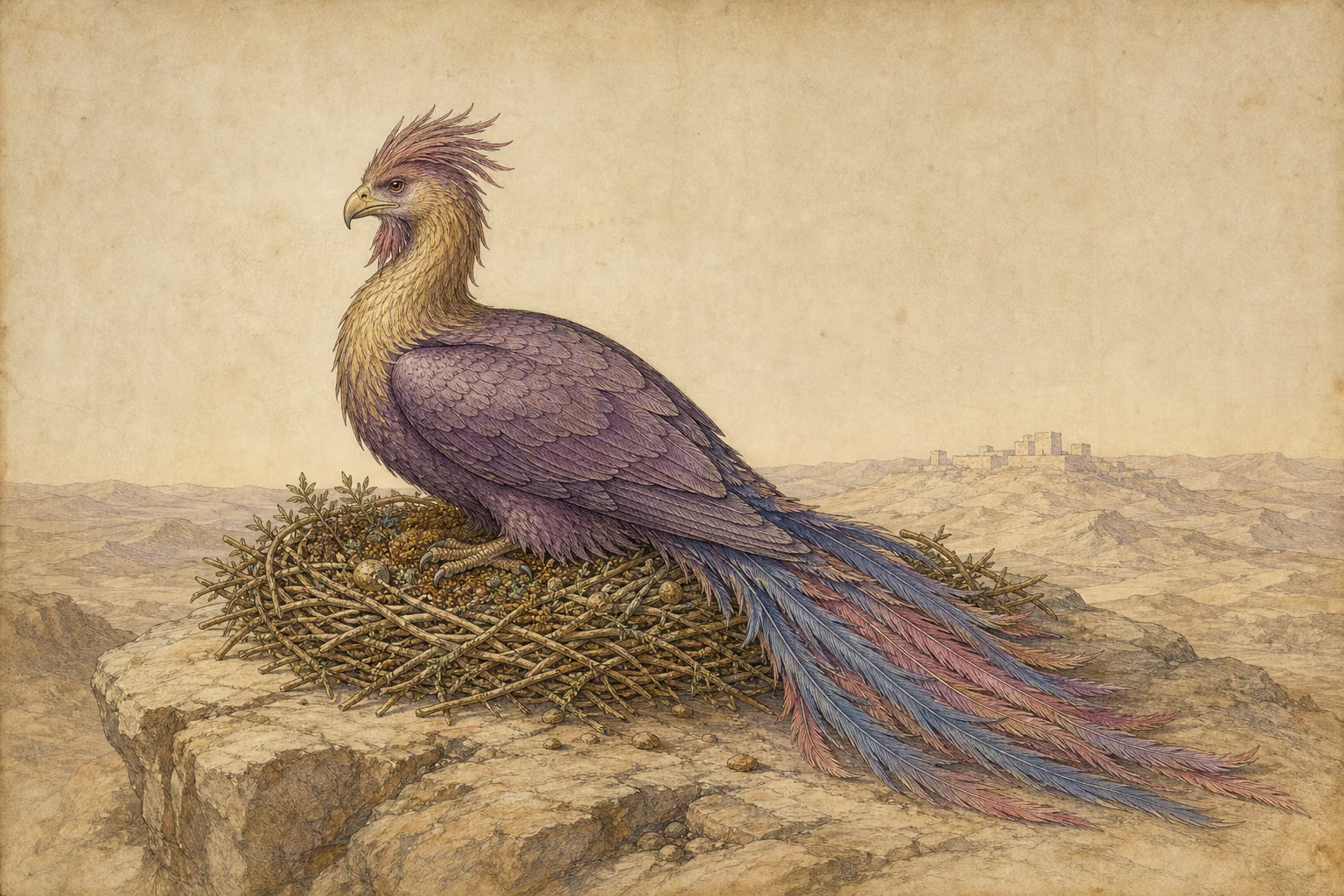
Aethiopes atque Indi discolores maxime et inenarrabiles ferunt aves et ante omnes nobilem Arabiae phoenicem, baud scio an fabulose, unum in toto orbe nec visum magno opere. aquilae narratur magnitudine, auri fulgore circa colla, cetero purpureus, caeruleam roseis caudam pinnis distinguentibus, cristis fauces caputque plumeo apice honestante. primus atque diligentissime togatorum de eo prodidit Manilius, senator ille maximis nobilis doctrinis doctore nullo: neminem extitisse qui viderit vescentem, sacrum in Arabia Soli esse, vivere annis DXL, senescentem casiae turisque surculis construere nidum, replere odoribus et superemori. ex ossibus deinde et medullis eius nasci primo ceu vermiculum, inde fieri pullum, principioque iusta funera priori reddere et totum deferre nidum prope Panchaiam in Solis urbem et in ara ibi deponere. cum huius alitis vita magni conversionem anni fieri prodit idem Manilius iterunque significationes tempestatum et siderum easdem reverti, hoc autem circa meridiem incipere quo die signum arietis sol intraverit, et fuisse eius conversionis annum prodente se P. Licinio Cn. Cornelio cos. CCXV. Cornelius Valerianus phoenicem devolavisse in Aegyptum tradit Q. Plautio Sex. Papinio cos. allatus est et in urbem Claudii principis censura anno urbis DCCC et in comitio propositus, quod actis testatum est, sed quem falsum esse nemo dubitaret.
English · Bostock & Riley 1855–57
Æthiopia and India, more especially, produce birds of diversified plumage, and such as quite surpass all description. In the front rank of these is the phœnix, that famous bird of Arabia; though I am not quite sure that its existence is not all a fable. It is said that there is only one in existence in the whole world, and that that one has not been seen very often. We are told that this bird is of the size of an eagle, and has a brilliant golden plumage around the neck, while the rest of the body is of a purple colour; except the tail, which is azure, with long feathers intermingled of a roseate hue; the throat is adorned with a crest, and the head with a tuft of feathers. The first Roman who described this bird, and who has done so with the greatest exactness, was the senator Manilius, so famous for his learning; which he owed, too, to the instructions of no teacher. He tells us that no person has ever seen this bird eat, that in Arabia it is looked upon as sacred to the sun, that it lives five hundred and forty years, that when it becomes old it builds a nest of cassia and sprigs of incense, which it fills with perfumes, and then lays its body down upon them to die; that from its bones and marrow there springs at first a sort of small worm, which in time changes into a little bird: that the first thing that it does is to perform the obsequies of its predecessor, and to carry the nest entire to the city of the Sun near Panchaia, and there deposit it upon the altar of that divinity.
The same Manilius states also, that the revolution of the great year is completed with the life of this bird, and that then a new cycle comes round again with the same characteristics as the former one, in the seasons and the appearance of the stars; and he says that this begins about mid-day of the day on which the sun enters the sign of Aries. He also tells us that when he wrote to the above effect, in the consulship of P. Licinius and Cneius Cornelius, it was the two hundred and fifteenth year of the said revolution. Cornelius Valerianus says that the phœnix took its flight from Arabia into Egypt in the consulship of Q. Plautius and Sextus Papinius. This bird was brought to Rome in the censorship of the Emperor Claudius, being the year from the building of the City, 800, and it was exposed to public view in the Comitium. This fact is attested by the public Annals, but there is no one that doubts that it was a fictitious phœnix only.