LIBER X · CAPUT 21
THE DUNGHILL COCK
Latine · Mayhoff 1906
Proxime gloriam sentiunt et hi nostri vigiles nocturni, quos excitandis in opera mortalibus rumpendoque somno natura genuit. norunt sidera et ternas distinguunt horas interdiu cantu. cum sole eunt cubitum quartaque castrensi vigilia ad curas laboremque revocant nec solis ortum incautis patiuntur obrepere diemque venientem nuntiant cantu, ipsum vero cantum plausu laterum. imperitant suo generi et regnum in quacumque sunt domo exercent. dimicatione paritur hoc inter ipsos velut ideo tela agnata cruribus suis intellegentium, nec finis saepe commorientibus. quod si palma contigit, statim in victoria canunt seque ipsi principes testantur; victus occultatur silens aegreque servitium patitur. et plebs tamen aeque superba graditur ardua cervice, cristis celsa, caelumque sola volucrum aspicit crebra, in sublime caudam quoque falcatam erigens. itaque terrori sunt etiam leonibus ferarum generosissimis. iam ex his quidam ad bella tantum et proelia adsidua nascuntur— quibus etiam patrias nobilitarunt, Rhodum aut Tanagram; secundus est honos habitus Melicis et Chalcidicis —, ut plane dignae aliti tantum honoris perhibeat Romana purpura. horum sunt tripudia solistima, hi magistratus nostros cotidie regunt domusque ipsis suas claudunt aut reserant. hi fasces Romanos inpellunt aut retinent, iubent acies ant prohibent, victoriarum omnium toto orbe partarum auspices. hi maxime terrarum imperio imperant, extis etiam fibrisque haut aliter quam opimae victimae diis grati. habent ostenta et praeposteri eorum vespertinique cantus: namque totis noctibus canendo Boeotiis nobilem illam adversus Lacedaemonios praesagivere victoriam, ita coniecta interpretatione, quoniam victa ales illa non caneret.
Desinunt canere castrati, quod duobus fit modis, lumbis adustis candente ferro aut imis cruribus, mox ulcere oblito figlina creta; facilius ita pinguescunt. Pergami omnibus annis spectaculum gallorum publice editur ceu gladiatorum. invenitur in annalibus in agro Ariminensi M. Lepido Q. Catulo cos. in villa Galerii locutum gallinaceum, semel, quod equidem sciam.
English · Bostock & Riley 1855–57
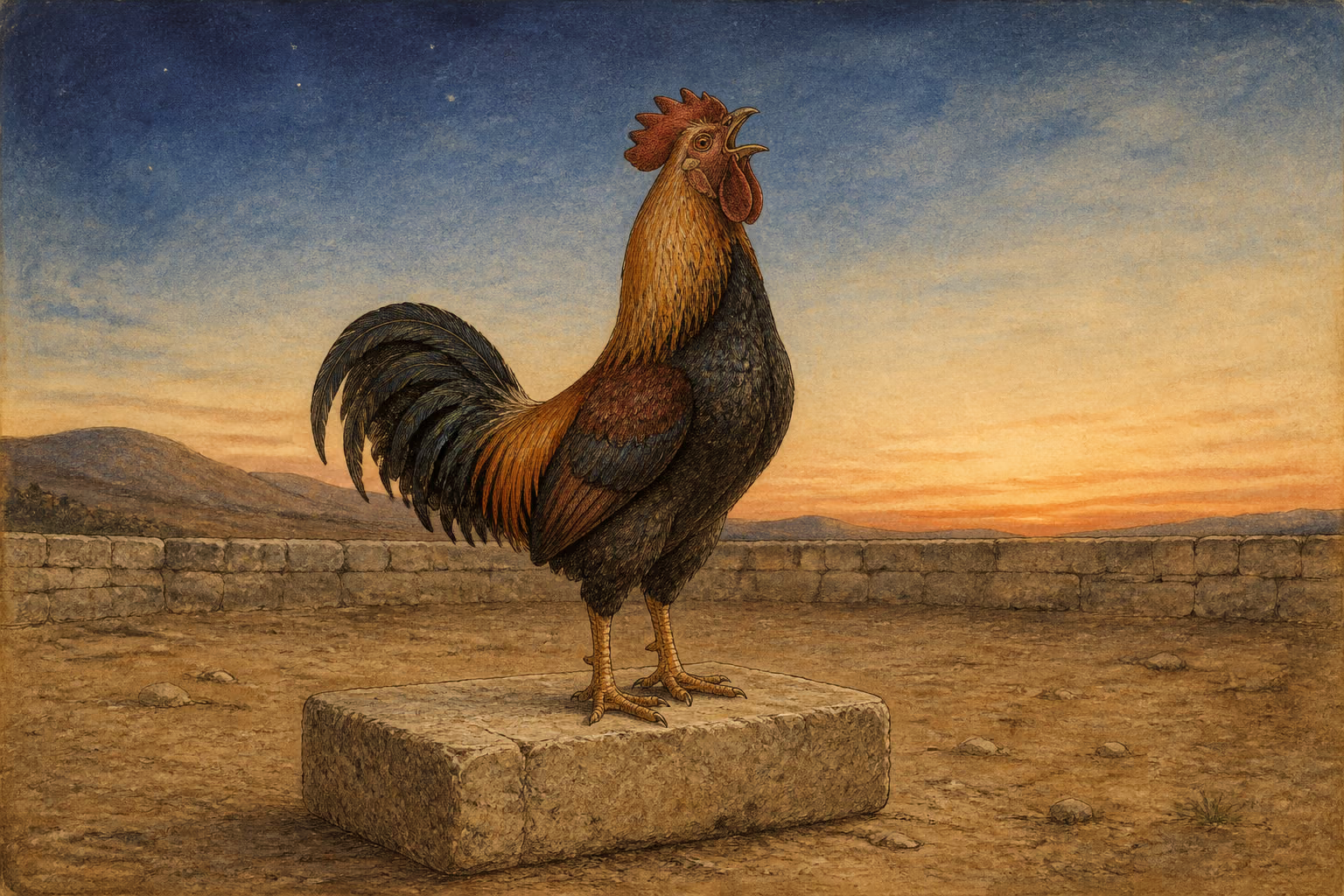
Next after the peacock, the animal that acts as our watchman by night, and which Nature has produced for the purpose of arousing mortals to their labours, and dispelling their slumbers, shows itself most actuated by feelings of vanity. The cock knows how to distinguish the stars, and marks the different periods of the day, every three hours, by his note. These animals go to roost with the setting of the sun, and at the fourth watch of the camp recall man to his cares and toils. They do not allow the rising of the sun to creep upon us unawares, but by their note proclaim the coming day, and they prelude their crowing by clapping their sides with their wings. They exercise a rigorous sway over the other birds of their kind, and, in every place where they are kept, hold the supreme command. This, however, is only obtained after repeated battles among themselves, as they are well aware that they have weapons on their legs, produced for that very purpose, as it were, and the contest often ends in the death of both the combatants at the same moment. If, on the other hand, one of them obtains the mastery, he instantly by his note proclaims himself the conqueror, and testifies by his crowing that he has been victorious; while his conquered opponent silently slinks away, and, though with a very bad grace, submits to servitude. And with equal pride does the throng of the poultry yard strut along, with head uplifted and crest erect. These, too, are the only ones among the winged race that repeatedly look up to the heavens, with the tail, which in its drooping shape resembles that of a sickle, raised aloft: and so it is that these birds inspire terror even in the lion, the most courageous of all animals.
Some of these birds, too, are reared for nothing but warfare and perpetual combats, and have even shed a lustre thereby on their native places, Rhodes and Tanagra. The next rank is considered to belong to those of Melos and Chalcis. Hence, it is not without very good reason that the consular purple of Rome pays these birds such singular honours. It is from the feeding of these creatures that the omens by fowls are derived; it is these that regulate day by day the movements of our magistrates, and open or shut to them their own houses, as the case may be; it is these that give an impulse to the fasces of the Roman magistracy, or withhold them; it is these that command battles or forbid them, and furnish auspices for victories to be gained in every part of the world. It is these that hold supreme rule over those who are themselves the rulers of the earth, and whose entrails and fibres are as pleasing to the gods as the first spoils of victory. Their note, when heard at an unusual hour or in the evening, has also its peculiar presages; for, on one occasion, by crowing the whole night through for several nights, they presaged to the Bœotians that famous victory which they gained over the Lacedæmonians; such, in fact, being the interpretation that was put upon it by way of prognostic, as this bird, when conquered, is never known to crow.
When castrated, cocks cease to crow. This operation is performed two different ways. Either the loins of the animal are seared with a red-hot iron, or else the lower part of the legs; after which, the wound is covered up with potter’s clay: this way they are fattened much more easily. At Pergamus, there is every year a public show of fights of game-cocks, just as in other places we have those of gladiators.
We find it stated in the Roman Annals, that in the consulship of M. Lepidus and Q. Catulus a dung-hill cock spoke, at the farm-house of Galerius; the only occasion, in fact, that I know of.