LIBER X · CAPUT 32
THE HALCYONES: THE HALCYON DAYS THAT ARE FAVOURABLE TO NAVIGATION
Latine · Mayhoff 1906
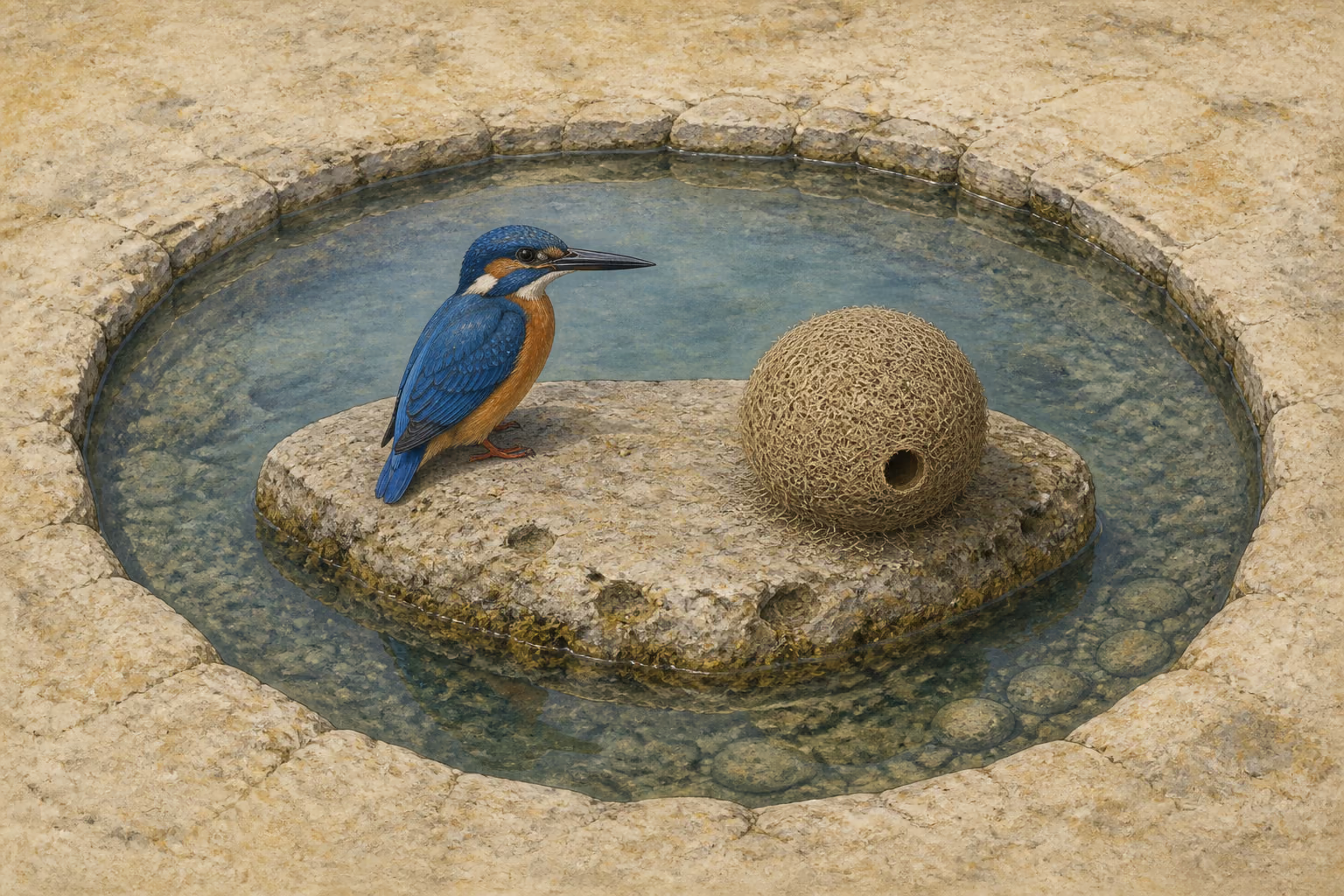
Eo maxime sunt insignes halcyones. dies earum partus maria quique navigant novere. ipsa avis paulo amplior passere, colore cyanea et parte inferiore tantum purpurea, candidis admixta pinnis collo, gracili ac procero rostro. alterum genus earum magnitudine distinguitur et cantu: minores in harundinetis canunt.halcyonemvidere rarissimum est nec nisi vergiliarum occasu et circa solstitia brumamve, nave aliquando circumvolata statim in latebras abeuntem. fetificant bruma, qui dies halcyonides vocantur, placido mari per eos et navigabili, Siculo maxime. faciunt autem VII ante brumam diebus nidos et totidem sequentibus pariunt. nidi earum admirationem habent pilae figura paulum eminenti, ore perquam angusto, grandium spongearum similitudine. ferro intercidi non queunt, franguntur ictu valido, ut spuma arida maris. nec unde confingantur invenitur; putant ex spinis aculeatis, piscibus enim vivunt. subeunt et in amnes. pariunt ova quina.
Gaviae in petris nidificant, mergi et in arboribus. pariunt plurimum terna, sed gaviae aestate, mergi incipiente vere.
English · Bostock & Riley 1855–57
It is for this that the halcyon is more especially remarkable; the seas, and all those who sail upon their surface, well know the days of its incubation. This bird is a little larger than a sparrow, and the greater part of its body is of an azure blue colour, with only an intermixture of white and purple in some of the larger feathers, while the neck is long and slender. There is one kind that is remarkable for its larger size and its note; the smaller ones are heard singing in the reed-beds. It is a thing of very rare occurrence to see a halcyon, and then it is only about the time of the setting of the Vergiliæ, and the summer and winter solstices; when one is sometimes to be seen to hover about a ship, and then immediately disappear. They hatch their young at the time of the winter solstice, from which circumstance those days are known as the “halcyon days:” during this period the sea is calm and navigable, the Sicilian sea in particular. They make their nest during the seven days before the winter solstice, and sit the same number of days after. Their nests are truly wonderful; they are of the shape of a ball slightly elongated, have a very narrow mouth, and bear a strong resemblance to a large sponge. It is impossible to cut them asunder with iron, and they are only to be broken with a strong blow, upon which they separate, just like foam of the sea when dried up. It has never yet been discovered of what material they are made; some persons think that they are formed of sharp fish-bones, as it is on fish that these birds live. They enter rivers also; their eggs are five in number.
The sea-mew also builds its nest in rocks, and the diver in trees as well. These birds produce three at the very most; the sea-mew in summer, the diver at the beginning of spring.