LIBER X · CAPUT 52
THE GENERATION OF BIRDS: OTHER OVIPAROUS ANIMALS
Latine · Mayhoff 1906
Generatio avium simplex videtur esse, cum et ipsa habeat sua miracula, quoniam et quadripedes ova gignunt, chamaeleontes, lacertae et quae diximus..., item serpentes. pinnatorum autem infecunda sunt quae aduncos habent ungues. cenchris sola ex his supra quaterna edit ova. tribuit hoc avium generi natura, ut fecundiores essent fugaces earum quam fortes. plurima pariunt struthocameli, gallinae, perdices [soli]. coitus avibus duobus modis, femina considente humi, ut in gallinis, aut stante, ut in gruibus.
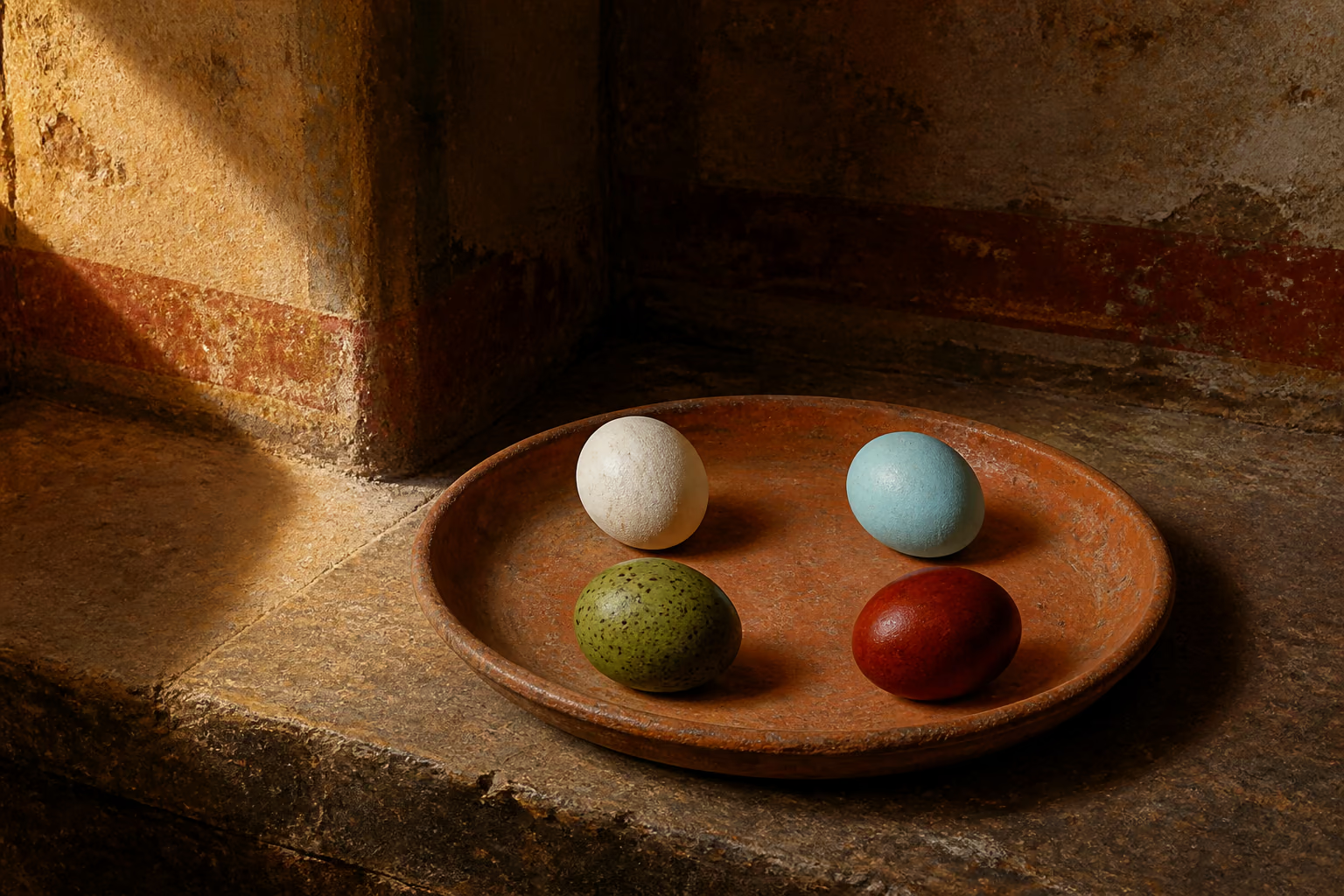
Ovorum alia sunt candida, ut columbis, perdicibus, alia pallida, ut aquaticis, alia punctis distincta, ut meleagridum, alia rubri coloris, ut phasianis, cenchridi. intus autem omne ovum volucrum bicolor, aquaticis lutei plus quam albi, id ipsum magis luridum quam ceteris; piscium unicolor, in quo nihil candidi. avium ova ex calore fragilia, serpentium ex frigore lenta, piscium ex liquore mollia. aquatilium rotunda, reliqua fere fastigio cacuminata. exeunt a rotundissima sui parte, dum pariuntur, molli putamine, sed protinus durescente quibuscumque emergunt portionibus. quae oblonga sint ova, gratioris saporis putat Horatius Flaccus. feminam edunt quae rotundiora gignuntur, reliqua marem. umbilicus ovis a cacumine inest, ceu gutta eminens in putamine.
English · Bostock & Riley 1855–57
The generation of birds would appear to be very simple, while at the same time it has its own peculiar marvels. Indeed, there are quadrupeds as well that produce eggs, the chameleon, for instance, the lizard, and those of the serpent tribe of which we have previously spoken. Of the feathered race, those which have hooked talons are comparatively unprolific; the cenchris being the only one among them that lays more than four eggs. Nature has so ordained it in the birds, that the timid ones should be more prolific than those which are courageous. The ostrich, the common fowl, and the partridge, are the only birds that lay eggs in considerable numbers. Birds have two modes of coupling, the female crouching on the ground, as in the barn-door fowl, or else standing, as is the case with the crane.
Some eggs are white, as those of the pigeon and partridge, for instance; others are of a pale colour, as in the aquatic birds: others, again, are dotted all over with spots, as is the case with those of the meleagris; others are red, like those of the pheasant and the cenchris. In the inside, the eggs of all birds are of two colours; those of the aquatic kind have more of the yellow than the white, and the yellow is of a paler tint than in those of other birds. Among fish, the eggs are of the same colour throughout, there being, in fact, no white. The eggs of birds are of a brittle nature, in consequence of the natural heat of the animal, while those of serpents are supple, in consequence of their coldness, and those of fish soft, from their natural humidity. Again, the eggs of aquatic birds are round, while those of most other kinds are elongated, and taper to a point. Eggs are laid with the round end foremost, and at the moment that they are laid the shell is soft, but it immediately grows hard, as each portion becomes exposed to the air. Horatius Flaccus expresses it as his opinion that those eggs which are of an oblong shape are of the most agreeable flavour. The rounder eggs are those which produce the female, the others the male. The umbilical cord is in the upper part of the egg, like a drop floating on the surface in the shell.