LIBER X · CAPUT 53
THE VARIOUS KINDS OF EGGS, AND THEIR NATURE
Latine · Mayhoff 1906
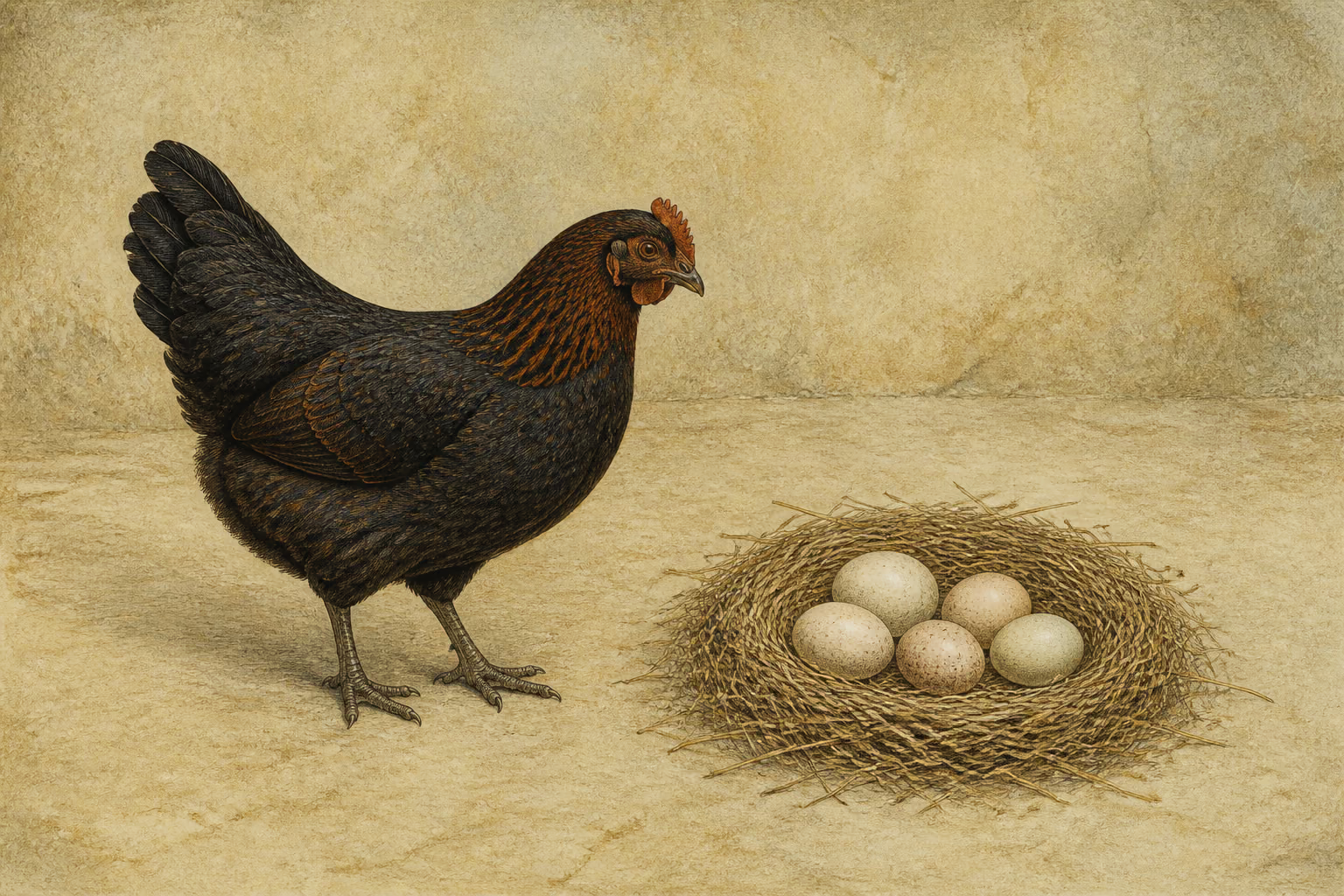
Quaedam omni tempore coeunt, ut gallinae, et pariunt, praeterquam duobus mensibus hiemis brumalibus. ex iis iuvencae plura quam veteres, sed minora, et in eodem fetu prima ac novissima. est autem tanta fecunditas, ut aliquae et sexagena pariant, aliquae cotidie, aliquae bis die, aliquae in tantum, ut effetae moriantur. Hadrianis laus maxima. columbae deciens anno pariunt, quaedam et undeciens, in Aegypto vero etiam brumali mense. hirundines et merulae et palumbi et turtures bis anno pariunt, ceterae aves fere semel. turdi, in cacuminibus arborum luto nidificantes paene contextim, in secessu generant. a coitu X diebus ova maturescunt in utero, vexatis autem gallinae et columbae pinna evulsa aliave simili iniuria diutius.
Omnibus ovis medio vitelli parva inest velut sanguinea gutta, quod esse cor avium existimant, primum in omni corpore id gigni opinantes: in ovo certe gutta ea salit palpitatque. ipsum animal ex albo liquore ovi corporatur. cibus eius in luteo est. omnibus intus caput maius toto corpore, oculi conpressi capite maiores. increscente pullo candor in medium vertitur, luteum circumfunditur. vicensimo die si moveatur ovum, iam viventis intra putamen vox auditur. ab eodem tempore plumescit, ita positus, ut caput supra dextrum pedem habeat, dextram vero alam supra caput. vitellus paulatim deficit. aves omnes in pedes nascuntur, contra quam reliqua animalia. quaedam gallinae omnia gemina ova pariunt et geminos interdum excludunt, ut Cornelius Celsus auctor est, alterum maiorem; aliqui negant omnino geminos excludi. plus vicena quina incubanda subici vetant. parere a bruma incipiunt. optima fetura ante vernum aequinoctium. post solstitium nata non implent magnitudinem iustam tantoque minus, quanto serius provenere.
English · Bostock & Riley 1855–57
There are some birds that couple at all seasons of the year, barn-door fowls, for instance; they lay, too, at all times, with the exception of two months at mid-winter. Pullets lay more eggs than the older hens, but then they are smaller. In the same brood those chickens are the smallest that are hatched the first and the last. These animals, indeed, are so prolific, that some of them will lay as many as sixty eggs, some daily, some twice a day, and some in such vast numbers that they have been known to die from exhaustion. Those known as the “Adrianæ,” are the most esteemed. Pigeons sit ten times a year, and some of them eleven, and in Egypt during the month of the winter solstice even. Swallows, blackbirds, ring-doves, and turtle-doves sit twice a year, most other birds only once. Thrushes make their nests of mud, in the tops of trees, almost touching one another, and lay during the time of their retirement. The egg comes to maturity in the ovary ten days after treading; but if the hen or pigeon is tormented by pulling out the feathers, or by the infliction of any injury of a similar nature, the maturing of the egg is retarded.
In the middle of the yolk of every egg there is what appears to be a little drop of blood; this is supposed to be the heart of the chicken, it being the general belief that that part is formed the first in every animal: at all events, while in the egg this speck is seen to throb and palpitate. The body of the animal itself is formed from the white fluid in the egg; while the yellow part constitutes its food. The head in every kind, while in the shell, is larger than the rest of the body; the eyes, too, are closed, and are larger than the other parts of the head. As the chicken grows, the white gradually passes to the middle of the egg, while the yellow is spread around it. On the twentieth day, if the egg is shaken, the voice of the now living animal can be heard in the shell. From this time it gradually becomes clothed with feathers; and its position is such that it has the head above the right foot, and the right wing above the head: the yolk in the meantime gradually disappears. All birds are born with the feet first, while with every other animal the contrary is the case. Some hens lay all their eggs with two yolks, and sometimes hatch twin chickens from the same egg, one being larger than the other, according to Cornelius Celsus: other writers, however, deny the possibility of twin chickens being hatched. It is a rule never to give a brood hen more than twenty-five eggs to sit upon at once. Hens begin to lay immediately after the winter solstice. The best broods are those which are hatched before the vernal equinox: chickens that are hatched after the summer solstice, never attain their full growth, and the more so, the later they are produced.