LIBER X · CAPUT 68
ANIMALS WHICH ARE BORN OF BEINGS THAT HAVE NOT BEEN BORN THEMSELVES—ANIMALS WHICH ARE BORN THEMSELVES BUT ARE NOT REPRODUCTIVE—ANIMALS WHICH ARE OF NEITHER SEX
Latine · Mayhoff 1906
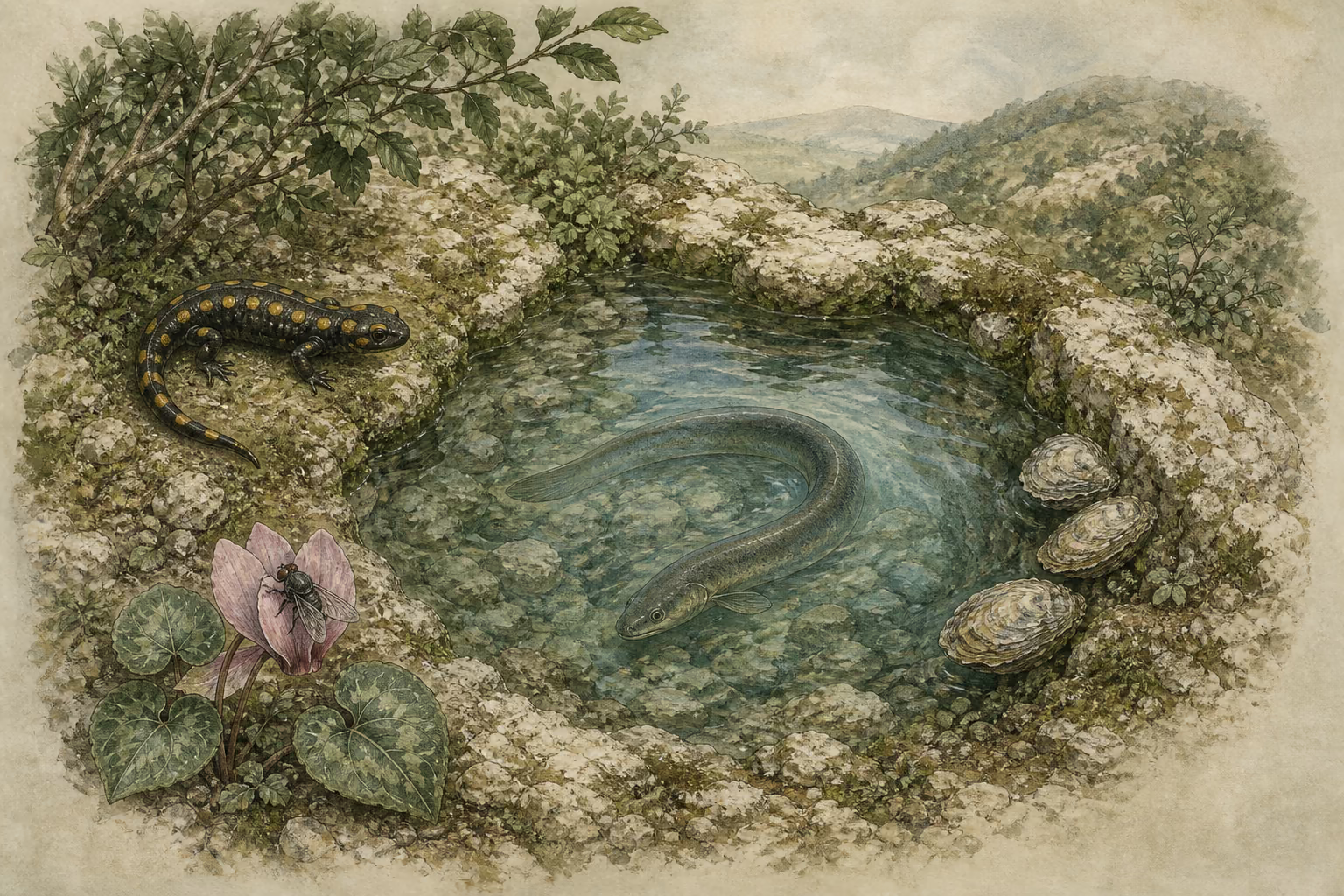
Quaedam ergo gignuntur ex non genitis et sine ulla simili origine, ut supra dicta et quaecumque ver statumque tempus anni generant. ex his quaedam nihil gignunt ut salamandrae, neque est iniis masculum femininumve, sicut neque in anguillis omnibusque quae nec animal nec ovum ex sese generant. neutrum est et ostreis genus et ceteris adhaerentibus vado vel saxo. quae autem per se generantur, si in mares et feminas discripta sunt, generant quidem aliquid coitu, sed inperfectum ac dissimile et ex quo nihil amplius gignatur, ut vermiculos muscae. id magis declarabit natura eorum quae insecta dicuntur, arduae explanationis omnia et..privatim dicato opere narranda. quapropter ingenium praedictorum et reliqua subtexetur edissertatio.
English · Bostock & Riley 1855–57
Some animals, again, are engendered of beings that are not engendered themselves, and have no such origin as those above mentioned, which are produced in the spring, or at some stated period of the year. Some of these are non-productive, the salamander, for instance, which is of no sex, either male or female; a distinction also, which does not exist in the eel and the other kinds that are neither viviparous nor oviparous. The oyster also, as well as the other shell-fish that adhere to the bottom of the sea or to rocks, are of neither sex. Again, as to those animals which are able to engender of themselves, if they are looked upon as divided into male and female, they do engender something, it is true, by coupling, but the produce is imperfect, quite dissimilar to the animal itself, and one from which nothing else is reproduced; this we find to be the case with flies, when they give birth to maggots. This fact is better illustrated by the nature of those animals which are known as insects; a subject, indeed, very difficult of explanation, and one which requires to be treated of in a Book by itself. We will, therefore, proceed for the present with our remarks upon the instincts of the animals that have been previously mentioned.