LIBER XI · CAPUT 46
HOOFS
Latine · Mayhoff 1906
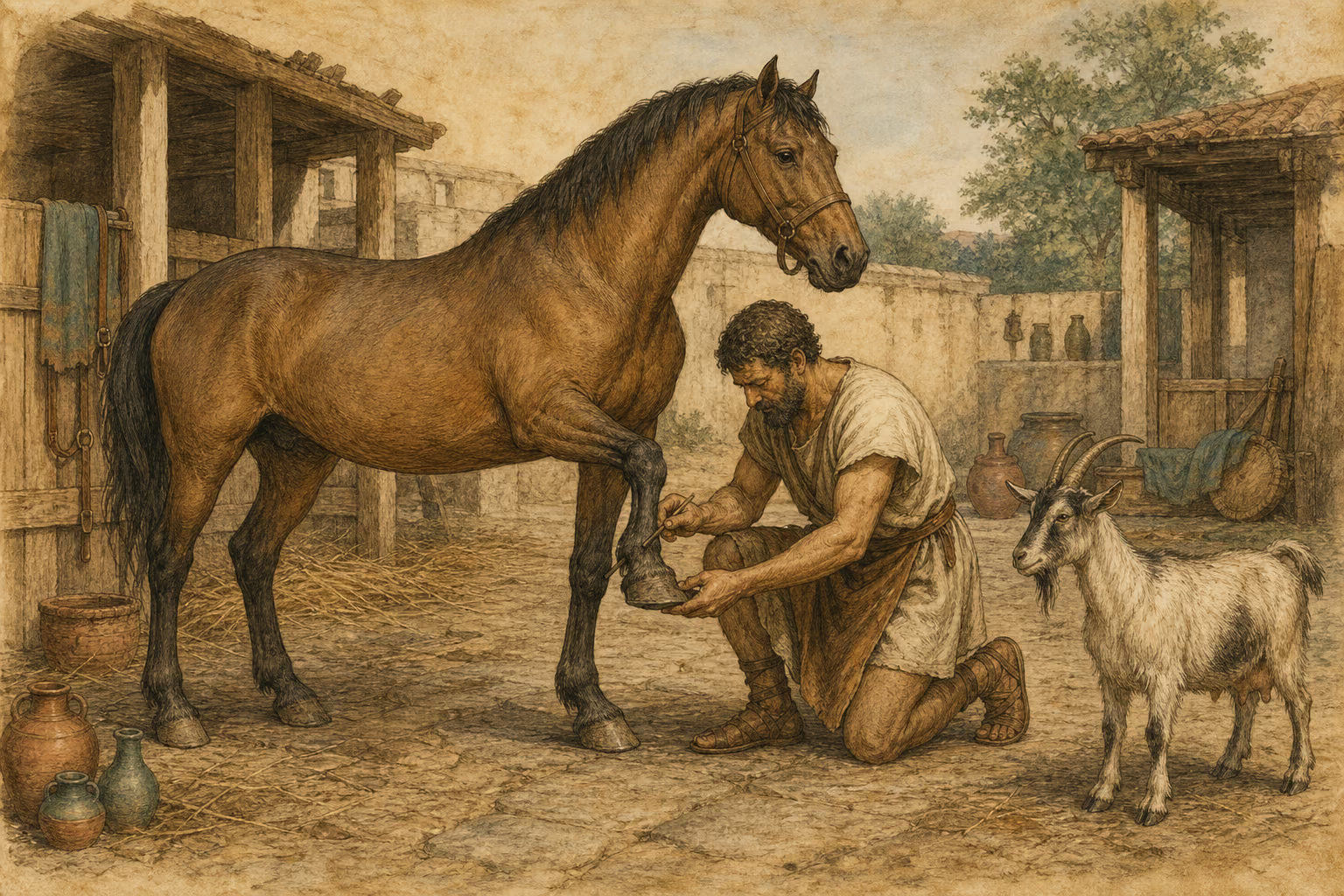
Vngulae veterino tantum generi renascuntur. sues in Illyrico quibusdam locis solidas habent ungulas. cornigera fere bisulca; solida ungula et bicorne nullum, unicorne asinus tantum Indicus; unicorne et bisulcum oryx. talos asinus Indicus unus solidipedum habet, nam sues ex utroque genere existimantur, ideo foedi earum. hominem qui existimarunt habere, facile convicti. lynx tantum digitos habentium simile quiddam talo habet; leo etiamnum tortuosius. talus autem rectus est in articulo pedis, ventre eminens concavo, in vertebra ligatus.
English · Bostock & Riley 1855–57
The horn of the hoof grows again in no animals except beasts of burden. The swine in some places in Illyricum have solid hoofs. Nearly all the horned animals are cloven-footed, no animal having solid hoofs and two horns. The Indian ass is only a one-horned animal, and the oryx is both one-horned and cloven-footed. The Indian ass is the only solid-hoofed animal that has pastern-bones. As to swine, they are looked upon as a sort of mongrel race, with a mixture of both kinds, and hence it is that their ankle-bones are so misshapen. Those authors who have imagined that man has similar pastern-bones, are easily to be confuted. The lynx is the only one among the animals that have the feet divided into toes, that has anything bearing a resemblance to a pastern-bone; while with the lion it is more crooked still. The great pastern-bone is straight, and situate in the joints of the foot; it projects outwards in a convex protuberance, and is held fast in its vertebration by certain ligaments.