LIBER XII · CAPUT 13
ASARUM, OR FOAL-FOOT
Latine · Mayhoff 1906
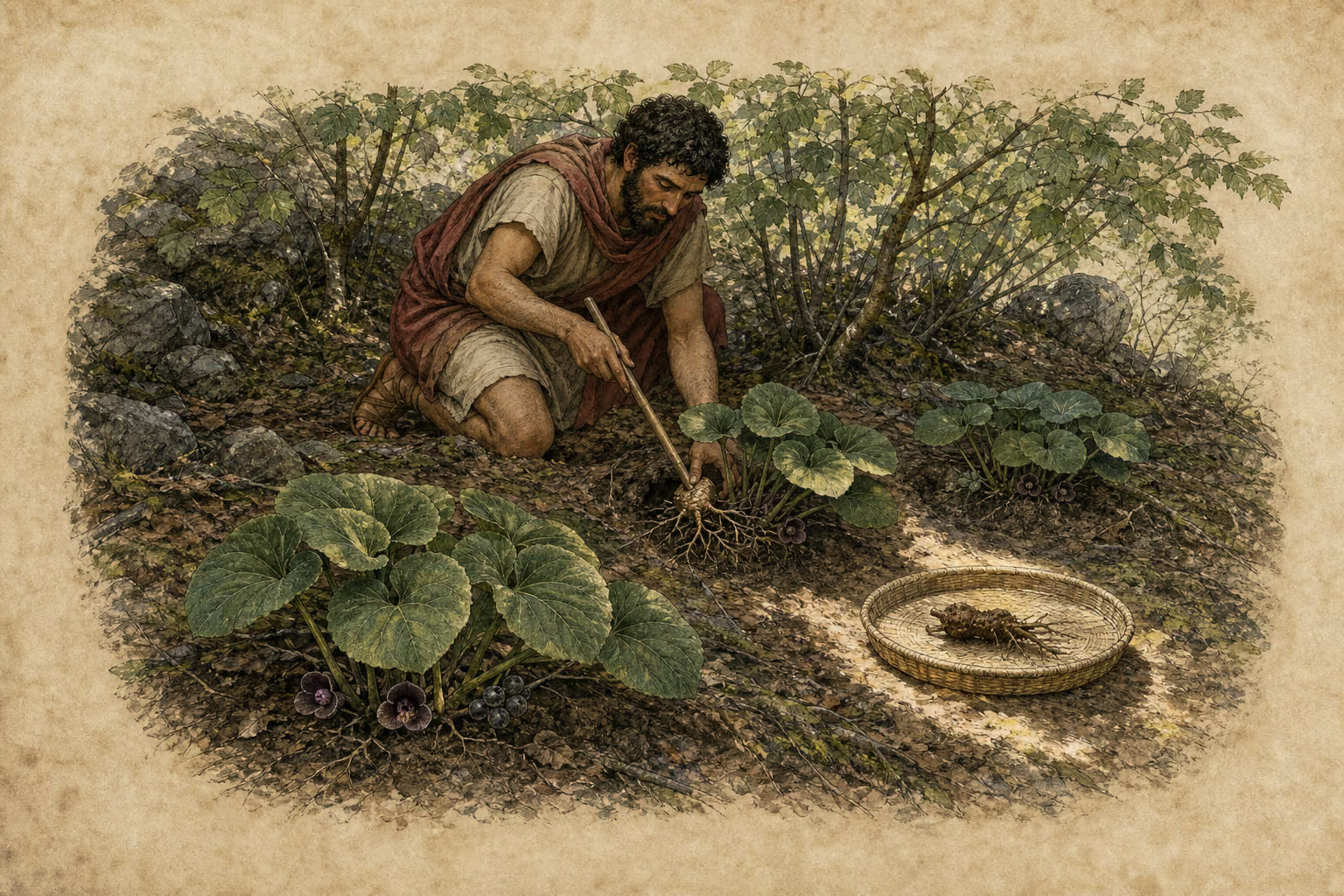
Nardi vim habet et asarum, quod et ipsum aliqui silvestre nardum appellant. est autem hederae foliis, rotundioribus tantum mollioribusque, flore purpureo, radice Gallici nardi, semine acinosum, saporis calidi ac vinosi, in montibus umbrosis bis anno florens. optimum in Ponto, proximum in Phrygia, tertium in Illyrico. foditur, cum folia amittere incipit, et in sole siccatur, celeriter situm trahens ac senescens. inventa nuper et in Threcia herba est cuius folia nihil ab Indico nardo distant.
Amomi uva in usu est ex Indica vite labrusca, ut alii existimavere, frutice fortuoso, palmi altitudine, carpiturque cum radice, manipulatim leniter componitur, protinus fragile. laudatur quam maxime Punici mali foliis simile nec rugosis, colore rufo. secunda bonitas pallido; herbaceum peius, pessimumqucandidum, quod et vetustate evenit. pretium uvae in libras $X$ LX, friato vero amomo $X$ XLIIX. nascitur et in Armeniae parte quae vocatur Otene et in Media et in Ponto. adulteratur foliis Punici et cummi liquido, ut cohaereat convolvatque se in uvae modum. est et quae vocatur amornis, minus venosa atque durior ac minus odorata, quo apparet aut aliud esse aut colligi inmaturum.
Simile his et nomine et frutice cardamomum, semine oblongo. metitur, eodem modo in Arabia. quattuor eius genera: viridissimum ac pingue, acutis angulis contumax frianti—hoc maxime laudatur—, proximum e rufo candicans, tertium brevius atque nigrius, peius tamen varium et facile tritu odorique parvi, qui vero costo vicinus esse debet. hoc et apud Medos nascitur. pretium optimi in libras $X$ III.
Cinnamomo proxima gentilitas erat, ni prius Arabiae divitias indicari conveniret causasque quae cognomen illi felicis ac beatae dedere.
English · Bostock & Riley 1855–57
The herb asarum, too, has the properties of nard, and, indeed, by some persons is known as wild nard. It has a leaf, however, more like that of the ivy, only that it is rounder and softer. The flower is purple, the root very similar to that of the Gallic nard, and the seed is like a grape. It is of a warm and vinous flavour, and blossoms twice a year, growing upon hill sides that are densely shaded. The best kind is that found in Pontus, and the next best that of Phrygia; that of Illyricum being only of third-rate quality. The root is dug up when it is just beginning to put forth its leaves, and then dried in the sun. It very soon turns mouldy, and loses its properties. There has, also, been lately found a certain herb in some parts of Greece, the leaves of which do not differ in the slightest degree from those of the Indian nard.
The clustered amomum is very extensively used; it grows upon a kind of wild vine that is found in India, though some persons have been of opinion that it is borne by a shrub, resembling the myrtle in appearance, and about the same height as the palm. This plant, also, is plucked along with the root, and is carefully pressed together with the hands; for it very soon becomes brittle. That kind is held in the highest esteem, the leaves of which bear a strong resemblance to those of the pomegranate, being free from wrinkles, and of a red colour. The second quality is that which is of a pallid hue. That which has a green, grassy appearance, is not so good, and the white is the worst of all; it assumes this appearance when old. The price of clustered amomum is sixty denarii per pound, but in dust it sells at only forty-nine. Amomum is produced, also, in that part of Armenia which is known as Otene; as, also, in Media and Pontus. It is adulterated with the leaves of the pomegranate and a solution of gum, which is employed in order to make the leaves adhere and form clusters, like those of the grape.
There is another substance, also, which is known by the name of amomis; it is not so full of veins as amomum, harder, and not so odoriferous; from which it would appear, either that it is altogether a different plant, or else that it is amomum gathered in an unripe state.
Similar to these substances, both in name as well as the shrub which produces it, is the cardamomum, the seeds of which are of an oblong shape. It is gathered in the same manner both in India and Arabia. There are four different kinds of cardamomum. That which is of a very green colour, unctuous, with sharp angles, and very difficult to break, is the most highly esteemed of all. The next best is of a reddish white tint, while that of third-rate quality is shorter and blacker, the worst of all being mottled and friable, and emitting but little smell; which, in its genuine state ought to be very similar to costum. Cardamomum grows also in Media. The price of the best is three denarii per pound.
Next in affinity to cardamomum would have been cinnamomum, and this we should have now proceeded to speak of, were it not more convenient first to make mention of the treasures of Arabia, and the reasons for which that country has received the names of “Happy” and “Blest.” The chief productions of Arabia are frankincense and myrrh, which last it bears in common with the country of the Troglodytæ.