LIBER XII · CAPUT 15
MYRRH
Latine · Mayhoff 1906
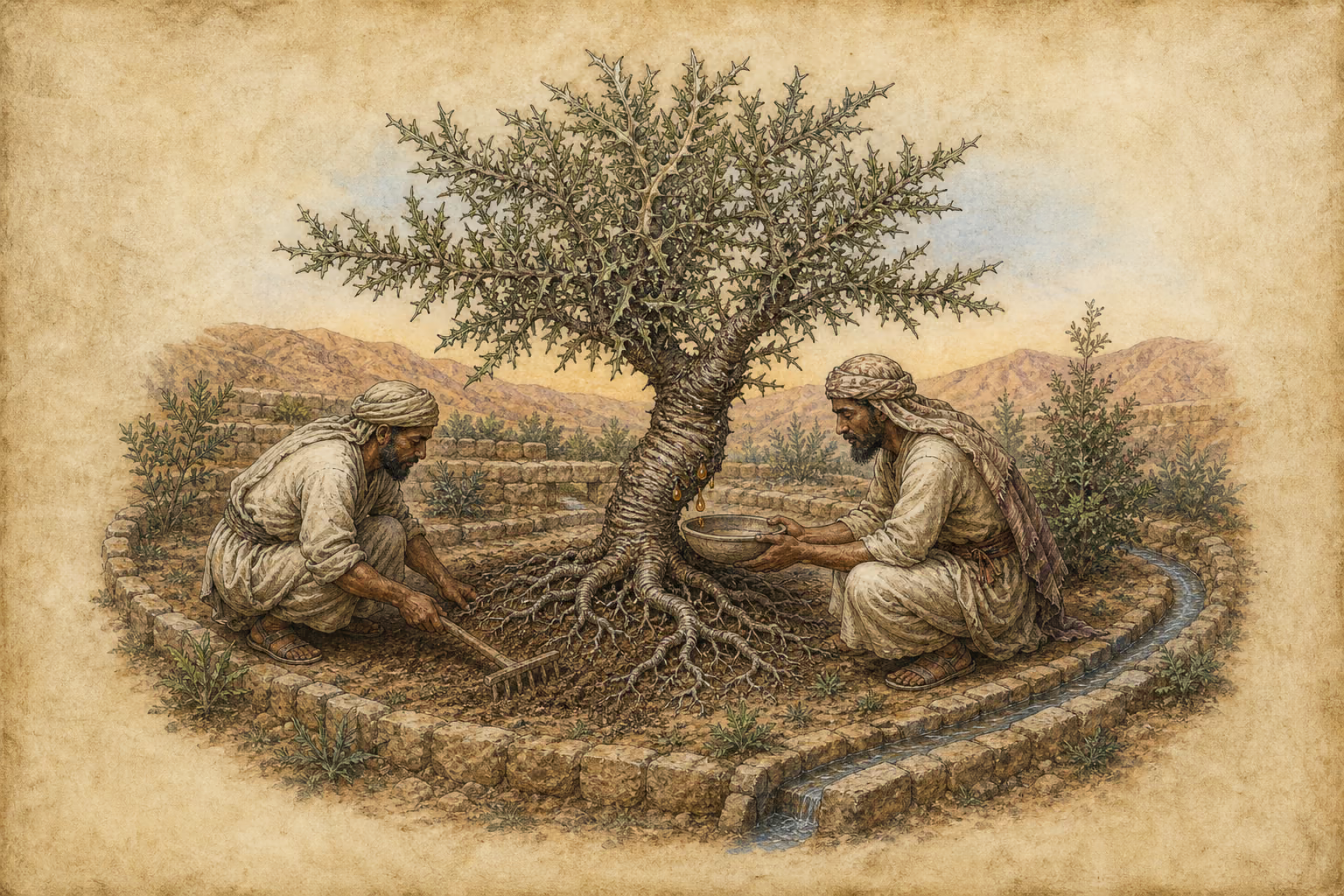
Murram in isdem silvis permixta arbore nasci tradidere aliqui, plures separatim, quippe multis locis Arabiae gignitur, ut apparebit in generibus. convehitur et ex insulis laudata, petuntque eam etiam ad Trogodytas Sabaei transitu maris. sativa quoque provenit, multum silvestri praelata. gaudet rastris atque ablaqueationibus, melior radice refrigerata.
Arbori altitudo ad quinque cubita, nec sine spina, caudice duro et intorto, crassiore quam turis, et ab radice etiam quam reliqua sui parte. corticem levem similemque unedoni scabrum alii spinosumque dixere, folium olivae, verum crispius et aculeatum, Iuba olusatri. aliqui similem iunipero, scabriorem tantum spinisque horridam, folio rotundiore, sed sapore iuniperi. nec non fuere qui e turis arbore utrumque nasci mentirentur.
Inciduntur bis et ipsae isdemque temporibus, sed a radice usque ad ramos qui valent. sudant autem sponte prius quam incidantur sta;cte dicta, cui nulla praefertur. ab hac sativa et in silvestri quoque melior aestiva. non dant ex murra portiones deo, quoniam et apud alios nascitur; regi tamen Gebbanitarum quartas partes eius pendunt. cetero passim a vulgo coemptam in folles conferciunt, nostrique unguentarii digerunt haud difficulter odoris atque pinguedinis argumentis.
English · Bostock & Riley 1855–57
According to some authors, myrrh is the produce of a tree that grows in the same forests as the incense-tree, though most say that they grow in different places: but the fact is that myrrh grows in many parts of Arabia, as will be seen when we come to speak of the several varieties of it. A sort that is highly esteemed is brought from the islands also, and the Sabæi even cross the sea to procure it in the country of the Troglodytæ. It is grown also by being transplanted, and when thus cultivated is greatly preferred to that which is grown in the forests. The plant is greatly improved by raking and baring the roots; indeed, the cooler the roots are kept, the better it is.
The tree grows to the height of five cubits, and has thorns upon it: the trunk is hard and spiral, and thicker than that of the incense-tree, and much more so at the root than at the upper part of the tree. Some authors have said that the bark is smooth like that of the arbute, others, that it is rough and covered with thorns: it has the leaf of the olive, but more wavy, with sharp points at the edges: Juba says, however, that it resembles the leaf of the olusatrum. Some again say that it resembles the juniper, only that it is rougher and bristling with thorns, and that the leaves are of a rounder shape, though they have exactly the taste of the juniper. There have been some writers who have incorrectly asserted that both myrrh and frankincense are the product of the same tree.
Incisions are made in the myrrh-tree also twice a year, and at the same season as in the incense-tree; but in the case of the myrrh-tree they are all made the way up from the root as far as the branches which are able to bear it. The tree spontaneously exudes, before the incision is made, a liquid which bears the name of stacte, and to which there is no myrrh that is superior. Second only in quality to this is the cultivated myrrh: of the wild or forest kind, the best is that which is gathered in summer. They give no tithes of myrrh to the god, because it is the produce of other countries as well; but the growers pay the fourth part of it to the king of the Gebanitæ. Myrrh is bought up indiscriminately by the common people, and then packed into bags; but our perfumers separate it without any difficulty, the principal tests of its goodness being its unctuousness and its aromatic smell.