LIBER XII · CAPUT 16
THE NATURE AND VARIOUS KINDS OF MYRRH
Latine · Mayhoff 1906
Genera complura: Trogodytica silvestrium prima, sequens Minaea, in qua et Atramitica est et Gebbanitica et Ausaritis Gebbanitarum regno, tertia Dianitis, quarta collaticia, quinta Sambracena a civitate regni Sabaeorum mari proxinia, sexta quam Dusaritim vocant. est et candida uno tantum loco, quae in Mesalum oppidum confertur. probatur Trogodytica pinguedine et quod aspectu aridior est sordidaque ac barbara, sed acrior ceteris. Sambracena praedicta ante alias hilaris, sed viribus tenuis. in plenum autem probatio est minutis glaebis nec rotundis, in concretu albicantis suci et tabescentis utque fracta candidos ungues habeat, gustu leniter amara. secunda bonitas intus variae; pessima quae intus nigra, peior, si etiam foris. pretia ex occasione ementium varia: stactae a $X$ III ad $X$ L, sativae summum $X$ XI, Erythraeae XVI—hanc volunt Arabicam intellegi —, Trogodyticae nucleo XVI S, ei vero quam odorariam vocant XII. adulteratur lentisci glaebis et cummi, item cucumeris suco amaritudinis causa, sicut ponderis spuma argenti. reliqua vitia deprehenduntur sapore, cummis dente lentescens. fallacissime autem adulteratur Indica murra, quae ibi de quadam spina colligitur. hoc solum peius India adfert, facili distinctione: tanto deterior est.
English · Bostock & Riley 1855–57
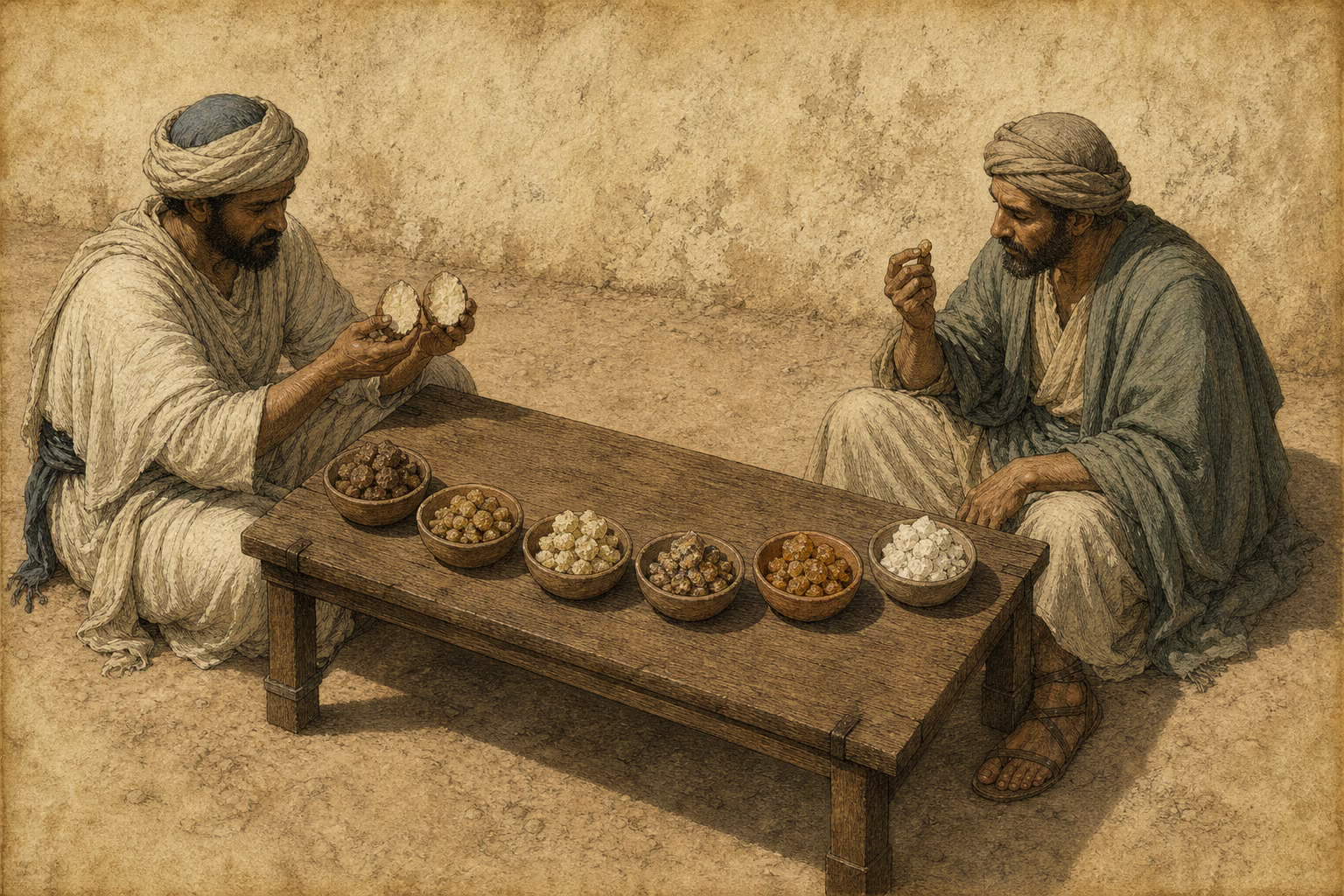
There are several kinds of myrrh; the first among the wild myrrhs is the Troglodytic; and the next are the Minæan, which includes the Atramitic, and that of Ausaritis, in the kingdom of the Gebanitæ. A third kind is the Dianitic, and a fourth is the mixed myrrh, or “all-sorts;” a fifth, again, is the Sambracenian, which is brought from a city in the kingdom of the Sabæi, near the sea; and a sixth is known by the name of Dusaritic. There is a white myrrh also, which is produced in only one spot, and is carried for sale to the city of Messalum. The Troglodytic myrrh is tested by its unctuousness, and its peculiarly dry appearance: it has also a dirty, rough look with it, but is more acrid than the other kinds. The Sambracenian myrrh has none of these faults, and is more sightly in appearance than any of them, though it is far from being so powerful. In general, however, the proof of its goodness consists in its being separated in little pieces of uneven shape, formed by the concretion of a whitish juice, which dries up little by little. When broken it ought to exhibit white marks like the finger-nails, and to be slightly bitter to the taste. That of second quality is of a mottled appearance within; while of worse quality is that which is of a black colour within; the very worst of all is that which is black on the outside as well.
The price of myrrh varies according to the number of purchasers. Stacte is sold at prices which vary from three denarii to forty per pound, while the very highest price of the cultivated myrrh is eleven denarii. Erythræan myrrh, the same, it is pretended, as Arabian myrrh, is sixteen denarii per pound, Troglodytic also, is sixteen denarii; and that known as odoraria, or odoriferous myrrh, sells at fourteen. Myrrh is adulterated with pieces of mastich, and other gums; it is also drugged with the juice of wild cucumber, in order to produce a certain bitterness, and with litharge for the purpose of increasing its weight. Other sophistications may be discovered on tasting it, and the gum will adhere to the teeth. But the cleverest mode of adulterating it is with Indian myrrh, a substance which is gathered from a certain prickly shrub which grows there. This is the only thing that India produces of worse quality than the corresponding produce of other countries: they may, however, be very easily distinguished, that of India being so very much inferior.