LIBER XII · CAPUT 18
WHY ARABIA WAS CALLED “HAPPY.”
Latine · Mayhoff 1906
Non sunt eorum cinnamomum aut casia, et tamen felix appellatur Arabia, falsi et ingrati cognominis, quae hoc acceptum superis ferat, cum plus ex eo inferis debeat. beatam illam fecit hominum etiam in morte luxuria quae dis intellexerant genita inurentium defunctis. periti rerum adseverant non ferre tantum annuo fetu, quantum Nero princeps novissimo Poppaeae suae die concremaverit. aestimentur post ea toto orbe singulis annis tot funera acervatimque congesta honori cadaverum quae dis per singulas micas dantur. nec minus propitii erant mola salsa supplicantibus, immo vero, ut palam est, placatiores. verum Arabiae etiamnum felicius mare est; ex illo namque margaritas mittit. minimaque computatione miliens centena milia sestertium annis omnibus India et Seres et paeninsula illa imperio nostro adimunt: tanti nobis deliciae et feminae constant. quota enim partio ex illis ad deos, quaeso, iam vel ad inferos pertinet?
English · Bostock & Riley 1855–57
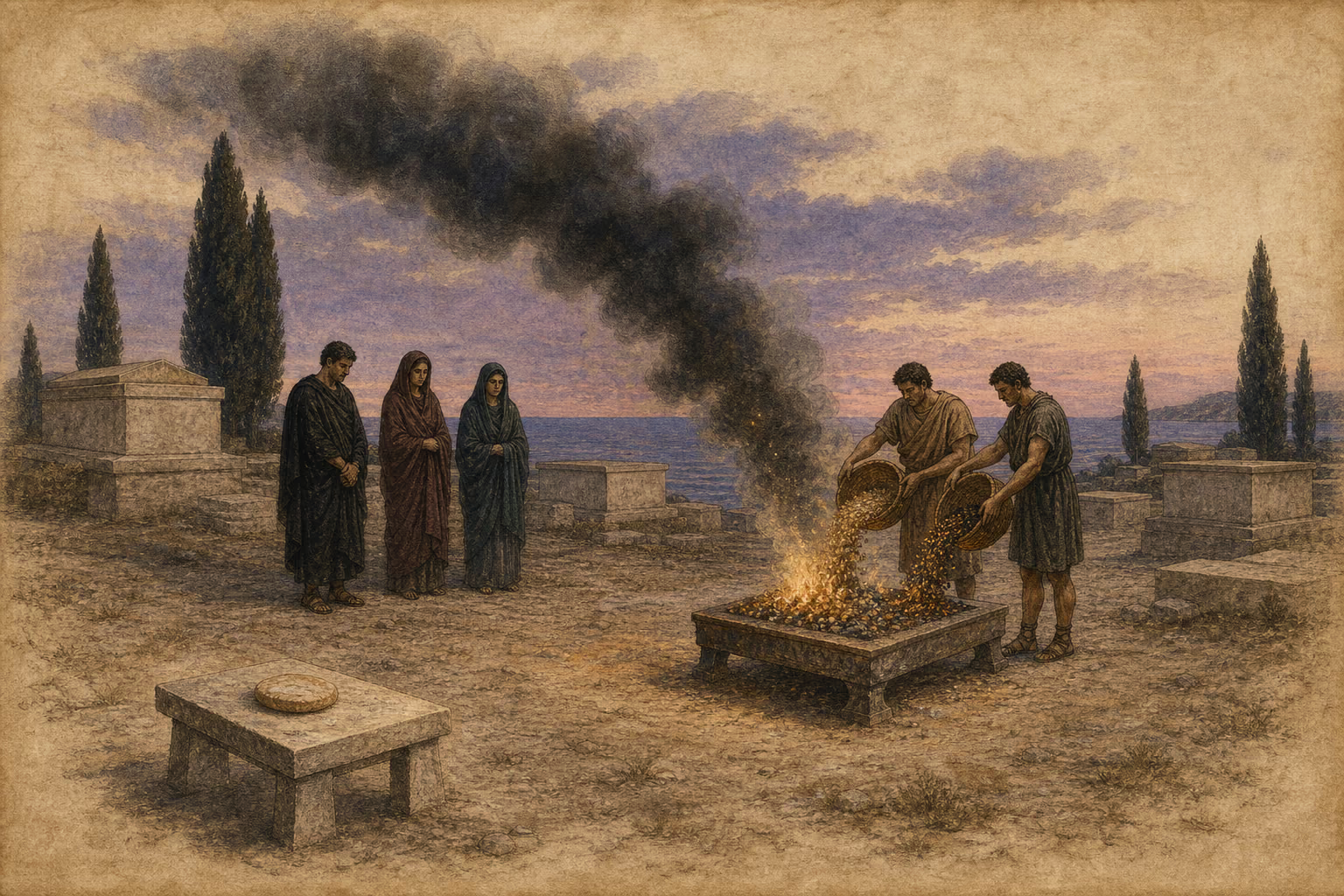
Arabia produces neither cinnamon nor cassia; and this is the country styled “Happy” Arabia! False and ungrateful does she prove herself in the adoption of this surname, which she would imply to have been received from the gods above; whereas, in reality, she is indebted for it far more to the gods below. It is the luxury which is displayed by man, even in the paraphernalia of death, that has rendered Arabia thus “happy;” and which prompts him to burn with the dead what was originally understood to have been produced for the service of the gods. Those who are likely to be the best acquainted with the matter, assert that this country does not produce, in a whole year, so large a quantity of perfumes as was burnt by the Emperor Nero at the funeral obsequies of his wife Poppæa. And then let us only take into account the vast number of funerals that are celebrated throughout the whole world each year, and the heaps of odours that are piled up in honour of the bodies of the dead; the vast quantities, too, that are offered to the gods in single grains; and yet, when men were in the habit of offering up to them the salted cake, they did not show themselves any the less propitious; nay, rather, as the facts themselves prove, they were even more favourable to us than they are now. But it is the sea of Arabia that has even a still greater right to be called “happy,” for it is this that furnishes us with pearls. At the very lowest computation, India, the Seres, and the Arabian Peninsula, withdraw from our empire one hundred millions of sesterces every year—so dearly do we pay for our luxury and our women. How large a portion, too, I should like to know, of all these perfumes, really comes to the gods of heaven, and the deities of the shades below?