LIBER XII · CAPUT 26
PANAX
Latine · Mayhoff 1906
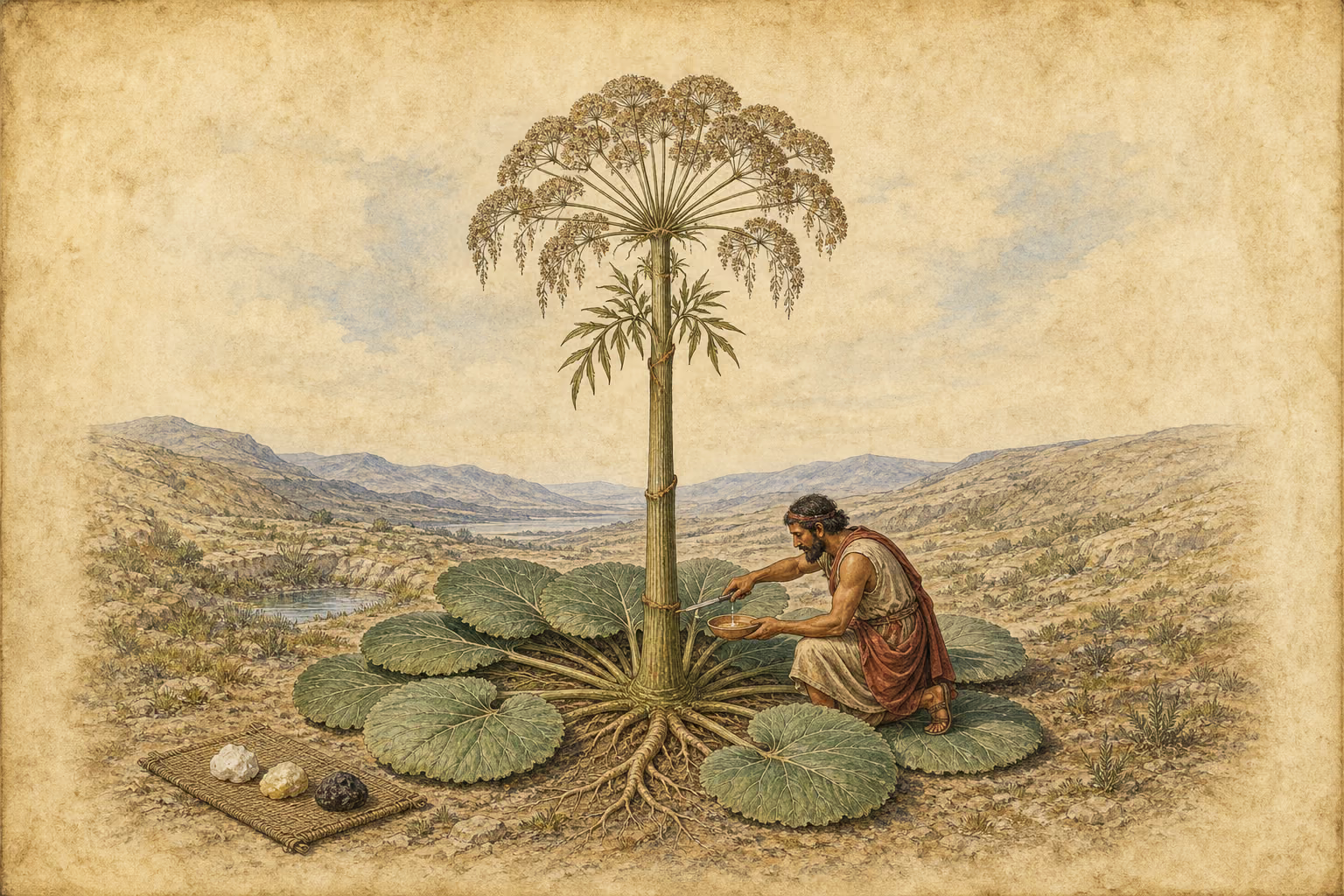
medicinae hoc tantum, panacen et unguentis eadem gignit, nascentem et in Psophide Arcadiae circaque Erymanthi fontem et in Africa et in Macedonia, ferula sui generis quinque cubitorum, foliis primo quaternis, mox senis in terra iacentibus, ampla magnitudine rotundis, in cacumine vero oleagineis, semine muscariis dependente ut ferulae. excipitur sucus inciso caule messibus, radice autumno. laudatur candor eius coacti; sequens pallido statera, niger colos inprobatur. pretium optimo in libras $X$ II. ab hac ferula differt quae vocatur spondylion foliis tantum, quia sunt minora et platani divisura. non nisi in opacis gignitur. semen eodem nomine sills speciem habet, medicinae tantum utile. dat et malobathrum Syria, arborem folio convoluto, colore aridi folii, ex quo premitur oleum ad unguenta, fertiliore eiusdem Aegypto. laudatius tamen ex India venit. in paludibus ibi gigni tradunt lentis modo, odoratius croco, nigricans scabrumque, quodam salis gustu. minus probatur candidum. celerrime situm in vetustate sentit. sapor eius nardo similis esse debet sub lingua. odor vero in vino subfervefacti antecedit alios. in pretio quidem prodigio simile est, a denaris singulis ad $X$ CCC pervenire libras, folium autem ipsum in libras $X$ LX.
English · Bostock & Riley 1855–57
Syria, too, furnishes panax, an ingredient used in unguents. This plant grows also at Psophis in Arcadia, about the sources of the Erymanthus, in Africa also, and in Macedonia. This is a peculiar kind of giant-fennel, which stands five cubits in height: it first throws out four leaves, and then six, which lie close to the ground, round, and of very considerable size; those, however, which grow towards the top resemble the leaves of the olive. It bears its seed in certain tufts, which hang down, just as in the fennel. The juice is obtained by incisions made in the stalk at harvest-time, and in the root in autumn. When in a coagulated state, it is esteemed according to its whiteness. The next in value is that of a pallid colour, while the black is held in no esteem. The price of that of the best quality is two denarii per pound.
The difference between this kind of giant-fennel and that known as spondylium, consists only in the leaf, which is smaller, and divided like that of the plane-tree. It grows in shady places only. The seed bears the same name as the plant, and has a strong resemblance to that of hart-wort: it is only employed in medicine.
Syria produces the malobathrum also, a tree which bears a folded leaf, with just the colour of a leaf when dried. From this plant an oil is extracted for unguents. Egypt produces it in still greater abundance; but that which is the most esteemed of all comes from India, where it is said to grow in the marshes like the lentil. It has a more powerful odour than saffron, and has a black, rough appearance, with a sort of brackish taste. The white is the least approved of all, and it very soon turns musty when old. In taste it ought to be similar to nard, when placed under the tongue. When made luke-warm in wine, the odour which it emits is superior to any other. The prices at which this drug ranges are something quite marvellous, being from one denarius to four hundred per pound; as for the leaf, it generally sells at sixty denarii per pound.