LIBER XII · CAPUT 6
THE PALA: THE FRUIT CALLED ARIENA
Latine · Mayhoff 1906
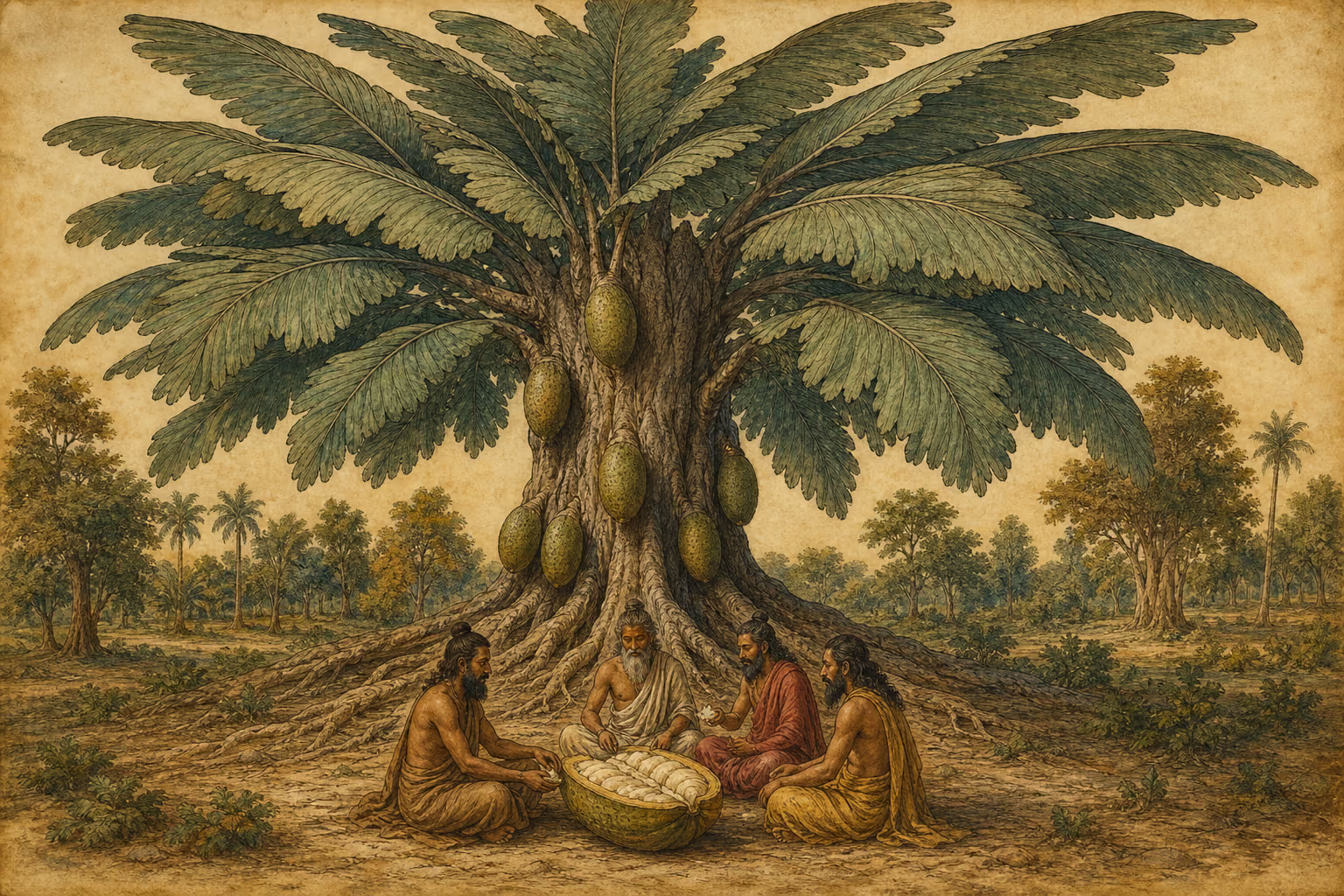
Maior alia pomo et suavitate praecellentior, 5 quo sapientes Indorum vivunt. folium alas avium imitatur, longitudine triun cubitorum, latitudine duum. fructum cortice emittit admirabilem suci dulcedine, ut uno quaternos satiet. arbori nomen palae, pomo arierae. plurima est in Sydracis, expeditionum Alexandri termino. est et alia similis huic, dulcior pomo, sed interaneorum valetudini infesta. edixerat Alexander ne quis agminis sui id pomum attingeret.
Genera arborum Macedones narravere maiore ex parte sine nominibus. est et terebintho similis cetera, pomo amygdalis, minore tantum magnitudine, praecipuae suavitatis, 15 in Bactris utique. hanc aliqui terebinthon esse proprii generis potius quam similem ei putaverunt. sed unde vestes lineas faciunt, foliis moro similis, calyce pomi cynorrhodo. serunt eam in campis, neque est gratior vinearum prospectus. 20
English · Bostock & Riley 1855–57
There is another tree in India, of still larger size, and even more remarkable for the size and sweetness of its fruit, upon which the sages of India live. The leaf of this tree resembles, in shape, the wing of a bird, being three cubits in length, and two in breadth. It puts forth its fruit from the bark, a fruit remarkable for the sweetness of its juice, a single one containing sufficient to satisfy four persons. The name of this tree is “pala,” and of the fruit, “ariena.” They are found in the greatest abundance in the country of the Sydraci, a territory which forms the extreme limit of the expedition of Alexander.
There is another tree, also, very similar to this, but bearing a still sweeter fruit, though very apt to cause derangement of the bowels. Alexander issued strict orders, forbidding anyone in the expedition to touch this fruit.
The Macedonians have made mention of various other kinds of trees, the greater part of which, however, are without names. There is one which resembles the terebinth in every respect, except the fruit, which is very similar to the almond, though less in size, and remarkable for its extreme sweetness. This tree was met with in Bactria, and some persons looked upon it as a variety of the terebinth, rather than as bearing a strong resemblance to it. As to the tree from which they manufacture a kind of linen cloth, in leaf it resembles the mulberry-tree, while the calix of the fruit is similar to the dog-rose. This tree is reared in the plains, and there is no sight throughout the cultivated parts of the country that is more enchanting than the plantations of it.